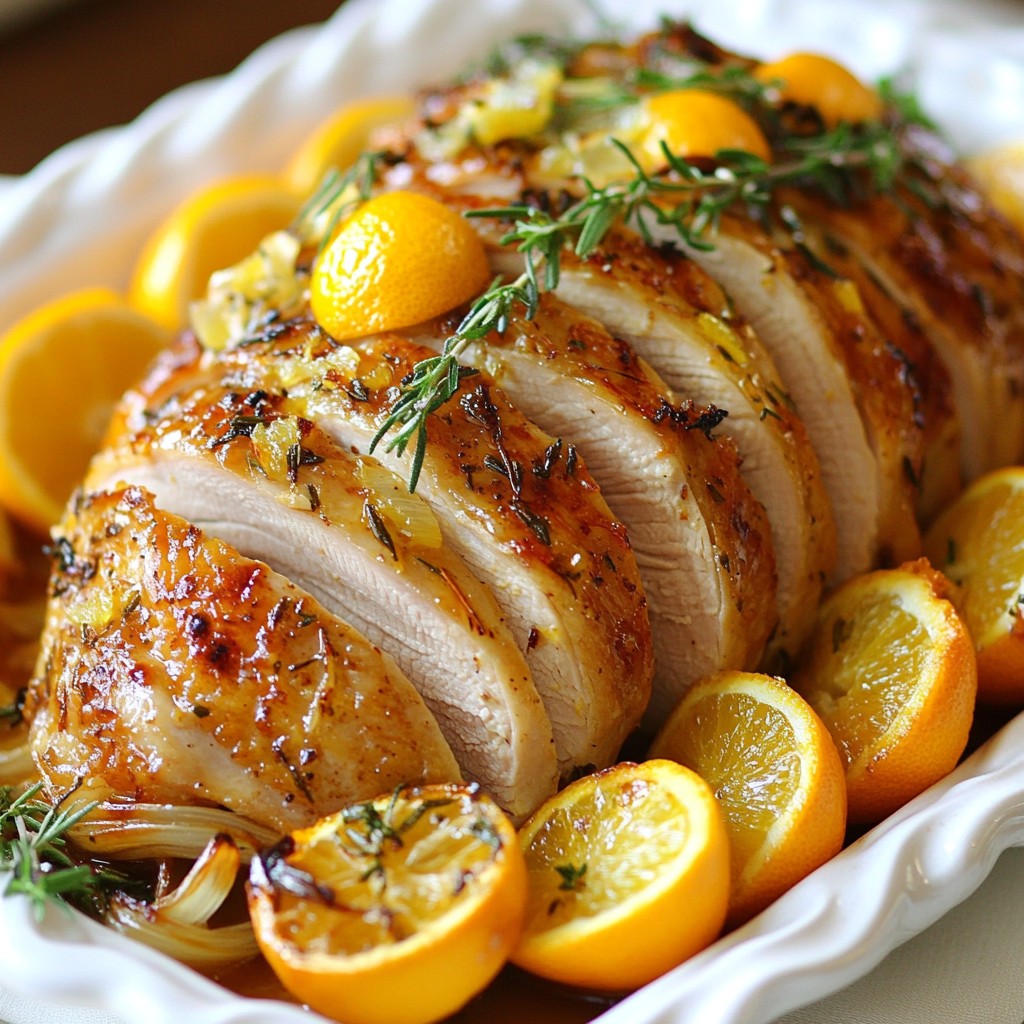
Welcome to a flavorful delight with Citrus Herb Roasted Turkey Breast! This dish combines juicy turkey, fresh citrus, and aromatic herbs to make your taste buds dance. Whether you're cooking for a holiday feast or a simple family dinner, this recipe promises to impress. I’ll guide you through each step, ensuring you get a tender, delicious turkey every time. Let’s dive into the savory details and create something truly special!
Why I Love This Recipe
- Flavorful Marinade: The combination of citrus and fresh herbs creates a bright and aromatic flavor that enhances the turkey's natural taste.
- Moist and Juicy: Roasting the turkey breast over onions and adding broth ensures that it remains moist throughout the cooking process.
- Easy to Prepare: This recipe requires minimal prep time and can be made ahead of time, making it perfect for busy holidays.
- Beautiful Presentation: With its vibrant garnishes and roasted onions, this dish not only tastes great but looks stunning on the table.
Ingredients
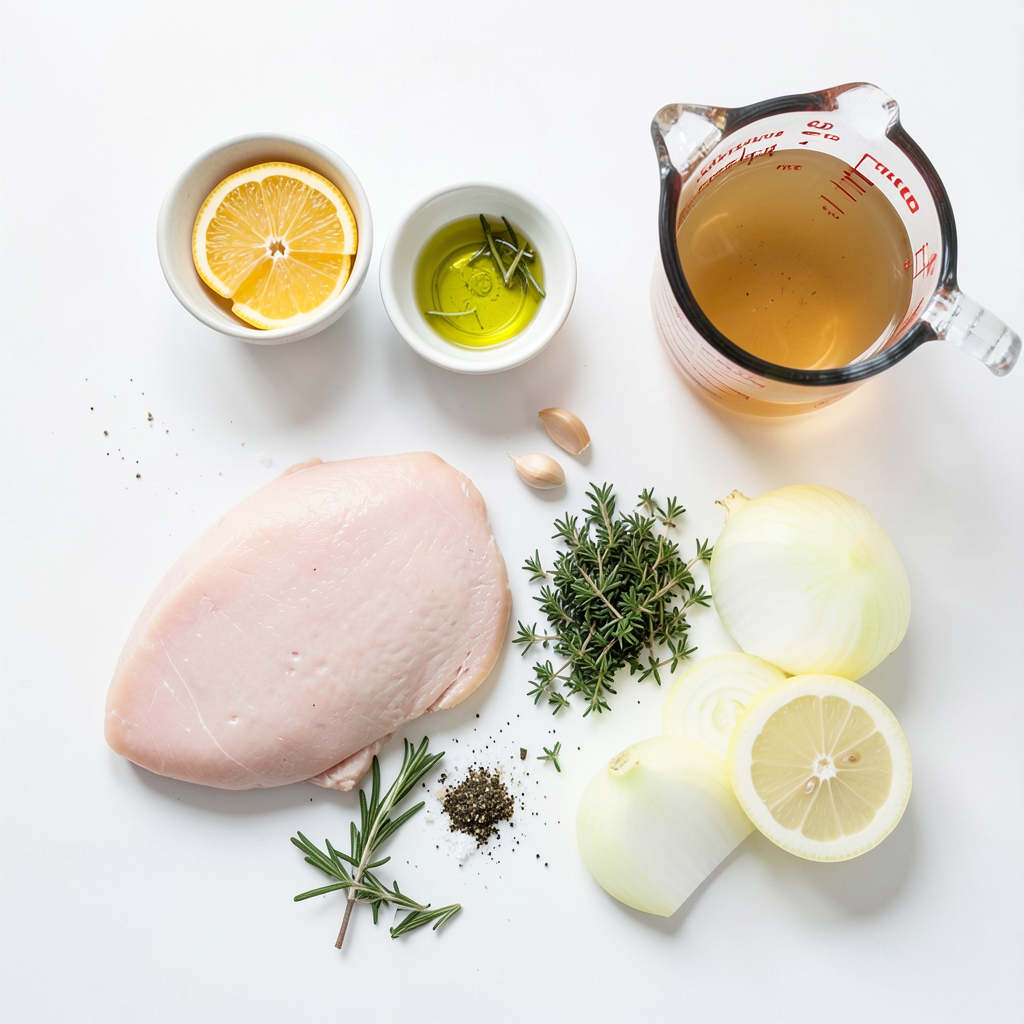
Main Ingredients for Citrus Herb Roasted Turkey Breast
- 1 boneless turkey breast (about 3-4 pounds)
- 2 tablespoons olive oil
- Zest and juice of 1 orange
- Zest and juice of 1 lemon
- 2 tablespoons fresh rosemary, finely chopped
- 2 tablespoons fresh thyme, chopped
- 4 cloves garlic, minced
- 1 large onion, quartered
- 2 cups low-sodium chicken broth
The main ingredients shine in this dish. The boneless turkey breast is your star. It cooks evenly and stays juicy. The olive oil adds moisture and helps the skin brown. Citrus fruits like orange and lemon give a bright, fresh taste. Fresh herbs like rosemary and thyme add depth and aroma. Garlic brings a savory punch. The onion serves as a base that enhances flavor.
Seasoning and Marinade Components
- Salt and pepper to taste
The seasoning is simple but essential. Salt and pepper help balance the flavors. They enhance the natural taste of the turkey.
To prepare the marinade, mix olive oil, orange juice, lemon juice, citrus zest, chopped herbs, minced garlic, salt, and pepper in a bowl. Stir well. This marinade infuses the turkey with bright flavors. Marinating is key to making the turkey juicy and flavorful. Aim for at least 2 hours of marinating. For best results, let it sit overnight. This allows the flavors to deepen and permeate the meat.
Step-by-Step Instructions
Prepping the Oven and Marinade
First, set your oven to 375°F (190°C). This temperature helps the turkey cook evenly. Next, prepare the marinade. In a bowl, mix the olive oil, orange juice, lemon juice, orange zest, lemon zest, chopped rosemary, chopped thyme, minced garlic, salt, and pepper. Stir well until combined. This blend brings out bright flavors.
Marinating the Turkey
To marinate the turkey, place the turkey breast in a large resealable bag or a shallow dish. Pour the marinade over it, ensuring every part is coated. Seal the bag or cover the dish and refrigerate. For best results, marinate for at least 2 hours, but overnight gives even better taste. The longer it marinates, the more flavorful it becomes.
Roasting Process
When ready to roast, set up your baking dish. Spread quartered onions in a large roasting pan. These will add flavor and help the turkey cook well. Place the marinated turkey on top of the onions. Pour the chicken broth around the turkey to keep it moist. Roast the turkey for about 60-75 minutes, or until it reaches 165°F (75°C) inside. Remember to baste the turkey with the pan juices halfway through. This step keeps it juicy and adds flavor.
Tips & Tricks
Ensuring Juicy Turkey Breast
To keep your turkey breast juicy, follow these tips:
- Brine the turkey: Soaking the turkey in saltwater adds moisture.
- Use broth: Pour low-sodium chicken broth in the roasting pan. This keeps the turkey moist.
- Baste often: Use pan juices to baste every 20 minutes while it cooks.
Resting the turkey is key. After cooking, let it sit for 10-15 minutes. This helps the juices stay inside. Cutting too soon lets the juices run out.
Flavor Enhancement Suggestions
Want to boost the flavors? Try these herbs and spices:
- Oregano: Adds a warm, earthy flavor.
- Sage: Brings a savory note.
- Paprika: Adds color and a mild kick.
For leftovers, make a turkey salad. Mix diced turkey with mayo, celery, and grapes for a tasty dish. You can also use it in soups or wraps.
Presentation Recommendations
Serving is just as important as cooking. Here are some ideas:
- Arrange turkey slices on a large platter.
- Add roasted onions for a pop of color.
For garnishing, use fresh herbs. Sprigs of rosemary or thyme look great. Include lemon and orange wedges for a vibrant touch. This makes your dish stand out!
Pro Tips
- Marination Time: For the best flavor, marinate the turkey breast overnight. This allows the herbs and citrus to penetrate the meat deeply, enhancing the taste.
- Basting: Don't forget to baste the turkey with the pan juices halfway through roasting. This helps keep the meat moist and adds extra flavor.
- Resting Period: Allow the turkey to rest after cooking. This step is crucial as it allows the juices to redistribute, resulting in a juicier slice.
- Serving Suggestions: For a beautiful presentation, garnish the turkey with fresh herbs and citrus wedges. This not only enhances appearance but also adds a refreshing aroma.
Variations
Alternative Flavor Profiles
You can change the citrus herb blend to suit your taste. Use limes or grapefruits instead of oranges and lemons. Each fruit brings a unique twist to the dish. You might enjoy adding herbs like basil or parsley for a fresh touch. For a spicy kick, consider using chili flakes or smoked paprika. These changes can enhance the overall flavor.
Cooking Methods
Roasting turkey breast gives it a nice crust and deep flavor. It cooks evenly and keeps the meat juicy. On the other hand, slow-cooking makes the turkey tender and easy to shred. It takes longer but is great for busy days. You can also use an air fryer for quick cooking. It creates a crispy skin while keeping the inside moist.
Dietary Modifications
If you need gluten-free options, simply check your broth and spices. Most of them are safe to use. You can also lower the sodium by using low-sodium broth. To make this dish healthier, trim excess fat from the turkey. You can serve it with more veggies instead of heavy sides. Consider adding a fresh salad for a light meal.
Storage Info
Storing Leftover Turkey
To keep leftover turkey fresh, place it in the fridge within two hours. Store it in an airtight container. This helps keep the flavors and moisture in. For best taste, eat the leftovers within three to four days. If you need more time, freezing is a great option.
Freezing Tips
To freeze turkey leftovers, first, let them cool. Cut the turkey into slices for easy use later. Wrap each piece in plastic wrap, then place them in a freezer bag. Remove as much air as you can to prevent freezer burn. Turkey can stay frozen for up to three months.
To reheat, take the turkey out of the freezer and let it thaw overnight in the fridge. You can also use the microwave for quick thawing. When you're ready to eat, heat it in the oven at 325°F (163°C) until it reaches 165°F (75°C).
Recommended Use for Leftovers
Leftover turkey is versatile! You can make turkey sandwiches with mayo and lettuce. Shredded turkey works great in salads or soups. Try adding it to tacos or stir-fry for a quick meal. You can also mix it with pasta and your favorite sauce for a hearty dish.
FAQs
How long should I marinate the turkey breast?
I recommend marinating the turkey breast for at least 2 hours. For the best flavor, let it sit overnight. This allows the herbs and citrus to soak in well. The longer it marinates, the more tasty it becomes.
What temperature should turkey breast reach when cooked?
The turkey breast should reach an internal temperature of 165°F (75°C). This ensures it is safe to eat and juicy. Use a meat thermometer to check. Insert it into the thickest part of the turkey for accuracy.
Can I use a frozen turkey breast for this recipe?
Yes, you can use a frozen turkey breast. Just remember to thaw it properly. Place it in the fridge for 24 hours for every 5 pounds. Once thawed, you can follow the marinating steps as usual.
In this article, we covered how to make a flavorful Citrus Herb Roasted Turkey Breast. You learned about key ingredients, like turkey, citrus, and herbs, and how to marinate for the best taste. The step-by-step guide included boiling tips, roasting time, and important basing steps. Remember, letting the turkey rest is key to keeping it juicy. You’ve got the tools and tricks to create a delicious meal. Enjoy making this dish and savoring the compliments that will surely follow!