If you crave a dish that warms your soul, you’re in for a treat! In this guide, I’ll share my favorite recipe for Classic Italian Meatballs that are hearty and full of flavor. You’ll learn how to select the best ingredients, master the cooking steps, and avoid common mistakes. Plus, I’ll show you how to customize these meatballs to suit your taste. Let’s turn your kitchen into an Italian trattoria today!
Ingredients
Classic Italian Meatballs Ingredients List
To make classic Italian meatballs, gather these simple ingredients:
– 1 lb ground beef
– 1/2 lb ground pork
– 1 cup breadcrumbs
– 1/4 cup grated Parmesan cheese
– 1/4 cup fresh parsley, chopped
– 2 cloves garlic, minced
– 1 large egg
– 1 teaspoon salt
– 1/2 teaspoon black pepper
– 1/2 teaspoon dried oregano
– 1/2 teaspoon dried basil
– 1/4 teaspoon red pepper flakes (optional)
– 2 cups marinara sauce
– Olive oil for frying
Optional Ingredients for Customization
You can change the flavor by adding some optional ingredients, such as:
– 1/4 cup chopped onion
– 1 tablespoon Worcestershire sauce
– 1/4 cup chopped bell pepper
– 1/4 teaspoon smoked paprika
These ingredients can give your meatballs a unique twist. Feel free to mix and match according to your taste.
Tips for Choosing Quality Ingredients
Choosing the right ingredients makes a big difference. Here are some tips:
– Meat: Look for fresh, high-quality ground beef and pork. Fat content adds flavor. Aim for an 80/20 blend for juiciness.
– Bread crumbs: Use fresh bread crumbs for better texture. You can make them from stale bread.
– Cheese: Use freshly grated Parmesan cheese. It has more flavor than pre-grated cheese.
– Herbs: Fresh parsley adds brightness. If using dried herbs, check their freshness. Old herbs lose flavor.
These choices will help create meatballs that are hearty and flavorful.
Step-by-Step Instructions
Preparing the Meat Mixture
To start, gather your ingredients. You need ground beef and ground pork. Combine them in a large bowl. Add breadcrumbs, grated Parmesan cheese, chopped parsley, and minced garlic. Crack the egg into the bowl, then sprinkle in salt, black pepper, oregano, basil, and red pepper flakes. Mix everything gently. Be careful not to overmix; this keeps meatballs tender. The blend should feel moist but not sticky.
Shaping and Cooking the Meatballs
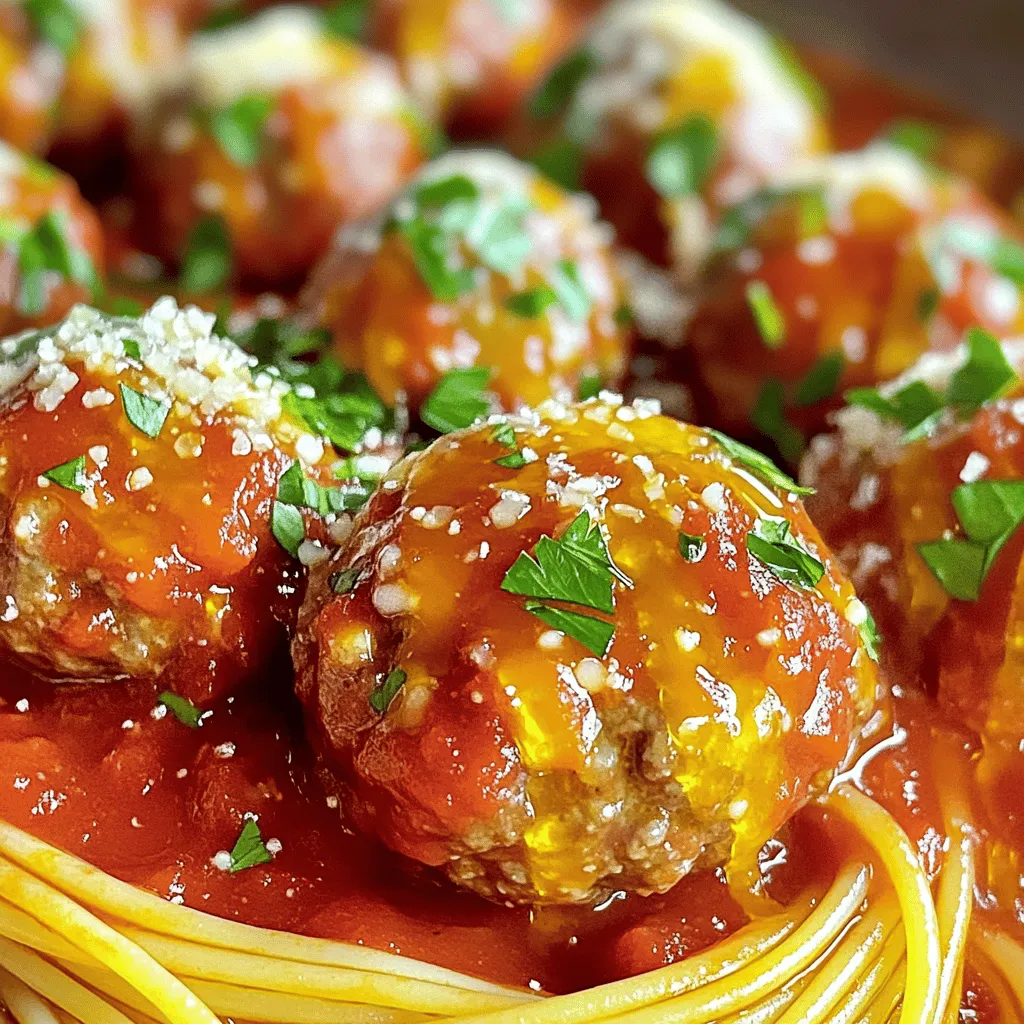
Next, shape the mixture into meatballs. Aim for about 1.5 inches in size. You should end up with 16 to 18 meatballs. Heat olive oil in a large skillet over medium heat. Once the oil is hot, add the meatballs in batches. Don’t overcrowd the pan; this helps them brown evenly. Cook for about 8 to 10 minutes until they are golden brown on all sides. After browning, transfer the meatballs to a paper towel-lined plate. This absorbs extra oil and keeps them from being greasy.
Simmering in Marinara Sauce
Now, it’s time for the sauce. Pour marinara sauce into the same skillet. Bring it to a gentle simmer. Carefully add the browned meatballs back into the skillet. Cover the skillet and let the meatballs simmer in the sauce for 15 to 20 minutes. This step allows the meatballs to soak up the flavors. Serve them hot, garnished with more parsley and extra Parmesan if you like. For a classic touch, pair them with spaghetti.
Tips & Tricks
How to Achieve Perfectly Tender Meatballs
To make tender meatballs, start with quality meat. I mix ground beef and pork. This blend gives flavor and moisture. Use fresh breadcrumbs instead of dry ones. This adds softness. Don’t overmix the meat. Just combine until mixed. Overmixing makes them tough. Lastly, shape them gently. This keeps them light and fluffy.
Common Mistakes to Avoid
A few common mistakes can spoil your meatballs. First, don’t skip the egg. It acts as a binder. Without it, the meatballs can fall apart. Second, be careful with salt. Too much can make them too salty. Also, avoid overcrowding the pan while frying. This can lead to steaming instead of browning. Finally, don’t rush the simmering. Let them cook in the sauce to soak up flavor.
Adjusting Seasoning for Flavor Perfection
Seasoning can make or break your meatballs. Start with the basics: salt, pepper, and herbs. I love using oregano and basil for that Italian touch. You can also add red pepper flakes for heat. Taste the mixture before cooking. If it lacks flavor, adjust as needed. You can always add more seasoning, but you can’t take it out. A little taste test goes a long way.

Variations
Different Meat Combinations
For classic Italian meatballs, you can mix meats to boost flavor. I love using ground beef and pork together. The beef gives a rich taste, while the pork adds moisture. You can also try ground turkey or chicken. These options make lighter meatballs. Combining meats gives a unique taste and texture.
Vegetarian or Vegan Alternatives
If you want a meatless option, there are great alternatives. Use lentils, chickpeas, or beans as a base. You can also use finely chopped mushrooms for a meaty texture. Add oats or breadcrumbs to bind the mixture. For flavor, season with herbs and spices. A mix of garlic and onion can make these meatballs shine.
Flavor Enhancements and Additions
You can elevate your meatballs with extra flavors. Try adding cheese, like mozzarella, for a gooey center. Fresh herbs, like basil and parsley, add brightness. For a kick, include red pepper flakes or diced jalapeños. You can even add a splash of Worcestershire sauce for depth. Each addition makes your meatballs unique and tasty.
Storage Info
How to Store Leftover Meatballs
After you enjoy your classic Italian meatballs, store any leftovers. Place them in an airtight container. These meatballs will last up to three days in the fridge. Keep them in the marinara sauce for added moisture and flavor. This method keeps them tasty for your next meal.
Freezing Tips for Meal Prep
Freezing meatballs is a smart way to save time. To freeze, let the meatballs cool completely. Arrange them in a single layer on a baking sheet. Freeze for about an hour. Once frozen, place them in a freezer-safe bag. Be sure to label the bag with the date. You can store them in the freezer for up to three months. When you want to use them, just thaw overnight in the fridge.
Reheating Instructions
Reheating meatballs is simple. You can use the microwave or the stove. For the microwave, place them on a plate and cover with a damp paper towel. Heat for one to two minutes until warm. If you prefer the stove, reheat in a skillet over low heat. Add a splash of marinara sauce to keep them moist. Stir occasionally until heated through. Enjoy your delicious leftovers!
FAQs
How to Make Classic Italian Meatballs from Scratch?
To make classic Italian meatballs, gather your ingredients. You need ground beef, ground pork, breadcrumbs, and Parmesan cheese. Fresh parsley, garlic, egg, salt, black pepper, oregano, and basil add great flavor. Follow the recipe carefully. Mix everything in a bowl and shape them into balls. Fry them in olive oil until brown, then simmer in marinara sauce. This method makes the meatballs juicy and tasty.
What are the Best Accompaniments for Meatballs?
The best accompaniments for meatballs include pasta, crusty bread, or a fresh salad. Spaghetti is a classic choice. The sauce clings to the pasta and enhances the meal. You can also serve meatballs in a sub sandwich. Add cheese and herbs for extra flavor. A side of roasted vegetables makes a great addition too. Each choice adds a different touch to your meal.
Can I Use Ground Chicken or Turkey Instead?
Yes, you can use ground chicken or turkey instead of beef and pork. This change makes the meatballs lighter. The taste will be different, but still delicious. Use the same spices and herbs for flavor. Keep in mind that chicken and turkey can be drier. Add a little more oil or breadcrumbs to keep them moist. Adjust cooking times if needed for best results.
To make classic Italian meatballs, we covered key ingredients, methods, and tips. Quality ingredients make a big difference. Customizing your meatballs adds personal flair. Remember to mix well and shape them right. Simmering in sauce brings out the flavor. Avoid common mistakes for the best texture.
Try different meats or go vegetarian. Store leftovers properly, or freeze them for later. In short, making meatballs at home is fun and rewarding. Enjoy your tasty creations with family or friends!