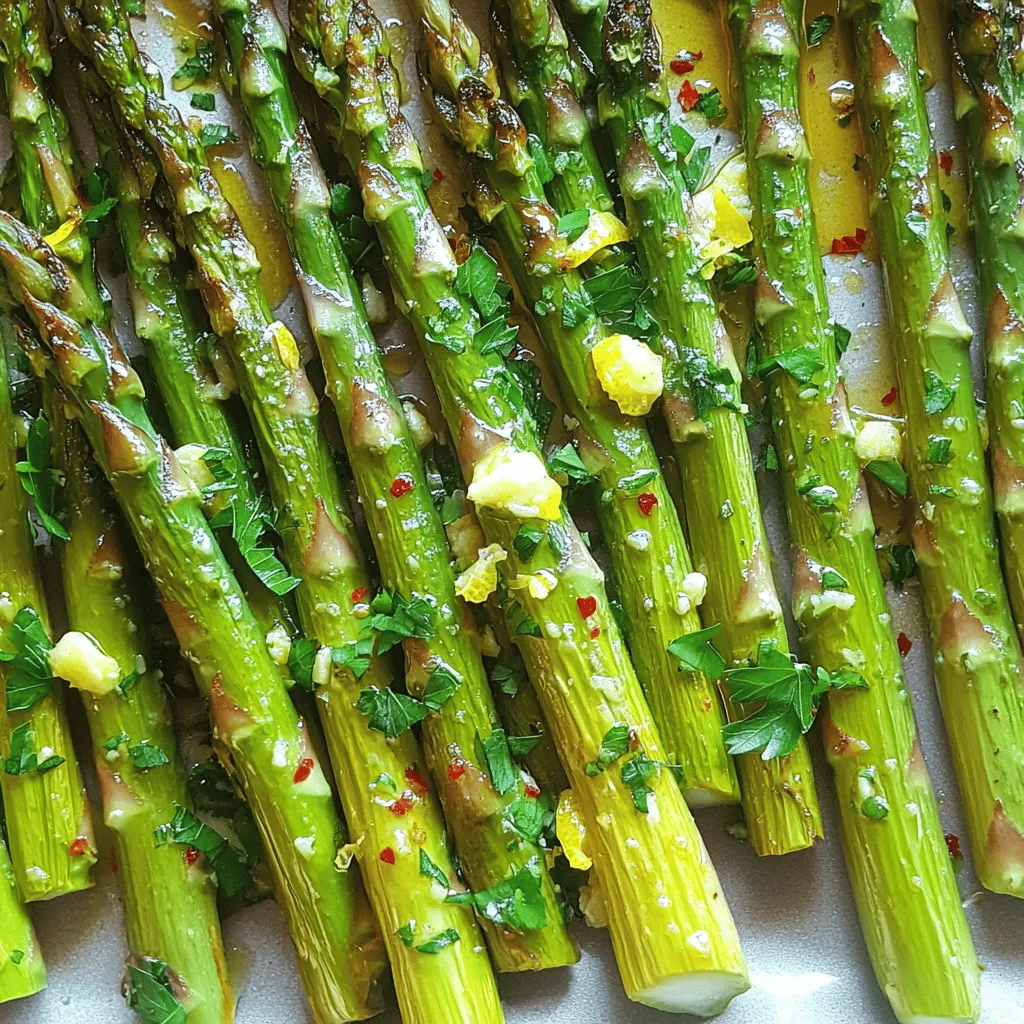
Garlic Lemon Asparagus Fresh and Flavorful Side Dish
![For this dish, you need 1 pound of fresh asparagus. Look for bright green color and firm stems. Trim the tough ends before cooking. This helps ensure that each bite is tender and tasty. Garlic and lemon are the stars here. You’ll need 4 cloves of garlic, minced finely. This adds a nice punch of flavor. You also need the zest and juice of 1 lemon. The zest gives a bright taste, while the juice adds a fresh tang. You can enhance the dish with extra ingredients. I suggest adding 1 teaspoon of red pepper flakes for a little heat. Fresh parsley, chopped, makes a nice garnish. It adds color and a fresh taste. A pinch of salt and pepper rounds out the flavors, making the dish pop. For the full recipe, check the details above. Start by gathering all your ingredients. You will need: - 1 pound fresh asparagus, trimmed - 4 cloves garlic, minced - 2 tablespoons olive oil - Zest of 1 lemon - Juice of 1 lemon - 1 teaspoon red pepper flakes (optional) - Salt and pepper to taste - Fresh parsley, chopped (for garnish) Wash the asparagus well and trim the ends. This helps remove any tough parts. Next, mince the garlic finely. Zest the lemon carefully to avoid the bitter white pith. Finally, squeeze the juice from the lemon, making sure to catch any seeds. Preheat your oven to 400°F (200°C). This ensures even cooking. In a large bowl, combine the asparagus, minced garlic, olive oil, lemon zest, and red pepper flakes, if you want some heat. Add the lemon juice and season with salt and pepper. Toss everything together well. You want the asparagus to be nicely coated. Now, spread the asparagus on a baking sheet in a single layer. This helps them cook evenly. Roast them in the oven for 15-20 minutes. Toss halfway through to promote even browning. You’ll know they’re done when they are tender and slightly crispy. Once cooked, remove the asparagus from the oven. Transfer it to a serving platter. For a pop of color and freshness, garnish with chopped parsley. This dish pairs well with many meals, making it a versatile side. If you want, you can check out the Full Recipe for more tips and variations! To get your asparagus just right, start with fresh spears. Look for bright green color and firm texture. Trim the tough ends, about one inch from the bottom. This helps avoid bitterness. Spread the asparagus in a single layer on the baking sheet. This ensures even roasting. Toss halfway through cooking for a nice crisp. Roast until tender, about 15-20 minutes. You can add more flavor to your dish. Try a sprinkle of Parmesan cheese before roasting for a savory kick. Fresh herbs like thyme or dill work well too. Add a splash of balsamic vinegar for a tangy twist. Red pepper flakes add heat, but use them sparingly. Lemon zest gives a bright taste that contrasts nicely with garlic. Need to feed more guests? Simply double the ingredients. You can also cut the recipe in half for smaller meals. Adjust the cooking time if you change the amount. Use a larger baking sheet for more asparagus. This keeps them from steaming and ensures a crispy finish. Always check for doneness by tasting a piece. {{image_2}} You can cook garlic lemon asparagus in many ways. Grilling gives it a smoky flavor. Just toss the asparagus with the garlic lemon mix and grill for 5-7 minutes. Sautéing is quick and easy too. Heat a pan, add olive oil, and toss the asparagus for about 5 minutes. Both methods keep the asparagus crisp and full of taste. Want to change up the flavor? Adding cheese is a great option. Feta or Parmesan adds creaminess. Fresh herbs like thyme or basil also work well. Just mix them in before you roast. If you like heat, try adding more red pepper flakes. Each twist brings a new taste to this dish. Seasonal ingredients can brighten this recipe. In spring, add some fresh peas or radishes. In summer, toss in cherry tomatoes for sweetness. Fall calls for butternut squash cubes. Winter may inspire you to add roasted nuts for crunch. Using what's fresh makes this dish more fun and tasty. After you enjoy your garlic lemon asparagus, store leftovers in an airtight container. This helps keep the flavors fresh. Place the container in the fridge. Leftovers last about three to four days. If you notice any off smells or changes in color, it's best to toss them. To reheat your asparagus, use the oven or a skillet. Preheat the oven to 350°F (175°C). Spread the asparagus on a baking sheet and warm for about 10 minutes. This keeps them crispy. If using a skillet, add a splash of olive oil and heat on medium for five minutes. Stir gently to avoid burning. Yes, you can freeze garlic lemon asparagus, but it may change texture. Blanch the asparagus first. Boil for two minutes, then place in ice water. Drain and dry before placing in freezer bags. They can last up to three months in the freezer. When ready to eat, cook straight from frozen. Enjoy the fresh taste by using the [Full Recipe]. Garlic lemon asparagus lasts about 3 to 5 days in the fridge. To store it, put it in an airtight container. This keeps it fresh and tasty. I recommend eating it within this time for the best flavor and texture. If you notice any changes, like a mushy texture, it’s best to throw it out. You can use frozen asparagus, but it will change the dish’s texture. Frozen asparagus tends to be softer when cooked. To use it, thaw the asparagus first. After that, pat it dry to remove excess moisture. This helps achieve a better roast. You might also need to adjust the cooking time. Garlic lemon asparagus pairs well with many dishes. Here are some great options: - Grilled chicken or fish - Pasta with olive oil and herbs - Quinoa or rice dishes - Steak or pork chops - A fresh green salad These ideas help you create a balanced meal. The bright lemon flavor complements rich proteins nicely. For even more inspiration, check out the Full Recipe for Garlic Lemon Asparagus. This article covered how to make delicious Garlic Lemon Asparagus. We talked about key ingredients like fresh asparagus and garlic. I shared clear steps to prepare, cook, and serve it. You learned tips for roasting it perfectly and some fun variations. Also, I gave storage tips to keep it fresh. When you try this dish, enjoy its bright flavors. Feel free to get creative with your own twists. Happy cooking!](https://dailydishly.com/wp-content/uploads/2025/06/b7aeafc4-6d88-42f1-94a5-d1a2b58bd123.webp)
Looking for a simple yet delicious side dish? Garlic lemon asparagus is the answer! This vibrant recipe brings together fresh asparagus, zesty lemon, and pungent garlic for a perfect flavor punch. Whether you roast it in the oven or try other cooking methods, I’ll walk you through each step. Let’s elevate your meal with this fresh and flavorful dish that everyone will love!
Ingredients
Fresh Asparagus
For this dish, you need 1 pound of fresh asparagus. Look for bright green color and firm stems. Trim the tough ends before cooking. This helps ensure that each bite is tender and tasty.
Garlic and Lemon Components
Garlic and lemon are the stars here. You’ll need 4 cloves of garlic, minced finely. This adds a nice punch of flavor. You also need the zest and juice of 1 lemon. The zest gives a bright taste, while the juice adds a fresh tang.
Optional Ingredients for Extra Flavor
You can enhance the dish with extra ingredients. I suggest adding 1 teaspoon of red pepper flakes for a little heat. Fresh parsley, chopped, makes a nice garnish. It adds color and a fresh taste. A pinch of salt and pepper rounds out the flavors, making the dish pop.
Step-by-Step Instructions
Preparation of Ingredients
Start by gathering all your ingredients. You will need:
– 1 pound fresh asparagus, trimmed
– 4 cloves garlic, minced
– 2 tablespoons olive oil
– Zest of 1 lemon
– Juice of 1 lemon
– 1 teaspoon red pepper flakes (optional)
– Salt and pepper to taste
– Fresh parsley, chopped (for garnish)
Wash the asparagus well and trim the ends. This helps remove any tough parts. Next, mince the garlic finely. Zest the lemon carefully to avoid the bitter white pith. Finally, squeeze the juice from the lemon, making sure to catch any seeds.
Cooking Process in the Oven
Preheat your oven to 400°F (200°C). This ensures even cooking. In a large bowl, combine the asparagus, minced garlic, olive oil, lemon zest, and red pepper flakes, if you want some heat. Add the lemon juice and season with salt and pepper. Toss everything together well. You want the asparagus to be nicely coated.
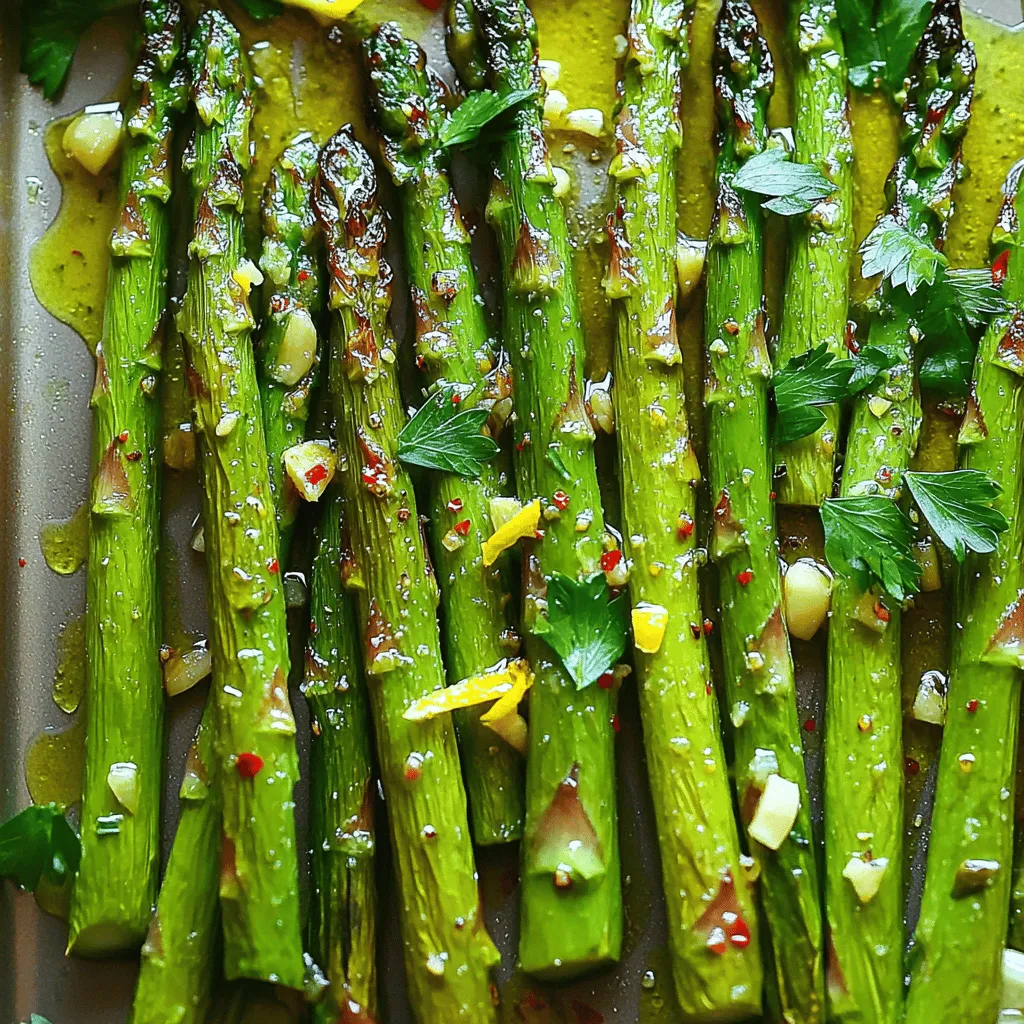
Now, spread the asparagus on a baking sheet in a single layer. This helps them cook evenly. Roast them in the oven for 15-20 minutes. Toss halfway through to promote even browning. You’ll know they’re done when they are tender and slightly crispy.
Serving the Dish
Once cooked, remove the asparagus from the oven. Transfer it to a serving platter. For a pop of color and freshness, garnish with chopped parsley. This dish pairs well with many meals, making it a versatile side.
Tips & Tricks
Achieving Perfectly Roasted Asparagus
To get your asparagus just right, start with fresh spears. Look for bright green color and firm texture. Trim the tough ends, about one inch from the bottom. This helps avoid bitterness. Spread the asparagus in a single layer on the baking sheet. This ensures even roasting. Toss halfway through cooking for a nice crisp. Roast until tender, about 15-20 minutes.
Enhancing Flavor with Additional Ingredients
You can add more flavor to your dish. Try a sprinkle of Parmesan cheese before roasting for a savory kick. Fresh herbs like thyme or dill work well too. Add a splash of balsamic vinegar for a tangy twist. Red pepper flakes add heat, but use them sparingly. Lemon zest gives a bright taste that contrasts nicely with garlic.
Adjusting the Recipe for Different Serving Sizes
Need to feed more guests? Simply double the ingredients. You can also cut the recipe in half for smaller meals. Adjust the cooking time if you change the amount. Use a larger baking sheet for more asparagus. This keeps them from steaming and ensures a crispy finish. Always check for doneness by tasting a piece.
Variations
Different Cooking Methods
You can cook garlic lemon asparagus in many ways. Grilling gives it a smoky flavor. Just toss the asparagus with the garlic lemon mix and grill for 5-7 minutes. Sautéing is quick and easy too. Heat a pan, add olive oil, and toss the asparagus for about 5 minutes. Both methods keep the asparagus crisp and full of taste.
Flavor Variations
Want to change up the flavor? Adding cheese is a great option. Feta or Parmesan adds creaminess. Fresh herbs like thyme or basil also work well. Just mix them in before you roast. If you like heat, try adding more red pepper flakes. Each twist brings a new taste to this dish.
Seasonal Variations Inspired by Fresh Ingredients
Seasonal ingredients can brighten this recipe. In spring, add some fresh peas or radishes. In summer, toss in cherry tomatoes for sweetness. Fall calls for butternut squash cubes. Winter may inspire you to add roasted nuts for crunch. Using what’s fresh makes this dish more fun and tasty.
Storage Info
Best Ways to Store Leftovers
After you enjoy your garlic lemon asparagus, store leftovers in an airtight container. This helps keep the flavors fresh. Place the container in the fridge. Leftovers last about three to four days. If you notice any off smells or changes in color, it’s best to toss them.
Reheating Instructions for Maintained Flavor
To reheat your asparagus, use the oven or a skillet. Preheat the oven to 350°F (175°C). Spread the asparagus on a baking sheet and warm for about 10 minutes. This keeps them crispy. If using a skillet, add a splash of olive oil and heat on medium for five minutes. Stir gently to avoid burning.
Freezing Garlic Lemon Asparagus: Is it Possible?
Yes, you can freeze garlic lemon asparagus, but it may change texture. Blanch the asparagus first. Boil for two minutes, then place in ice water. Drain and dry before placing in freezer bags. They can last up to three months in the freezer. When ready to eat, cook straight from frozen.
FAQs
How long does Garlic Lemon Asparagus last in the fridge?
Garlic lemon asparagus lasts about 3 to 5 days in the fridge. To store it, put it in an airtight container. This keeps it fresh and tasty. I recommend eating it within this time for the best flavor and texture. If you notice any changes, like a mushy texture, it’s best to throw it out.
Can I use frozen asparagus for this recipe?
You can use frozen asparagus, but it will change the dish’s texture. Frozen asparagus tends to be softer when cooked. To use it, thaw the asparagus first. After that, pat it dry to remove excess moisture. This helps achieve a better roast. You might also need to adjust the cooking time.
What can I serve with Garlic Lemon Asparagus?
Garlic lemon asparagus pairs well with many dishes. Here are some great options:
– Grilled chicken or fish
– Pasta with olive oil and herbs
– Quinoa or rice dishes
– Steak or pork chops
– A fresh green salad
These ideas help you create a balanced meal. The bright lemon flavor complements rich proteins nicely.
This article covered how to make delicious Garlic Lemon Asparagus. We talked about key ingredients like fresh asparagus and garlic. I shared clear steps to prepare, cook, and serve it. You learned tips for roasting it perfectly and some fun variations. Also, I gave storage tips to keep it fresh.
When you try this dish, enjoy its bright flavors. Feel free to get creative with your own twists. Happy cooking!
![For this dish, you need 1 pound of fresh asparagus. Look for bright green color and firm stems. Trim the tough ends before cooking. This helps ensure that each bite is tender and tasty. Garlic and lemon are the stars here. You’ll need 4 cloves of garlic, minced finely. This adds a nice punch of flavor. You also need the zest and juice of 1 lemon. The zest gives a bright taste, while the juice adds a fresh tang. You can enhance the dish with extra ingredients. I suggest adding 1 teaspoon of red pepper flakes for a little heat. Fresh parsley, chopped, makes a nice garnish. It adds color and a fresh taste. A pinch of salt and pepper rounds out the flavors, making the dish pop. For the full recipe, check the details above. Start by gathering all your ingredients. You will need: - 1 pound fresh asparagus, trimmed - 4 cloves garlic, minced - 2 tablespoons olive oil - Zest of 1 lemon - Juice of 1 lemon - 1 teaspoon red pepper flakes (optional) - Salt and pepper to taste - Fresh parsley, chopped (for garnish) Wash the asparagus well and trim the ends. This helps remove any tough parts. Next, mince the garlic finely. Zest the lemon carefully to avoid the bitter white pith. Finally, squeeze the juice from the lemon, making sure to catch any seeds. Preheat your oven to 400°F (200°C). This ensures even cooking. In a large bowl, combine the asparagus, minced garlic, olive oil, lemon zest, and red pepper flakes, if you want some heat. Add the lemon juice and season with salt and pepper. Toss everything together well. You want the asparagus to be nicely coated. Now, spread the asparagus on a baking sheet in a single layer. This helps them cook evenly. Roast them in the oven for 15-20 minutes. Toss halfway through to promote even browning. You’ll know they’re done when they are tender and slightly crispy. Once cooked, remove the asparagus from the oven. Transfer it to a serving platter. For a pop of color and freshness, garnish with chopped parsley. This dish pairs well with many meals, making it a versatile side. If you want, you can check out the Full Recipe for more tips and variations! To get your asparagus just right, start with fresh spears. Look for bright green color and firm texture. Trim the tough ends, about one inch from the bottom. This helps avoid bitterness. Spread the asparagus in a single layer on the baking sheet. This ensures even roasting. Toss halfway through cooking for a nice crisp. Roast until tender, about 15-20 minutes. You can add more flavor to your dish. Try a sprinkle of Parmesan cheese before roasting for a savory kick. Fresh herbs like thyme or dill work well too. Add a splash of balsamic vinegar for a tangy twist. Red pepper flakes add heat, but use them sparingly. Lemon zest gives a bright taste that contrasts nicely with garlic. Need to feed more guests? Simply double the ingredients. You can also cut the recipe in half for smaller meals. Adjust the cooking time if you change the amount. Use a larger baking sheet for more asparagus. This keeps them from steaming and ensures a crispy finish. Always check for doneness by tasting a piece. {{image_2}} You can cook garlic lemon asparagus in many ways. Grilling gives it a smoky flavor. Just toss the asparagus with the garlic lemon mix and grill for 5-7 minutes. Sautéing is quick and easy too. Heat a pan, add olive oil, and toss the asparagus for about 5 minutes. Both methods keep the asparagus crisp and full of taste. Want to change up the flavor? Adding cheese is a great option. Feta or Parmesan adds creaminess. Fresh herbs like thyme or basil also work well. Just mix them in before you roast. If you like heat, try adding more red pepper flakes. Each twist brings a new taste to this dish. Seasonal ingredients can brighten this recipe. In spring, add some fresh peas or radishes. In summer, toss in cherry tomatoes for sweetness. Fall calls for butternut squash cubes. Winter may inspire you to add roasted nuts for crunch. Using what's fresh makes this dish more fun and tasty. After you enjoy your garlic lemon asparagus, store leftovers in an airtight container. This helps keep the flavors fresh. Place the container in the fridge. Leftovers last about three to four days. If you notice any off smells or changes in color, it's best to toss them. To reheat your asparagus, use the oven or a skillet. Preheat the oven to 350°F (175°C). Spread the asparagus on a baking sheet and warm for about 10 minutes. This keeps them crispy. If using a skillet, add a splash of olive oil and heat on medium for five minutes. Stir gently to avoid burning. Yes, you can freeze garlic lemon asparagus, but it may change texture. Blanch the asparagus first. Boil for two minutes, then place in ice water. Drain and dry before placing in freezer bags. They can last up to three months in the freezer. When ready to eat, cook straight from frozen. Enjoy the fresh taste by using the [Full Recipe]. Garlic lemon asparagus lasts about 3 to 5 days in the fridge. To store it, put it in an airtight container. This keeps it fresh and tasty. I recommend eating it within this time for the best flavor and texture. If you notice any changes, like a mushy texture, it’s best to throw it out. You can use frozen asparagus, but it will change the dish’s texture. Frozen asparagus tends to be softer when cooked. To use it, thaw the asparagus first. After that, pat it dry to remove excess moisture. This helps achieve a better roast. You might also need to adjust the cooking time. Garlic lemon asparagus pairs well with many dishes. Here are some great options: - Grilled chicken or fish - Pasta with olive oil and herbs - Quinoa or rice dishes - Steak or pork chops - A fresh green salad These ideas help you create a balanced meal. The bright lemon flavor complements rich proteins nicely. For even more inspiration, check out the Full Recipe for Garlic Lemon Asparagus. This article covered how to make delicious Garlic Lemon Asparagus. We talked about key ingredients like fresh asparagus and garlic. I shared clear steps to prepare, cook, and serve it. You learned tips for roasting it perfectly and some fun variations. Also, I gave storage tips to keep it fresh. When you try this dish, enjoy its bright flavors. Feel free to get creative with your own twists. Happy cooking!](https://dailydishly.com/wp-content/uploads/2025/06/b7aeafc4-6d88-42f1-94a5-d1a2b58bd123-300x300.webp)


![To make crispy Parmesan ranch potato skins, you need a few simple and tasty items. Here’s what you will need: - 4 medium russet potatoes - 1 tablespoon olive oil - 1 teaspoon garlic powder - 1 teaspoon onion powder - 1 teaspoon dried parsley - ½ teaspoon salt - ¼ teaspoon black pepper - ½ cup grated Parmesan cheese - ½ cup shredded cheddar cheese - ½ cup sour cream - 2 green onions, sliced - Optional: hot sauce for drizzling These ingredients blend well together to create bold flavors. The russet potatoes shine with their fluffy texture. Olive oil helps the skins crisp up nicely. Garlic and onion powders add great depth to every bite. Parmesan cheese gives a sharp, rich taste, while cheddar brings creaminess. If you want to switch things up, you can try different cheeses, like mozzarella or pepper jack. You can also use sweet potatoes for a twist. Adjust the spices based on your taste, too. You can add more garlic powder or even a pinch of cayenne for heat. This recipe is flexible and can be made to suit your preferences. For the full recipe, check the instructions above. Start by preheating your oven to 400°F (200°C). This step is key for crispy potato skins. While the oven heats, wash the potatoes well. Use a fork to pierce each potato several times. This helps steam escape and ensures even cooking. Place the potatoes on a baking sheet. Bake them for 45-60 minutes until they are fork-tender. After baking, remove the potatoes and let them cool for about 10 minutes. Once they are cool enough to handle, cut each potato in half lengthwise. Use a spoon to scoop out some of the insides, leaving about a ¼-inch thick shell. This gives you the perfect base for your toppings. Next, brush the potato skins with olive oil, both inside and out. This step adds flavor and helps achieve that crispy texture. In a small bowl, mix together garlic powder, onion powder, dried parsley, salt, and black pepper. This seasoning blend will bring great taste to your skins. Sprinkle this mix evenly inside each potato skin. Now, it’s time to layer on the cheese. Start with the grated Parmesan cheese, then add the shredded cheddar cheese on top. The cheese will melt beautifully and add a rich flavor to each bite. Place the potato skins back on the baking sheet, cheese-side up. Return them to the oven and bake for another 15-20 minutes. Keep an eye on them until the cheese is melted and the edges are crispy. After baking, remove the skins from the oven and let them cool slightly. Top each one with a dollop of sour cream and garnish with sliced green onions. If you like a kick, drizzle some hot sauce on top. Enjoy this tasty treat with friends or family. For a complete guide, refer to the Full Recipe. To get those potato skins extra crispy, start with the right oil. I use olive oil because it adds flavor and helps the skins crisp up. Brush the oil on both the inside and outside of the potato skins. This step is key! When baking, make sure to keep an eye on the skins. Check them at the 15-minute mark. The cheese should melt, and the edges should turn golden brown. If they look a bit soft, give them a few more minutes. Trust your eyes; crispy is the goal! Want to kick up the flavor? You can add more spices. Try paprika or cayenne for some heat. A sprinkle of smoked paprika can give a nice smoky taste. If you want to modify the ranch flavor, consider adding some herbs. Fresh dill or chives can brighten things up. You can also mix in a little ranch seasoning for extra zing! These small changes can transform your potato skins into an even tastier snack. {{image_2}} You can change the cheeses to mix things up. Try using gouda or mozzarella. These cheeses melt well and add great taste. You can also use feta for a tangy twist. For toppings, consider adding cooked bacon bits or jalapeños for heat. Switching up the seasonings can create unique flavors. Instead of garlic and onion powder, try smoked paprika or chili powder. These spices give a warm, smoky flavor that is hard to resist. You can also add a sprinkle of ranch seasoning for extra zest. If you want to make these potato skins vegan, swap the cheese for a plant-based version. Nutritional yeast can also add a cheesy flavor without dairy. For the sour cream, use a vegan alternative made from cashews or coconut. To make these skins gluten-free, just ensure your seasoning blends are free from gluten. You can also use gluten-free breadcrumbs if you want extra crunch. If you want to cut down on fat, use less cheese and opt for low-fat dairy products. You can also brush the skins with cooking spray instead of oil. This way, you keep the flavor while making them lighter. For the full recipe, check out the [Full Recipe]. To keep your crispy Parmesan ranch potato skins fresh, store them in the fridge. Place them in an airtight container. This helps keep them crisp for a few days. Use wax paper or parchment paper between layers to avoid sogginess. When you want to reheat them, preheat your oven to 375°F (190°C). Place the skins on a baking sheet and heat for about 10-15 minutes. This keeps them nice and crispy, just like when they were fresh. If you want to save some for later, you can freeze potato skins. Start by baking them and letting them cool completely. Once cool, wrap each skin individually in plastic wrap. Then, place them in a freezer bag. This helps prevent freezer burn. To thaw, move them to the fridge overnight. When you’re ready to eat, reheat them in the oven at 375°F (190°C) for about 15 minutes. They will taste almost as good as fresh from the oven! For the full recipe, check out the Crispy Parmesan Ranch Potato Skins details. Yes, you can use different types of potatoes. Each type brings a unique flavor and texture. For example, russet potatoes are fluffy and great for crisping. Yukon golds are creamier and add a buttery taste. Red potatoes hold their shape well but may not get as crispy. Experiment with what you like best. Just remember to keep the skin thick enough for filling. To make these potato skins healthier, you can swap some ingredients. Use low-fat cheese for less fat. Greek yogurt can replace sour cream for a protein boost. You can also skip cheese entirely and pile on veggies, like bell peppers or spinach. This way, you keep the flavor but cut down on calories. Choose olive oil spray instead of pouring oil to control the amount used. Yes, you can prep these potato skins ahead of time. Bake the potatoes and scoop them out. Store the skins in an airtight container in the fridge. You can also mix your seasonings and cheese ahead. When you’re ready to eat, just assemble and bake. This method saves time and makes it easy to enjoy a tasty snack. In this article, we covered making delicious potato skins. You learned the key flavors, portion sizes, and how to prep and bake. We shared tips for maximum crispiness and enhancements for extra taste. You saw variations for different diets and storage methods for leftovers. These potato skins can be fun and easy to make. With some practice, you'll impress everyone with your tasty creations. Enjoy your cooking journey!](https://dailydishly.com/wp-content/uploads/2025/07/9ef0e1bf-f6f5-4930-b94b-6007a553a89c-768x768.webp)