
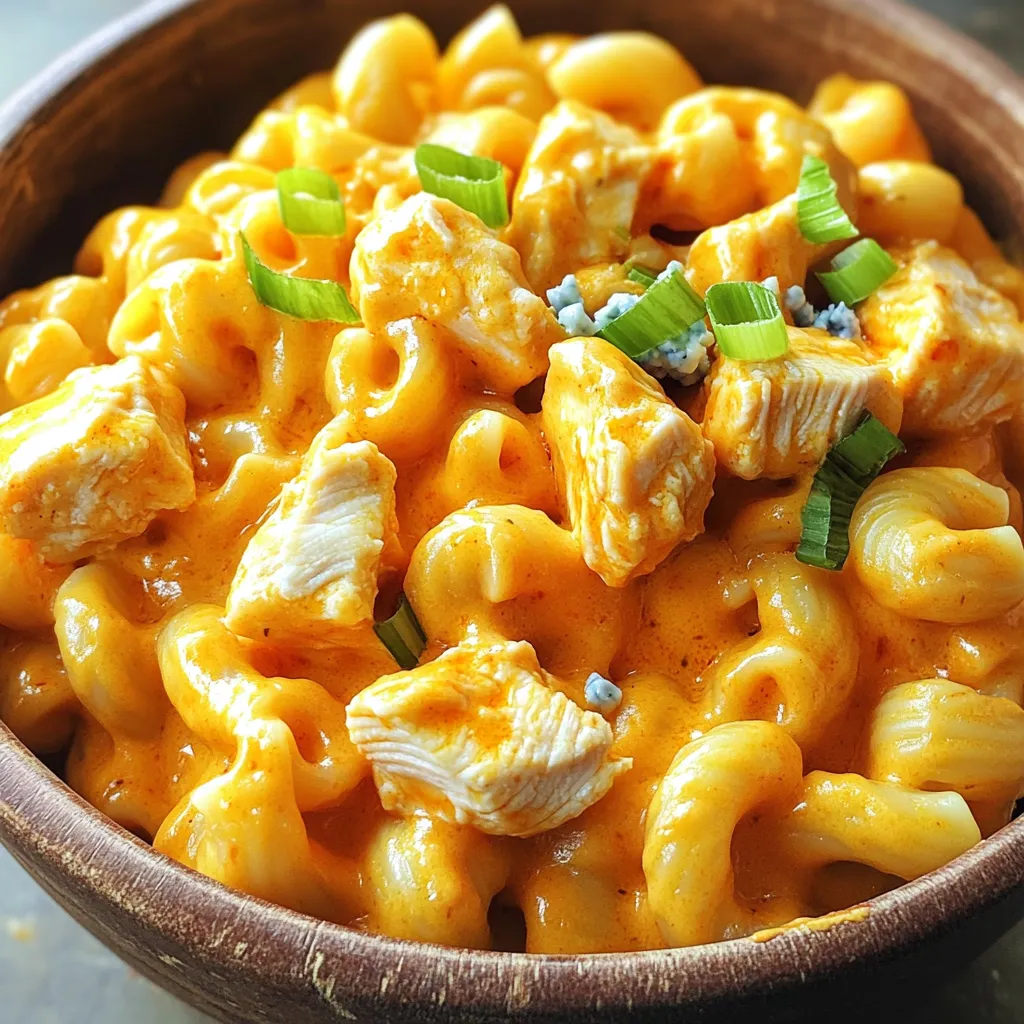
Instant Pot Buffalo Chicken Mac and Cheese Delight

Welcome to my recipe for Instant Pot Buffalo Chicken Mac and Cheese Delight! If you crave creamy, spicy goodness, you’re in for a treat. This dish combines tender chicken with rich cheese and zesty buffalo sauce, all made in one pot. It’s quick, easy, and packed with flavor. Ready to dive into a meal that will impress everyone? Let’s get cooking, so you can enjoy this delicious dish tonight!
Ingredients
List of Ingredients for Instant Pot Buffalo Chicken Mac and Cheese
To make this tasty dish, gather these ingredients:
– 1 lb boneless, skinless chicken breasts, cubed
– 1 tablespoon olive oil
– 1 cup buffalo sauce (mild or hot, based on preference)
– 1 cup chicken broth
– 1 cup whole milk
– 8 oz elbow macaroni
– 2 cups shredded sharp cheddar cheese
– 1 cup shredded mozzarella cheese
– 1 teaspoon garlic powder
– 1 teaspoon onion powder
– Salt and pepper to taste
– Fresh scallions, chopped (for garnish)
– Crumbled blue cheese (optional, for garnish)
Substitutions for Key Ingredients
You can swap ingredients if needed. For chicken, use turkey or tofu. If you want less spice, a mild sauce works great. You can also use vegetable broth instead of chicken broth. If you lack elbow macaroni, try penne or fusilli. For a creamy touch, swap whole milk for heavy cream.
Recommended Brands for Best Flavor
For best taste, I recommend these brands:
– Chicken: Bell & Evans or Perdue for quality chicken.
– Buffalo Sauce: Frank’s RedHot for a classic flavor.
– Broth: Swanson or Pacific Foods for rich chicken broth.
– Cheese: Cabot or Tillamook for sharp cheddar.
– Pasta: Barilla or Ronzoni for reliable elbow macaroni.
Using these brands enhances the overall flavor of your Instant Pot Buffalo Chicken Mac and Cheese.
Step-by-Step Instructions
Preparation Steps Overview
Start by gathering all your ingredients. You will need:
– 1 lb boneless, skinless chicken breasts, cubed
– 1 tablespoon olive oil
– 1 cup buffalo sauce
– 1 cup chicken broth
– 1 cup whole milk
– 8 oz elbow macaroni
– 2 cups shredded sharp cheddar cheese
– 1 cup shredded mozzarella cheese
– 1 teaspoon garlic powder
– 1 teaspoon onion powder
– Salt and pepper to taste
– Fresh scallions, chopped
– Crumbled blue cheese (optional)
Make sure your Instant Pot is clean and ready to use.
Detailed Cooking Instructions (Sautéing, Pressure Cooking, and Mixing)
1. Sauté the Chicken: Turn on the Instant Pot and set it to sauté mode. Add the olive oil and let it heat up. Once hot, add the cubed chicken. Season it with salt, pepper, garlic powder, and onion powder. Cook for about 5 minutes or until the chicken turns brown.
2. Add the Sauce: Pour the buffalo sauce over the chicken. Stir well to coat the chicken evenly.
3. Layer the Pasta: Add the chicken broth next. Then, sprinkle the elbow macaroni on top. Do not stir it. This helps the pasta cook evenly and not stick together.
4. Pressure Cook: Close the lid of the Instant Pot. Make sure the valve is set to sealing. Set it to cook on high pressure for 4 minutes.
5. Release Pressure: After 4 minutes, turn the valve to venting to release the pressure quickly. Be careful as hot steam will come out. Remove the lid slowly.
6. Mix Cheeses and Milk: Stir in the whole milk along with the shredded cheddar and mozzarella cheeses. Mix until everything is melted and creamy. If the mac and cheese is too thick, add a bit more milk to reach your desired consistency.
7. Final Touches: Taste your dish. Adjust the seasonings if needed.
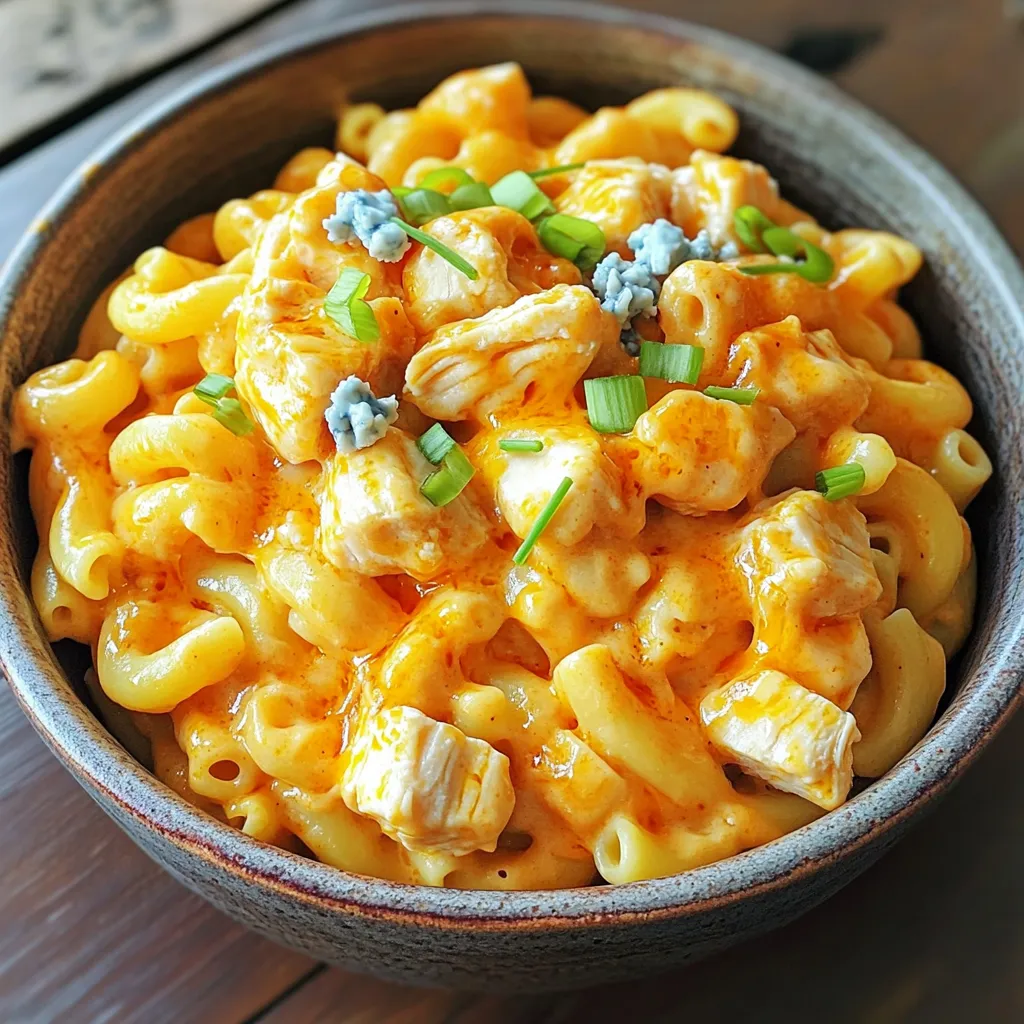
8. Serve: Dish out the mac and cheese hot. Garnish with chopped scallions and crumbled blue cheese if you like.
Tips for Ensuring Perfect Consistency
– Cheese: Always use freshly shredded cheese. Pre-shredded cheese has fillers that can make it clump.
– Milk: If the mix is too thick, add milk a little at a time until you get a creamy texture.
– Pasta Cooking: Layering the pasta without stirring helps prevent it from sticking together during cooking.
This method gives you a creamy, flavorful dish that everyone will love!
Tips & Tricks
How to Achieve the Best Texture
To get the best texture for your Buffalo chicken mac and cheese, follow these steps:
– Use freshly shredded cheese. It melts better than pre-shredded versions.
– Stir in the cheese slowly. This helps it melt evenly.
– If the mix feels too thick, add a splash of milk. This keeps it creamy.
– Use the right pasta. Elbow macaroni holds the sauce well.
Making It Spicier or Milder
Adjusting the spice level is easy:
– For a milder dish, use mild buffalo sauce.
– Add more milk for a creamier and less spicy mix.
– To make it spicier, use hot buffalo sauce or add cayenne pepper.
– You can also sprinkle red pepper flakes on top for extra heat.
Time-Saving Suggestions
Want to save time? Here are some tips:
– Prep the chicken the night before. This cuts down on cooking time.
– Use frozen pre-cooked chicken. Just add it to your pot directly.
– Measure your ingredients ahead of time. This speeds up the cooking process.
– Clean as you go. It makes the kitchen less messy after cooking.
These tips will help you create a delicious Buffalo chicken mac and cheese with ease!
Variations
Additional Ingredients to Customize the Recipe
You can add fun ingredients to make this dish your own. Here are some ideas:
– Cooked bacon: Adds a nice crunch and smoky flavor.
– Diced bell peppers: These give color and a sweet taste.
– Spinach or kale: Great for adding greens and extra nutrients.
– Ranch seasoning: Mix this in for a creamy twist.
Feel free to mix and match these extras. They can all work well in the base recipe.
Alternative Cheese Combinations
While sharp cheddar and mozzarella are classic, you can change things up with other cheeses. Here are my favorites:
– Pepper jack: This adds a spicy kick.
– Cream cheese: Makes the dish super creamy and rich.
– Gouda: Offers a smoky flavor that pairs well with buffalo sauce.
Try using one or two of these cheeses to see what you like best.
Different Pasta Options
You can swap out elbow macaroni for other pasta shapes. Here are some great options:
– Penne: Its tubes hold the cheese sauce well.
– Shells: These can trap the sauce inside, making each bite tasty.
– Fusilli: The spirals help catch the sauce and bits of chicken.
Experiment with different pasta shapes to find your favorite!
Storage Info
How to Store Leftovers Safely
To store your Buffalo Chicken Mac and Cheese, let it cool first. Use airtight containers for best results. You can keep leftovers in the fridge for up to three days. Make sure to label the containers with the date. This helps you track freshness and avoid waste.
Reheating Instructions
When you’re ready to enjoy leftovers, reheat them in the microwave. Place the mac and cheese in a microwave-safe dish. Add a splash of milk to keep it creamy. Heat in short bursts of one minute. Stir in between to ensure even heating. You can also reheat on the stove over low heat. Stir gently to avoid burning.
Freezing Guide and Tips
Freezing is a great option for longer storage. Use freezer-safe containers to prevent freezer burn. Make sure to leave some space in the container for expansion. Buffalo Chicken Mac and Cheese can stay fresh in the freezer for up to three months. When you want to eat it, thaw it overnight in the fridge. Reheat as mentioned above for the best flavor and texture.
FAQs
What can I use instead of buffalo sauce?
You can use barbecue sauce for a different flavor. Ranch dressing also works well. You can mix hot sauce with plain yogurt for a creamy twist. If you want a milder dish, try sweet chili sauce. Each option gives a unique taste to your mac and cheese.
Can this recipe be made in advance?
Yes, you can make this dish ahead of time. Prepare it as usual and let it cool. Store it in an airtight container in the fridge. When you’re ready to eat, just reheat it on the stove or in the microwave. Add a splash of milk to keep it creamy.
How long does the mac and cheese stay fresh in the fridge?
This mac and cheese stays fresh for about 3 to 5 days. Make sure it is in a sealed container to keep it from drying out. Always check for any off smells or changes before eating leftovers. Enjoy your tasty meal safely!
This blog post covered the essential ingredients and steps for making Instant Pot Buffalo Chicken Mac and Cheese. We discussed ingredient swaps and recommended brands for great flavor. You learned about cooking techniques, tips for texture, variations, and how to store your dish.
Remember, this dish is flexible, so feel free to customize it to your taste. Enjoy experimenting with flavors and textures, and I’m sure you’ll create a meal you’ll love!
![- 8 oz rice noodles - 1 cup red bell pepper, julienned - 1 cup yellow bell pepper, julienned - 1 cup cucumber, julienned - 1 cup purple cabbage, shredded - 1 cup carrots, grated - 1 cup edamame (shelled) - 1/4 cup fresh cilantro, chopped - 1/4 cup green onions, sliced For the Peanut Sauce: - 1/2 cup creamy peanut butter - 3 tablespoons soy sauce (or tamari for a gluten-free option) - 2 tablespoons lime juice - 1 tablespoon maple syrup (or honey) - 1 tablespoon sesame oil - 1 garlic clove, minced - 1 teaspoon grated fresh ginger - 1-2 tablespoons water (to thin the sauce, as needed) Each serving has about 250 calories. This salad is packed with nutrients. It offers protein and fiber from the noodles and veggies. The peanut sauce adds healthy fats and flavor. Each bite is both tasty and good for you. If you need gluten-free options, use rice noodles and tamari. For vegan alternatives, swap honey for maple syrup. You can also add tofu for extra protein. This salad can fit many diets while still being delicious. You can find the full recipe for Rainbow Thai Peanut Noodle Salad [Full Recipe]. To start, bring a large pot of water to a boil. Use enough water to let the noodles float freely. Once boiling, add 8 oz of rice noodles. Cook them for about 3 to 5 minutes, or until they are firm but tender. Keep an eye on them! After they are cooked, drain them in a colander. Rinse the noodles with cold water. This stops the cooking and keeps the noodles from sticking together. Set them aside while you prep the veggies. While the noodles cook, wash and cut the vegetables. To make it easy, julienne the red and yellow bell peppers. Use a sharp knife for clean cuts. Slice the cucumber and shred the purple cabbage. Grate the carrots too. Aim for uniform pieces so they mix well. Once cut, place all the veggies in a large mixing bowl. This keeps everything together for the next step. You can also add the edamame for extra protein. Now, let’s make the peanut sauce! In a medium bowl, mix 1/2 cup of creamy peanut butter, 3 tablespoons of soy sauce, and 2 tablespoons of lime juice. Add 1 tablespoon of maple syrup for a touch of sweetness. Next, add 1 tablespoon of sesame oil, 1 minced garlic clove, and 1 teaspoon of grated ginger. Whisk these ingredients together until smooth. If the sauce feels thick, add 1-2 tablespoons of water. This helps thin it out to your liking. Now, pour this yummy sauce over the noodles and veggies. Toss gently to coat everything evenly. The flavors will blend beautifully together. For more details, check the Full Recipe. To cook noodles al dente, bring water to a boil. Add rice noodles and cook for about 4-6 minutes. Stir often to prevent sticking. Once done, drain and rinse under cold water. This stops cooking and keeps noodles firm. For crunchy vegetables, cut them just before serving. This keeps their crispness. Use a sharp knife for even slices. Julienne the peppers and cucumber. Shred the cabbage and grate the carrots. Keep them colorful for a vibrant dish. Boost flavor with spices and condiments. A pinch of red pepper flakes gives heat. Add a splash of fish sauce for depth. If you love citrus, lime zest brightens the dish. Fresh herbs make a big difference. Cilantro adds a fresh taste. You can try mint or basil for a twist. Chop herbs finely and mix them in just before serving. Serving bowls set the stage for a great meal. Use larger bowls for family-style serving. For individual plates, choose clear glass bowls. This shows off the colorful layers. Garnishing techniques can elevate your dish. Sprinkle extra cilantro on top for a pop of green. Add chopped peanuts for crunch. Arrange salad in colorful layers for a beautiful view. A rainbow of colors always catches the eye. {{image_2}} You can make this salad heartier by adding protein. Chicken is a great choice. Just grill or sauté it, then slice it thin. Tofu is another option. It soaks up the peanut sauce well. You can also try shrimp or beans for a different flavor. Each adds a nice touch to the Rainbow Thai Peanut Noodle Salad. Switching up the peanut sauce can give your salad new life. You can try a sesame sauce for a nutty twist. Just blend sesame paste with soy sauce and lime juice. For a sweeter flavor, teriyaki sauce works well too. It brings a rich taste that pairs nicely with the fresh veggies. Using seasonal vegetables can enhance your salad's freshness. In summer, add ripe tomatoes or corn for sweetness. Fall brings squash or roasted peppers for warmth. Winter might call for hearty greens like kale. Each season offers unique flavors. Tailoring your recipe helps keep it exciting all year long. For the full recipe, check out the detailed steps to make this dish shine. To store leftovers of your Rainbow Thai Peanut Noodle Salad, put it in the fridge. Use an airtight container to keep it fresh. Glass containers work great because they don’t hold onto smells. If you use plastic, make sure it’s food-safe and BPA-free. You can freeze the salad, but it is best to freeze only the noodles and sauce. Keep the veggies separate. They don't freeze well and lose their crunch. To thaw, move the noodles and sauce to the fridge overnight. When ready to eat, heat the noodles gently and mix in fresh veggies. This keeps everything bright and tasty. In the fridge, the salad lasts about 3 to 5 days. Check for signs of spoilage before eating. If the veggies look wilted or the sauce smells off, it’s best to toss it. Freshness is key for this vibrant dish! What is the best type of noodles for this salad? The best noodles are rice noodles. They are light and soak up the sauce. You can also use soba or whole grain noodles if you prefer. Just remember to cook them until they are al dente. This keeps them from getting too mushy in the salad. Can I make the salad in advance? Yes, you can make the salad ahead of time. It tastes better after chilling for a bit. Prepare it up to a day in advance and store it in the fridge. Just keep the sauce separate if you want the noodles to stay firm. What to do if the sauce is too thick? If your sauce is too thick, add a tablespoon of water. Mix it well, and check again. You can repeat this until it reaches the right consistency. A smooth sauce coats the salad nicely. How to fix overly soggy noodles? To fix soggy noodles, rinse them in cold water. This stops the cooking process and helps firm them up. If they still seem too soft, use them in soups or stir-fries instead. What can I serve with Rainbow Thai Peanut Noodle Salad? This salad pairs well with grilled chicken or shrimp. You can also serve it with spring rolls for a light meal. Add a side of fresh fruit for a sweet touch. Can this dish be served warm? Yes, you can serve this dish warm. Just toss the salad right after mixing it. However, I recommend chilling it first to enhance the flavors. For the full recipe, check out the details provided above. This blog post covered key ingredients for Rainbow Thai Peanut Noodle Salad, including rice noodles, fresh veggies, and tasty peanut sauce. I shared nutritional info, substitutions for dietary needs, and step-by-step cooking instructions. We also explored tips to enhance texture and flavor, various protein additions, and creative presentation ideas. Overall, this salad is versatile and easy to make, perfect for any occasion. Keep it fresh, store leftovers properly, and don't hesitate to try new variations. Enjoy crafting your delicious, colorful dish!](https://dailydishly.com/wp-content/uploads/2025/07/2e038f5f-8562-408c-ae38-174aa7e62a42-768x768.webp)

![To make the sweet potato and black bean enchiladas, gather the following ingredients: - 2 medium sweet potatoes, peeled and diced - 1 can (15 oz) black beans, rinsed and drained - 1 cup corn kernels (fresh, frozen, or canned) - 1 teaspoon cumin - 1 teaspoon smoked paprika - ½ teaspoon chili powder - Salt and pepper to taste - 1 cup shredded cheddar cheese (or a vegan alternative) - 8 large tortillas (corn or flour) - 1 cup enchilada sauce (store-bought or homemade) - 2 tablespoons olive oil - Fresh cilantro and avocado slices for garnish These ingredients create a colorful and tasty meal. Sweet potatoes bring natural sweetness and nutrition. Black beans add protein and fiber, making these enchiladas hearty. Corn gives a nice crunch, while spices add depth. You can use different types of cheese to fit your taste. Also, consider adding more veggies like spinach or bell peppers for extra flavor. The enchilada sauce can be homemade or store-bought, depending on your time. Be sure to prep your ingredients before you start cooking. This makes the assembly easy and quick. For the full recipe, check out the instructions I provided earlier. Enjoy creating a dish that is both satisfying and fun to eat! To start, I cook the sweet potatoes. I peel and dice them into small cubes. Then, I boil water in a medium pot. Once boiling, I add the sweet potato cubes. I cook them for about 10 minutes, or until they are tender. After that, I drain them and mash them slightly with a fork. I like to leave some chunks for texture. Next, I flavor the sweet potato mixture. In a large bowl, I combine the mashed sweet potatoes with black beans, corn, cumin, smoked paprika, chili powder, salt, and pepper. I mix it well until everything combines. This mixture is full of flavor and nutrition. Now, I begin assembling the enchiladas. I spread ½ cup of enchilada sauce on the bottom of a 9x13 inch baking dish. This step helps keep the enchiladas from sticking. I take a tortilla and place it on a flat surface. I add about ¼ cup of the sweet potato and black bean mixture down the center. I sprinkle a little cheese on top. Then, I roll the tortilla tightly and place it seam-side down in the baking dish. I repeat this process until I use all the tortillas and filling. It's time to bake the enchiladas. I cover the dish with foil and bake them for 20 minutes. This keeps them moist while cooking. After 20 minutes, I remove the foil and bake for another 10 minutes. This last step makes the cheese bubbly and slightly golden. Once baked, I let the enchiladas cool for a few minutes. They are ready to be served. You can garnish them with fresh cilantro and avocado slices for extra flavor. For the full recipe, refer to the provided instructions. Choosing the right tortillas is key. I prefer using corn tortillas for a classic taste. They hold the filling well and get soft in the oven. If you like flour tortillas, they work too. Just warm them up first to make them more flexible. For cheese melting tips, choose a cheese that melts easily. Cheddar is a great option. You can mix it with Monterey Jack for a creamier texture. To help your cheese melt better, cover the enchiladas with foil while baking. This traps steam and keeps the cheese gooey. Preparing the filling in advance is a great time-saver. You can cook the sweet potatoes and mix them with the beans and spices the day before. Just store it in the fridge until you are ready to assemble. When it comes to storing assembled enchiladas, cover them tightly with plastic wrap or foil. You can keep them in the fridge for up to two days. If you want to freeze them, do so before baking. Just wrap them well and they can last up to three months. When you're ready to eat, bake them straight from the freezer; just add some extra time for cooking. For the full recipe, check out the Sweet Potato & Black Bean Enchiladas . {{image_2}} For a vegan twist, skip the cheese. Use a vegan cheese substitute. Nutritional yeast also adds a cheesy flavor. Instead of regular enchilada sauce, choose a vegan option or make your own. You can add more veggies, too. Try bell peppers, zucchini, or spinach for extra nutrition. These additions make the dish colorful and tasty. Want more heat? Add diced jalapeños to the filling. You can also increase the chili powder. If you prefer milder flavors, use less chili powder. Swap it for smoked paprika for a smoky taste without the heat. Try adding cumin or coriander for added depth. These spices can bring new flavors to your enchiladas. Making your own enchilada sauce is easy and fun. Combine tomatoes, onions, and spices for a fresh taste. You can also try green sauce for a zesty change. If you're short on time, store-bought sauces work well too. Just pick a brand you like. Experimenting with different sauces can really change the dish. For the full recipe and detailed instructions, check out the [Full Recipe]. To store leftover enchiladas, let them cool down first. Place them in an airtight container. This keeps them fresh for up to three days. When storing, try not to stack them. This helps avoid breaking the tortillas. You can also cover them with plastic wrap before sealing the container. To freeze enchiladas, wrap them well in foil or plastic wrap. You can also use a freezer-safe container. They will stay good for about three months. When you want to eat them, take them out and thaw overnight in the fridge. To reheat, bake them in the oven at 350°F (175°C) for about 25 minutes. You can also add a bit of sauce to keep them moist. Enjoy them like they are fresh! For the full recipe, check out Sweet Potato & Black Bean Enchiladas. Yes, you can use other beans in this recipe. Some great options include: - Pinto beans - Kidney beans - Chickpeas - White beans These beans add unique flavors and textures. Just make sure to rinse and drain them well. Each type of bean offers a different taste, so feel free to experiment! To make these enchiladas gluten-free, choose the right tortillas. You can use: - Corn tortillas - Gluten-free flour tortillas Both options work well. Make sure to check the labels for any gluten-containing ingredients. Gluten-free tortillas hold the filling nicely, giving you that perfect bite. When serving enchiladas, consider these tasty sides: - Mexican rice - Refried beans - A fresh salad - Guacamole - Salsa These sides enhance the meal and add more flavor. Enjoy your enchiladas with your favorite accompaniments for a complete dining experience. For the full recipe, check out the details above! This guide covered making tasty enchiladas with sweet potatoes, black beans, and spices. You learned how to prepare and assemble, plus tips for the best results. Keep your enchiladas fresh with proper storage or freeze them for later. Explore variations to suit your taste. Enjoy these dishes with your favorite sides. Now you’re ready to create delicious enchiladas anytime!](https://dailydishly.com/wp-content/uploads/2025/06/7d965e75-a030-40f0-bb8d-330850614dc3-768x768.webp)

![- 4 salmon fillets (6 ounces each) - 1/4 cup soy sauce (low-sodium preferred) - 1/4 cup honey - 2 tablespoons rice vinegar - 1 tablespoon grated fresh ginger - 2 cloves garlic, minced - 1 teaspoon sesame oil The heart of this dish is the salmon. I love using fresh salmon fillets for their rich flavor and texture. They cook well and stay moist. For the sauce, soy sauce adds that umami punch. Low-sodium options are great if you want to cut down on salt. Honey gives a sweet touch, balancing the salty soy. Rice vinegar adds tang and depth. Fresh ginger and garlic bring warmth and spice to the marinade. - 2 green onions, finely chopped (for garnish) - 1 tablespoon sesame seeds (for garnish) Garnishes can elevate your dish. Chopped green onions add color and a mild onion flavor. Sesame seeds give a nice crunch and nutty taste. They make the dish look beautiful too. - Cooked jasmine rice - Steamed vegetables I recommend serving the teriyaki salmon over fluffy jasmine rice. The rice soaks up the sauce perfectly. Steamed vegetables are great on the side. They add color, texture, and nutrients to your meal. This combo makes a full and balanced plate. For the complete cooking process, check the Full Recipe. To start, you need to whisk the marinade. In a medium bowl, combine: - 1/4 cup soy sauce - 1/4 cup honey - 2 tablespoons rice vinegar - 1 tablespoon grated fresh ginger - 2 cloves garlic, minced - 1 teaspoon sesame oil Whisk them until smooth. This creates a sweet and salty blend. Next, marinate the salmon. Place the salmon fillets in a shallow dish. Pour the marinade over them. Cover the dish and refrigerate for at least 30 minutes. For a stronger flavor, marinate up to 2 hours. Now, it’s time to bake. Preheat your oven to 400°F (200°C). This step is key for even cooking. Line a baking sheet with parchment paper or foil. This makes for easy cleanup. After marinating, take the salmon out. Reserve the marinade for later. Place the fillets skin-side down on the sheet. Bake the salmon for 12-15 minutes. It’s done when it flakes easily with a fork. While the salmon bakes, prepare the sauce. Pour the reserved marinade into a small saucepan. Bring it to a boil over medium heat. Let it simmer for 3-5 minutes. This thickens the sauce nicely. Be careful not to over-reduce it. Once the salmon is ready, drizzle the thickened sauce on top. Garnish with: - Chopped green onions - Sesame seeds Now, serve your teriyaki salmon over fluffy jasmine rice for a complete meal. For the full recipe, check the section above. For the best teriyaki salmon, marination is key. I recommend marinating for at least 30 minutes. If you have time, go for 2 hours. This extra time allows the flavors to soak in. Balancing the flavors is also important. The soy sauce adds saltiness, while honey brings sweetness. Adjust these to fit your taste. You can even add a splash of lime juice for a zesty kick! You can cook the salmon in the oven or on the grill. If you use the oven, preheat it to 400°F (200°C). For grilling, heat your grill to medium-high. Both methods yield tasty results. Just make sure not to overcook the salmon. Cook it until it flakes easily with a fork. This usually takes about 12 to 15 minutes in the oven. If grilling, check often to avoid dryness. When plating, keep it simple and elegant. Place the salmon on a bed of fluffy jasmine rice. Drizzle it with the thickened teriyaki sauce. Garnish with green onions and sesame seeds for a pop of color. For sides, steamed vegetables work great. Try broccoli or snap peas for a fresh crunch. This makes your meal not just tasty but also beautiful! {{image_2}} You can swap out salmon for other fish. Try using trout or tilapia. Both have great flavors and cook well. For gluten-free options, use tamari instead of soy sauce. Tamari has a similar taste and works perfectly in this recipe. You can also use coconut aminos, a great soy sauce alternative. Want to change the taste? Add spices like black pepper or red pepper flakes. These spices give the dish a nice kick. You can also add citrus juice. Lime or lemon juice brightens up the flavors. Just mix it into the marinade for a fresh twist. You can grill the salmon for a smoky flavor. Just preheat your grill and cook the salmon for about 6-8 minutes each side. If you want a caramelized finish, try broiling. Place the salmon under a broiler for 2-3 minutes after baking. This gives a nice, crisp topping. This Easy Teriyaki Salmon recipe is flexible. Feel free to mix and match these ideas! For the full recipe, check out the [Full Recipe]. To store leftovers, let the salmon cool to room temperature. Place it in an airtight container. This keeps it fresh and prevents strong smells. The shelf life in the fridge is about 3 to 4 days. If you plan to eat it later, remember to check for any signs of spoilage before enjoying. You can freeze cooked salmon for up to 3 months. Wrap each piece tightly in plastic wrap, then place it in an airtight container or freezer bag. To reheat, thaw the salmon overnight in the fridge. You can warm it in the oven at 350°F (175°C) for about 10-15 minutes. This helps keep the texture nice and flaky. Use airtight containers for storing salmon. This prevents air from getting in and keeps it fresh longer. Avoid leaving cooked salmon out at room temperature for too long. Proper storage helps retain its rich flavor and juicy texture. Enjoy your Easy Teriyaki Salmon at its best! For the full recipe, check out the [Full Recipe]. I recommend marinating teriyaki salmon for at least 30 minutes. This allows the flavors to soak in. For a stronger taste, you can marinate it for up to 2 hours. Just don’t go over two hours, or the salmon may get too salty. Yes, you can use frozen salmon! Just be sure to thaw it first. To thaw, place the salmon in the fridge overnight. If you need it faster, seal it in a bag and submerge it in cold water for about an hour. After thawing, pat it dry before marinating. I love serving teriyaki salmon with fluffy jasmine rice. It soaks up the tasty sauce well. You can also pair it with steamed vegetables like broccoli or green beans. A fresh salad with a light dressing works great, too! Check out the Full Recipe for more ideas. In this post, we explored how to make easy teriyaki salmon using simple ingredients. We discussed key items like salmon fillets, soy sauce, honey, and fresh ginger. You learned step-by-step instructions for making the marinade, baking the salmon, and adding finishing touches. We also covered tips for perfecting the dish and how to customize it. Remember, you can store leftovers for later enjoyment. With these insights, you now have all the tools to create a delicious teriyaki salmon that impresses. Enjoy your cooking journey!](https://dailydishly.com/wp-content/uploads/2025/06/d319870b-f2b5-4b65-bbf7-0456604e94a9-768x768.webp)
