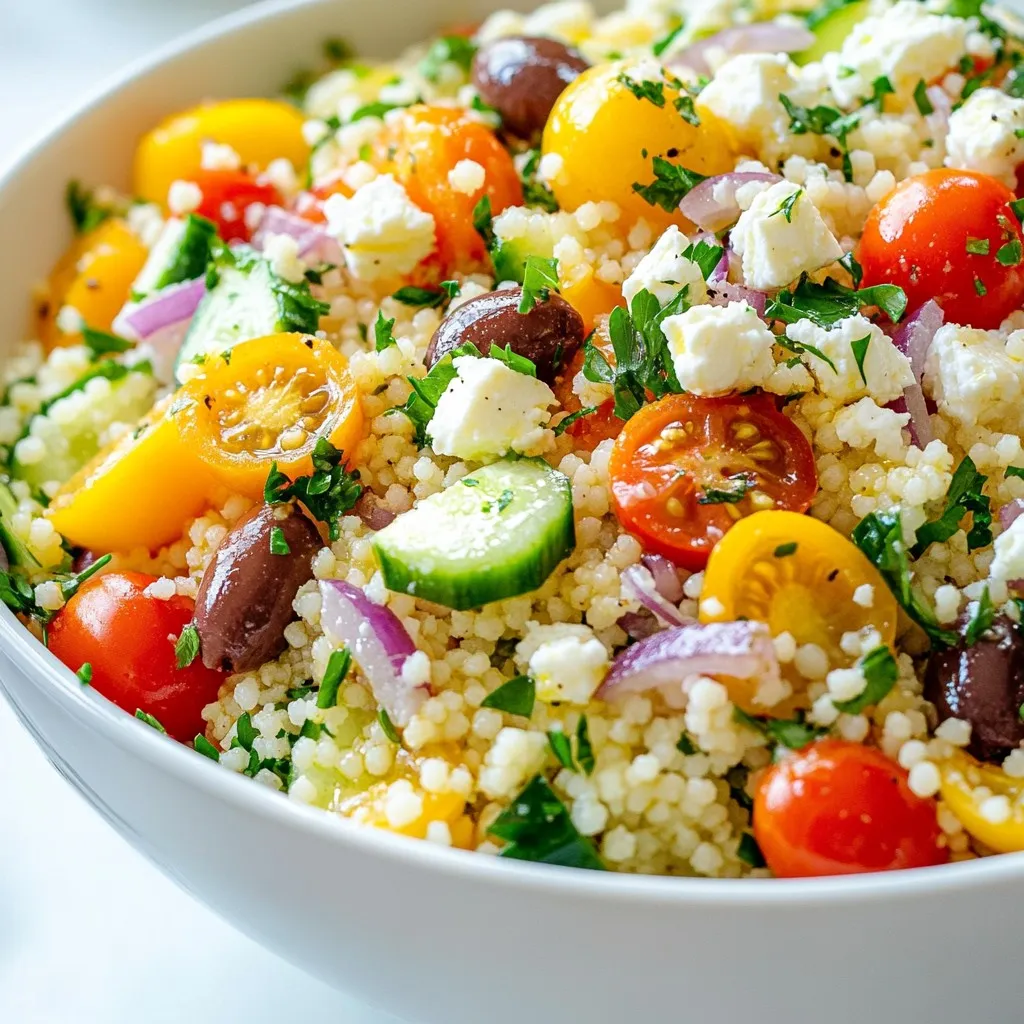
Mediterranean Couscous Salad Fresh and Flavorful Delight

- 1 cup couscous - 1 1/4 cups vegetable broth - 1 cup cherry tomatoes, halved - 1 cucumber, diced - 1/2 red onion, finely chopped - 1/2 cup Kalamata olives, pitted and sliced - 1/2 cup feta cheese, crumbled - 1/4 cup fresh parsley, chopped - 2 tablespoons lemon juice - 2 tablespoons extra virgin olive oil - Salt and pepper to taste To make this salad great, start by measuring your ingredients. Use a medium saucepan to boil the vegetable broth. Make sure to wash your vegetables well. Cut the cherry tomatoes in half for easy bites. Dice the cucumber evenly for texture. Chop the red onion finely to mix well. Pitting and slicing Kalamata olives is easy with a sharp knife. Crumble the feta cheese into small pieces for a creamy touch. Fresh parsley adds a nice pop of green and flavor. If you prefer gluten-free, try quinoa instead of couscous. For a dairy-free option, skip the feta or use a vegan cheese. You can swap Kalamata olives for green olives if you like a milder taste. If you need a low-sodium option, use low-sodium vegetable broth and adjust the salt. You can also add proteins like chickpeas or grilled chicken for a heartier dish. {{ingredient_image_1}} Start by boiling the vegetable broth in a medium saucepan. Once it bubbles, add the couscous. Stir well and then lower the heat. Cover the pan and let it sit for about five minutes. This helps the couscous absorb all the broth. When done, fluff it with a fork. Let it cool to room temperature. This step is key to keeping the couscous light and fluffy. Using the right liquid is important. Vegetable broth adds flavor. Always measure your broth precisely. Too much can make the couscous mushy. After cooking, let it sit covered. This allows it to steam and become tender. Fluffing with a fork separates the grains. Avoid stirring too much to keep it airy. Once the couscous cools, chop your veggies. Dice the cucumber, halve the cherry tomatoes, and finely chop the red onion. Mix these in a large bowl. Add the sliced olives, crumbled feta, and chopped parsley. Then, add the cooled couscous to this mix. Toss gently to combine. Be careful; you want everything mixed without breaking the feta. Finally, dress the salad with lemon juice and olive oil. Toss again to coat everything nicely. To boost flavor in your Mediterranean couscous salad, consider adding fresh herbs. Dill or mint can give a nice twist. Toasted nuts, like pine nuts or almonds, add crunch and depth. A splash of balsamic glaze can also elevate the taste. For a spicy kick, add a pinch of red pepper flakes. One common mistake is overcooking the couscous. Always follow the cooking times and check for doneness. Avoid using too much dressing; it can make the salad soggy. Also, remember to let the salad chill so flavors meld. Don't skip the lemon juice; it brightens the dish beautifully. Serve your salad in a large bowl for a colorful display. Garnish with extra feta and parsley for a pop of color. Pair it with grilled chicken or fish for a full meal. For a picnic, pack it in a sealed container; it travels well! Enjoy it cold or at room temperature for the best experience. Pro Tips Use Fresh Ingredients: Always choose the freshest vegetables and herbs for the best flavor in your salad. Customize Your Feta: Experiment with different types of feta (such as herbed or smoked) for a unique twist. Chill Before Serving: Allowing the salad to chill for at least 30 minutes enhances the flavors and makes it more refreshing. Perfectly Fluffy Couscous: Make sure to fluff the couscous with a fork after cooking to prevent it from becoming clumpy. {{image_2}} You can change the flavors of your Mediterranean couscous salad with seasonal ingredients. For spring, try adding fresh peas or asparagus. In summer, use ripe peaches or bell peppers. Fall brings great options like roasted butternut squash or Brussels sprouts. In winter, consider using hearty root vegetables like carrots or beets. Adjusting ingredients keeps your salad fresh and exciting. To make your salad more filling, add protein. Chickpeas are a great option, as they blend well with the flavors. Grilled chicken or shrimp also works nicely. If you prefer something different, try adding tuna or salmon. These proteins not only boost nutrition but also enhance the salad's taste and texture. You can easily make this salad vegan and gluten-free. For a gluten-free option, swap couscous with quinoa or rice. Both grains are delicious and healthy. To keep it vegan, replace feta cheese with a plant-based cheese or skip it altogether. You can also boost flavor with extra olives or avocado. These changes ensure everyone can enjoy this salad. To keep your Mediterranean couscous salad fresh, place it in an airtight container. This helps keep moisture in and prevents drying out. Make sure to seal the lid tightly after each use. If you want to keep it extra fresh, store it in the fridge. You can store the salad in the fridge for up to three days. After that, the veggies may become soggy. If you notice any water pooling at the bottom of the container, it's best to toss it out. Always check for freshness before eating. While this salad tastes best cold, you can warm it up if you prefer. To reheat, place the salad in a microwave-safe dish. Heat it on low for about 30 seconds. Stir it gently and check the temperature. You want it warm, not hot. If you prefer, you can serve it at room temperature as well. Yes, you can prepare this salad ahead of time. Make it a few hours before serving. This allows the flavors to mix well. Just chill it in the fridge. The longer it sits, the tastier it becomes. This salad is packed with healthy ingredients. Couscous is a good source of carbs. Cherry tomatoes are full of vitamins. Cucumbers add hydration and crunch. Kalamata olives provide healthy fats. Feta cheese adds protein and flavor. Fresh parsley boosts vitamins too. Overall, it’s a nutritious choice. To make the salad more filling, add protein. Grilled chicken, chickpeas, or beans work well. You can also add nuts or seeds for crunch. Another option is to mix in quinoa or barley. These changes will help keep you satisfied longer. Yes, you can use other grains. Quinoa is a great substitute. It is gluten-free and packed with protein. You can also try bulgur wheat or farro. Each grain gives a different taste and texture. Just adjust cooking times as needed. This article covered how to create a tasty Mediterranean Couscous Salad. We explored the right ingredients, including substitutions for different diets. I shared detailed steps and key techniques to ensure perfect couscous. We talked about tips for flavor and common mistakes to avoid. Finally, I highlighted storing leftovers and answered common questions. Use these insights to enjoy your salad. You have what it takes to make it delicious and satisfying for everyone. Happy cooking!

WANT TO SAVE THIS RECIPE?

Are you ready to dive into a bowl of vibrant flavors? My Mediterranean Couscous Salad is a fresh and delightful dish that’s easy to make! Packed with colorful veggies and zesty herbs, it’s perfect for any meal. Whether you want a light lunch or a side for dinner, this salad fits the bill. Let’s get started with simple ingredients and step-by-step tips to make this delicious recipe your new favorite.

Why I Love This Recipe

  1. Fresh and Flavorful: This Mediterranean Couscous Salad is bursting with fresh ingredients that provide a vibrant flavor profile, making each bite a delightful experience.
  2. Quick and Easy: With minimal prep time and simple instructions, this recipe is perfect for a quick lunch or a last-minute dinner side dish.
  3. Versatile and Customizable: You can easily swap in your favorite vegetables or add proteins like chicken or chickpeas to make it your own!
  4. Perfect for Meal Prep: This salad keeps well in the fridge, making it an ideal choice for meal prep, ensuring you have a healthy option ready to go throughout the week.

Ingredients

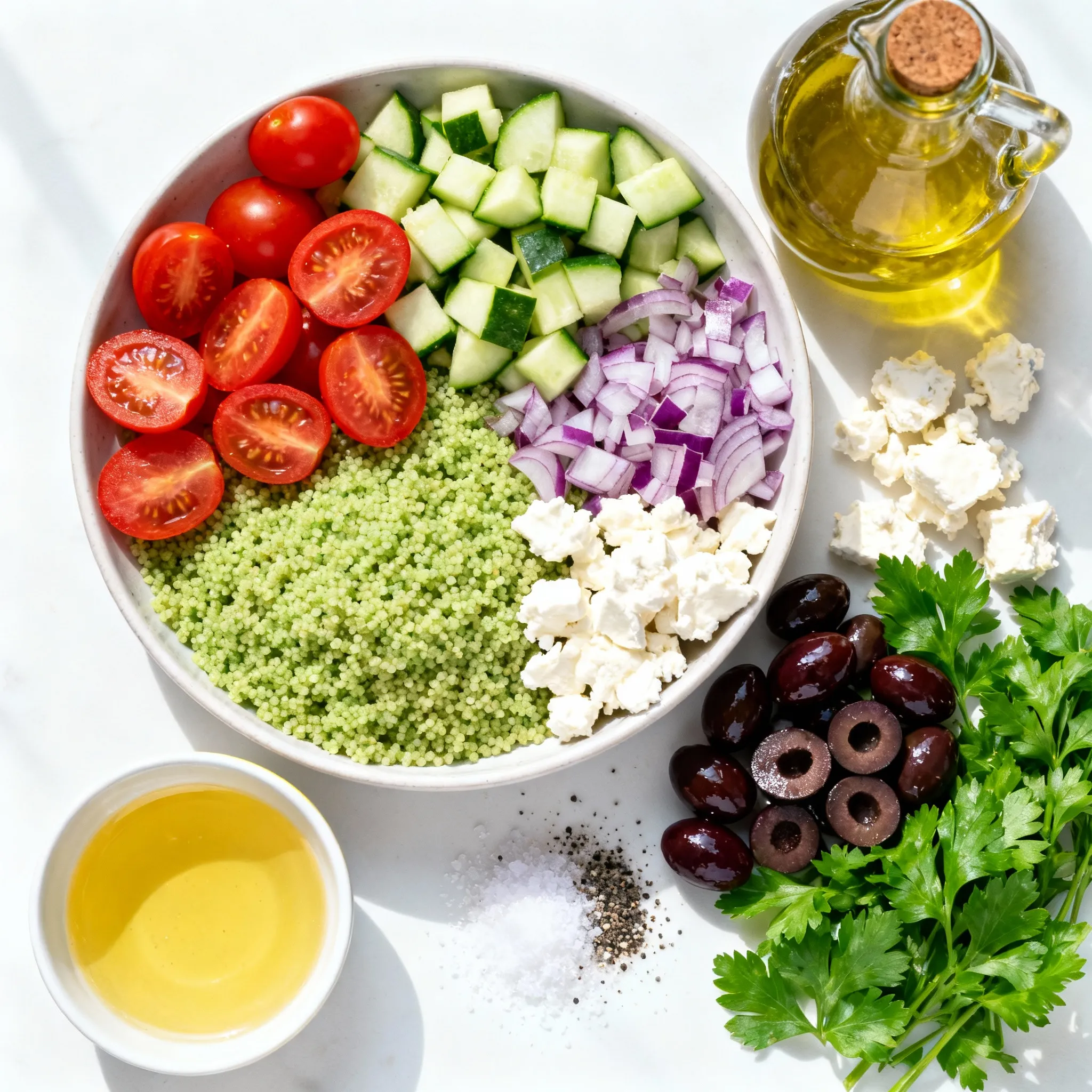
List of Ingredients Needed

– 1 cup couscous

– 1 1/4 cups vegetable broth

– 1 cup cherry tomatoes, halved

– 1 cucumber, diced

– 1/2 red onion, finely chopped

– 1/2 cup Kalamata olives, pitted and sliced

– 1/2 cup feta cheese, crumbled

– 1/4 cup fresh parsley, chopped

– 2 tablespoons lemon juice

– 2 tablespoons extra virgin olive oil

– Salt and pepper to taste

Preparation Tips for Ingredients

To make this salad great, start by measuring your ingredients. Use a medium saucepan to boil the vegetable broth. Make sure to wash your vegetables well. Cut the cherry tomatoes in half for easy bites. Dice the cucumber evenly for texture. Chop the red onion finely to mix well. Pitting and slicing Kalamata olives is easy with a sharp knife. Crumble the feta cheese into small pieces for a creamy touch. Fresh parsley adds a nice pop of green and flavor.

Substitutions for Dietary Preferences

If you prefer gluten-free, try quinoa instead of couscous. For a dairy-free option, skip the feta or use a vegan cheese. You can swap Kalamata olives for green olives if you like a milder taste. If you need a low-sodium option, use low-sodium vegetable broth and adjust the salt. You can also add proteins like chickpeas or grilled chicken for a heartier dish.
Step-by-Step Instructions

Detailed Cooking Process

Start by boiling the vegetable broth in a medium saucepan. Once it bubbles, add the couscous. Stir well and then lower the heat. Cover the pan and let it sit for about five minutes. This helps the couscous absorb all the broth. When done, fluff it with a fork. Let it cool to room temperature. This step is key to keeping the couscous light and fluffy.

Key Techniques for Perfect Couscous

Using the right liquid is important. Vegetable broth adds flavor. Always measure your broth precisely. Too much can make the couscous mushy. After cooking, let it sit covered. This allows it to steam and become tender. Fluffing with a fork separates the grains. Avoid stirring too much to keep it airy.

Cooling and Combining Ingredients

Once the couscous cools, chop your veggies. Dice the cucumber, halve the cherry tomatoes, and finely chop the red onion. Mix these in a large bowl. Add the sliced olives, crumbled feta, and chopped parsley. Then, add the cooled couscous to this mix. Toss gently to combine. Be careful; you want everything mixed without breaking the feta. Finally, dress the salad with lemon juice and olive oil. Toss again to coat everything nicely.

Tips & Tricks

How to Enhance Flavor

To boost flavor in your Mediterranean couscous salad, consider adding fresh herbs. Dill or mint can give a nice twist. Toasted nuts, like pine nuts or almonds, add crunch and depth. A splash of balsamic glaze can also elevate the taste. For a spicy kick, add a pinch of red pepper flakes.

Common Mistakes to Avoid

One common mistake is overcooking the couscous. Always follow the cooking times and check for doneness. Avoid using too much dressing; it can make the salad soggy. Also, remember to let the salad chill so flavors meld. Don’t skip the lemon juice; it brightens the dish beautifully.

Best Serving Suggestions

Serve your salad in a large bowl for a colorful display. Garnish with extra feta and parsley for a pop of color. Pair it with grilled chicken or fish for a full meal. For a picnic, pack it in a sealed container; it travels well! Enjoy it cold or at room temperature for the best experience.

Pro Tips

  1. Use Fresh Ingredients: Always choose the freshest vegetables and herbs for the best flavor in your salad.
  2. Customize Your Feta: Experiment with different types of feta (such as herbed or smoked) for a unique twist.
  3. Chill Before Serving: Allowing the salad to chill for at least 30 minutes enhances the flavors and makes it more refreshing.
  4. Perfectly Fluffy Couscous: Make sure to fluff the couscous with a fork after cooking to prevent it from becoming clumpy.

Variations

Seasonal Ingredient Swaps

You can change the flavors of your Mediterranean couscous salad with seasonal ingredients. For spring, try adding fresh peas or asparagus. In summer, use ripe peaches or bell peppers. Fall brings great options like roasted butternut squash or Brussels sprouts. In winter, consider using hearty root vegetables like carrots or beets. Adjusting ingredients keeps your salad fresh and exciting.

Protein Additions for a Heartier Salad

To make your salad more filling, add protein. Chickpeas are a great option, as they blend well with the flavors. Grilled chicken or shrimp also works nicely. If you prefer something different, try adding tuna or salmon. These proteins not only boost nutrition but also enhance the salad’s taste and texture.

Vegan and Gluten-Free Alternatives

You can easily make this salad vegan and gluten-free. For a gluten-free option, swap couscous with quinoa or rice. Both grains are delicious and healthy. To keep it vegan, replace feta cheese with a plant-based cheese or skip it altogether. You can also boost flavor with extra olives or avocado. These changes ensure everyone can enjoy this salad.

Storage Info

How to Store Leftovers Properly

To keep your Mediterranean couscous salad fresh, place it in an airtight container. This helps keep moisture in and prevents drying out. Make sure to seal the lid tightly after each use. If you want to keep it extra fresh, store it in the fridge.

Recommended Storage Duration

You can store the salad in the fridge for up to three days. After that, the veggies may become soggy. If you notice any water pooling at the bottom of the container, it’s best to toss it out. Always check for freshness before eating.

Reheating Instructions

While this salad tastes best cold, you can warm it up if you prefer. To reheat, place the salad in a microwave-safe dish. Heat it on low for about 30 seconds. Stir it gently and check the temperature. You want it warm, not hot. If you prefer, you can serve it at room temperature as well.

FAQs

Can I prepare Mediterranean Couscous Salad in advance?

Yes, you can prepare this salad ahead of time. Make it a few hours before serving. This allows the flavors to mix well. Just chill it in the fridge. The longer it sits, the tastier it becomes.

What are the nutritional benefits of this salad?

This salad is packed with healthy ingredients. Couscous is a good source of carbs. Cherry tomatoes are full of vitamins. Cucumbers add hydration and crunch. Kalamata olives provide healthy fats. Feta cheese adds protein and flavor. Fresh parsley boosts vitamins too. Overall, it’s a nutritious choice.

How do I make it more filling?

To make the salad more filling, add protein. Grilled chicken, chickpeas, or beans work well. You can also add nuts or seeds for crunch. Another option is to mix in quinoa or barley. These changes will help keep you satisfied longer.

Can I use other grains instead of couscous?

Yes, you can use other grains. Quinoa is a great substitute. It is gluten-free and packed with protein. You can also try bulgur wheat or farro. Each grain gives a different taste and texture. Just adjust cooking times as needed.

This article covered how to create a tasty Mediterranean Couscous Salad. We explored the right ingredients, including substitutions for different diets. I shared detailed steps and key techniques to ensure perfect couscous. We talked about tips for flavor and common mistakes to avoid.

Finally, I highlighted storing leftovers and answered common questions. Use these insights to enjoy your salad. You have what it takes to make it delicious and satisfying for everyone. Happy cookin
- 1 cup couscous - 1 1/4 cups vegetable broth - 1 cup cherry tomatoes, halved - 1 cucumber, diced - 1/2 red onion, finely chopped - 1/2 cup Kalamata olives, pitted and sliced - 1/2 cup feta cheese, crumbled - 1/4 cup fresh parsley, chopped - 2 tablespoons lemon juice - 2 tablespoons extra virgin olive oil - Salt and pepper to taste To make this salad great, start by measuring your ingredients. Use a medium saucepan to boil the vegetable broth. Make sure to wash your vegetables well. Cut the cherry tomatoes in half for easy bites. Dice the cucumber evenly for texture. Chop the red onion finely to mix well. Pitting and slicing Kalamata olives is easy with a sharp knife. Crumble the feta cheese into small pieces for a creamy touch. Fresh parsley adds a nice pop of green and flavor. If you prefer gluten-free, try quinoa instead of couscous. For a dairy-free option, skip the feta or use a vegan cheese. You can swap Kalamata olives for green olives if you like a milder taste. If you need a low-sodium option, use low-sodium vegetable broth and adjust the salt. You can also add proteins like chickpeas or grilled chicken for a heartier dish. {{ingredient_image_1}} Start by boiling the vegetable broth in a medium saucepan. Once it bubbles, add the couscous. Stir well and then lower the heat. Cover the pan and let it sit for about five minutes. This helps the couscous absorb all the broth. When done, fluff it with a fork. Let it cool to room temperature. This step is key to keeping the couscous light and fluffy. Using the right liquid is important. Vegetable broth adds flavor. Always measure your broth precisely. Too much can make the couscous mushy. After cooking, let it sit covered. This allows it to steam and become tender. Fluffing with a fork separates the grains. Avoid stirring too much to keep it airy. Once the couscous cools, chop your veggies. Dice the cucumber, halve the cherry tomatoes, and finely chop the red onion. Mix these in a large bowl. Add the sliced olives, crumbled feta, and chopped parsley. Then, add the cooled couscous to this mix. Toss gently to combine. Be careful; you want everything mixed without breaking the feta. Finally, dress the salad with lemon juice and olive oil. Toss again to coat everything nicely. To boost flavor in your Mediterranean couscous salad, consider adding fresh herbs. Dill or mint can give a nice twist. Toasted nuts, like pine nuts or almonds, add crunch and depth. A splash of balsamic glaze can also elevate the taste. For a spicy kick, add a pinch of red pepper flakes. One common mistake is overcooking the couscous. Always follow the cooking times and check for doneness. Avoid using too much dressing; it can make the salad soggy. Also, remember to let the salad chill so flavors meld. Don't skip the lemon juice; it brightens the dish beautifully. Serve your salad in a large bowl for a colorful display. Garnish with extra feta and parsley for a pop of color. Pair it with grilled chicken or fish for a full meal. For a picnic, pack it in a sealed container; it travels well! Enjoy it cold or at room temperature for the best experience. Pro Tips Use Fresh Ingredients: Always choose the freshest vegetables and herbs for the best flavor in your salad. Customize Your Feta: Experiment with different types of feta (such as herbed or smoked) for a unique twist. Chill Before Serving: Allowing the salad to chill for at least 30 minutes enhances the flavors and makes it more refreshing. Perfectly Fluffy Couscous: Make sure to fluff the couscous with a fork after cooking to prevent it from becoming clumpy. {{image_2}} You can change the flavors of your Mediterranean couscous salad with seasonal ingredients. For spring, try adding fresh peas or asparagus. In summer, use ripe peaches or bell peppers. Fall brings great options like roasted butternut squash or Brussels sprouts. In winter, consider using hearty root vegetables like carrots or beets. Adjusting ingredients keeps your salad fresh and exciting. To make your salad more filling, add protein. Chickpeas are a great option, as they blend well with the flavors. Grilled chicken or shrimp also works nicely. If you prefer something different, try adding tuna or salmon. These proteins not only boost nutrition but also enhance the salad's taste and texture. You can easily make this salad vegan and gluten-free. For a gluten-free option, swap couscous with quinoa or rice. Both grains are delicious and healthy. To keep it vegan, replace feta cheese with a plant-based cheese or skip it altogether. You can also boost flavor with extra olives or avocado. These changes ensure everyone can enjoy this salad. To keep your Mediterranean couscous salad fresh, place it in an airtight container. This helps keep moisture in and prevents drying out. Make sure to seal the lid tightly after each use. If you want to keep it extra fresh, store it in the fridge. You can store the salad in the fridge for up to three days. After that, the veggies may become soggy. If you notice any water pooling at the bottom of the container, it's best to toss it out. Always check for freshness before eating. While this salad tastes best cold, you can warm it up if you prefer. To reheat, place the salad in a microwave-safe dish. Heat it on low for about 30 seconds. Stir it gently and check the temperature. You want it warm, not hot. If you prefer, you can serve it at room temperature as well. Yes, you can prepare this salad ahead of time. Make it a few hours before serving. This allows the flavors to mix well. Just chill it in the fridge. The longer it sits, the tastier it becomes. This salad is packed with healthy ingredients. Couscous is a good source of carbs. Cherry tomatoes are full of vitamins. Cucumbers add hydration and crunch. Kalamata olives provide healthy fats. Feta cheese adds protein and flavor. Fresh parsley boosts vitamins too. Overall, it’s a nutritious choice. To make the salad more filling, add protein. Grilled chicken, chickpeas, or beans work well. You can also add nuts or seeds for crunch. Another option is to mix in quinoa or barley. These changes will help keep you satisfied longer. Yes, you can use other grains. Quinoa is a great substitute. It is gluten-free and packed with protein. You can also try bulgur wheat or farro. Each grain gives a different taste and texture. Just adjust cooking times as needed. This article covered how to create a tasty Mediterranean Couscous Salad. We explored the right ingredients, including substitutions for different diets. I shared detailed steps and key techniques to ensure perfect couscous. We talked about tips for flavor and common mistakes to avoid. Finally, I highlighted storing leftovers and answered common questions. Use these insights to enjoy your salad. You have what it takes to make it delicious and satisfying for everyone. Happy cooking!

Mediterranean Couscous Salad

A refreshing and vibrant salad featuring couscous, fresh vegetables, and a tangy dressing.
Prep Time 15 minutes
Cook Time 5 minutes
Total Time 45 minutes
Course Salad
Cuisine Mediterranean
Servings 4
Calories 250 kcal

Ingredients
  

  • 1 cup couscous
  • 1.25 cups vegetable broth
  • 1 cup cherry tomatoes, halved
  • 1 whole cucumber, diced
  • 0.5 whole red onion, finely chopped
  • 0.5 cup Kalamata olives, pitted and sliced
  • 0.5 cup feta cheese, crumbled
  • 0.25 cup fresh parsley, chopped
  • 2 tablespoons lemon juice
  • 2 tablespoons extra virgin olive oil
  • to taste salt
  • to taste pepper

Instructions
 

  • In a medium saucepan, bring the vegetable broth to a boil.
  • Once boiling, stir in the couscous, reduce heat to low, cover, and let it sit for about 5 minutes or until the liquid is absorbed.
  • Fluff the couscous with a fork and allow it to cool to room temperature.
  • In a large bowl, combine the halved cherry tomatoes, diced cucumber, chopped red onion, sliced olives, crumbled feta cheese, and chopped parsley.
  • Add the cooled couscous to the vegetable mixture and toss gently to combine.
  • In a small bowl, whisk together the lemon juice, olive oil, salt, and pepper until emulsified.
  • Pour the dressing over the couscous salad and toss gently until everything is evenly coated.
  • Taste and adjust seasoning with more salt, pepper, or lemon juice if desired.
  • Chill in the refrigerator for at least 30 minutes before serving to allow flavors to meld.

Notes

Serve in a large salad bowl, garnished with extra crumbles of feta and a sprinkle of fresh parsley on top for a vibrant appearance.
Keyword couscous, Mediterranean, salad, vegetarian

WANT TO SAVE THIS RECIPE?

Related Posts