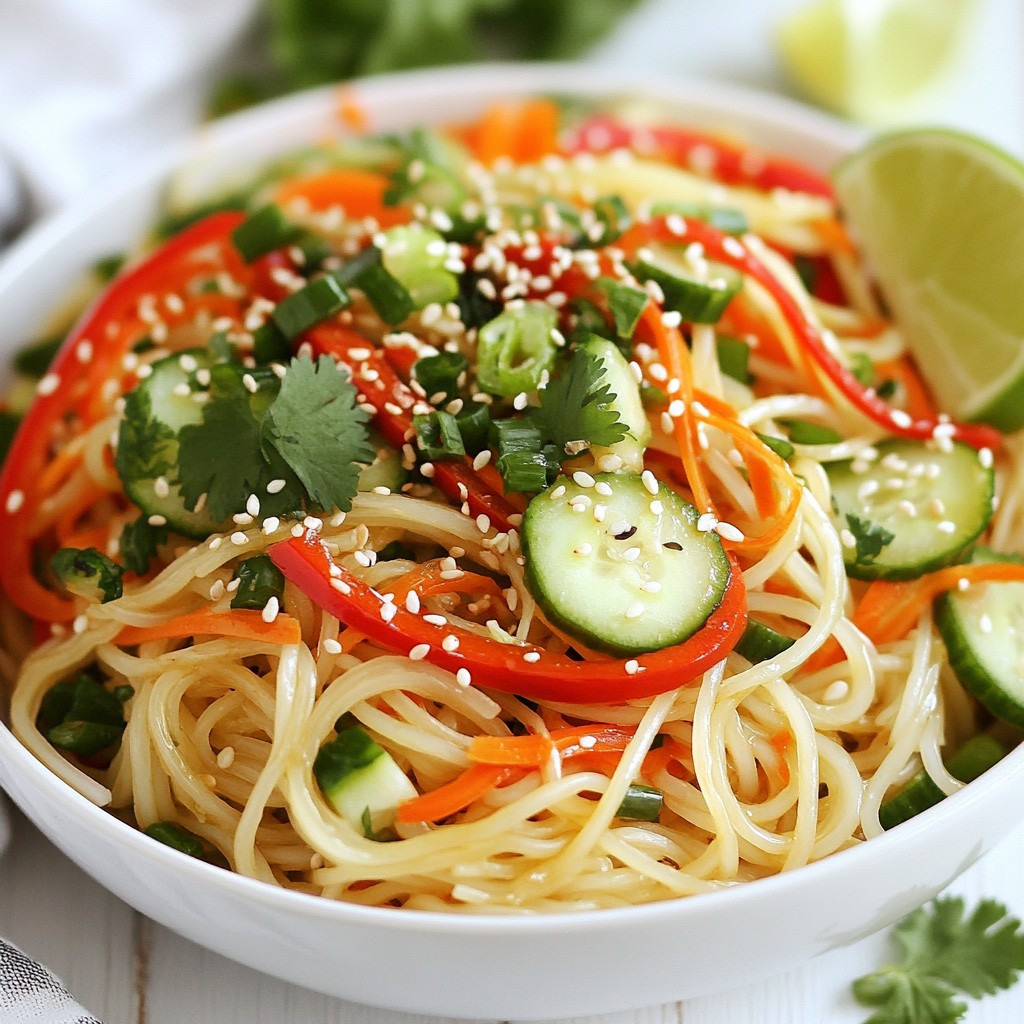
Looking for a refreshing dish that bursts with flavor? This Sesame Ginger Noodle Salad is your answer! Packed with colorful veggies and enhanced by a zesty dressing, it's a delightful meal for any occasion. Whether you serve it as a main or a side, the crunchy textures and bright flavors will impress your taste buds. Ready to dive into this tasty recipe? Let’s get started!
Why I Love This Recipe
- Fresh and Vibrant: This salad is loaded with colorful vegetables that not only look great but also provide a burst of fresh flavors in every bite.
- Quick and Easy: With a prep time of just 15 minutes, this recipe is perfect for a fast lunch or a light dinner without sacrificing taste.
- Customizable: You can easily adjust the ingredients based on what you have on hand or your dietary preferences, making it a versatile dish.
- Flavorful Dressing: The sesame ginger dressing adds a deliciously tangy and nutty flavor that ties all the ingredients together beautifully.
Ingredients
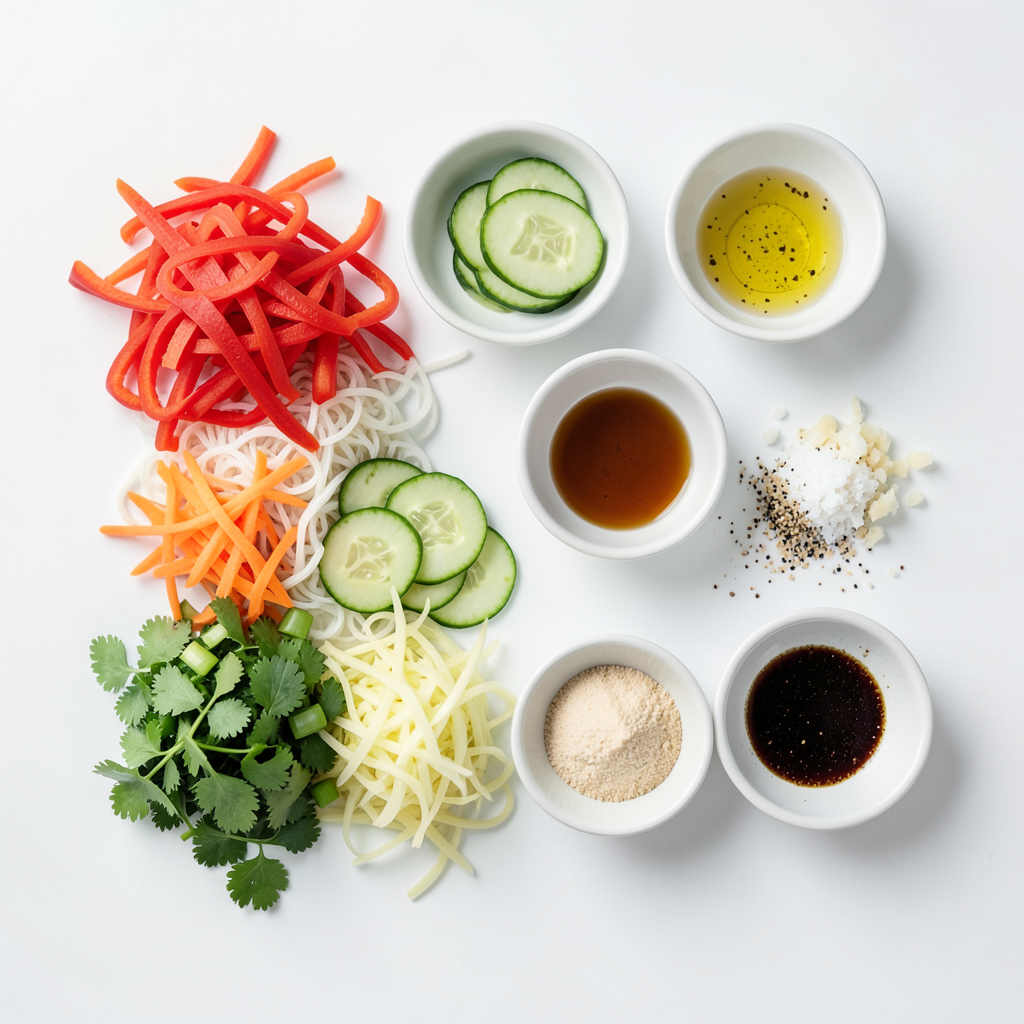
Main Ingredients
- 8 oz. rice noodles
- 1 red bell pepper, julienned
- 1 cucumber, thinly sliced
- 2 carrots, grated
- 4 green onions, chopped
- ¼ cup fresh cilantro, chopped
For this salad, rice noodles give a light base. They soak up all the flavors. Fresh veggies add crunch and color. The red bell pepper and cucumber provide a sweet and refreshing bite. Carrots add a nice texture, while green onions and cilantro bring in brightness.
Dressing Ingredients
- 1 tablespoon sesame oil
- 2 tablespoons soy sauce or tamari
- 1 tablespoon rice vinegar
- 1 tablespoon honey or agave syrup
- 1 tablespoon freshly grated ginger
- 1 teaspoon garlic powder
The dressing ties everything together. Sesame oil adds a nutty taste. Soy sauce or tamari gives it a savory depth. Rice vinegar adds tang, while honey or agave syrup balances it with sweetness. Fresh ginger packs a punch, and garlic powder adds warmth.
Optional Toppings
- 2 tablespoons sesame seeds
- Salt and pepper to taste
Toppings are optional but add extra flavor. Sesame seeds give a nice crunch. Salt and pepper enhance the overall taste. You can adjust these to fit your palate.
Step-by-Step Instructions
Cooking the Rice Noodles
To cook rice noodles, follow the package instructions closely. Typically, you bring water to a boil. Then, add the noodles and cook until they are soft, usually about 4 to 5 minutes. After cooking, drain the noodles in a colander. Rinse them under cold water to stop the cooking process. This step helps keep the noodles firm and prevents them from sticking together.
Preparing the Vegetables
To julienne the red bell pepper, first cut it in half and remove the seeds. Place the half skin side down on the board. Slice it into thin strips. For the cucumber, slice it into thin rounds. Grate the carrots using a box grater or a food processor. These fresh vegetables add color and crunch to your salad.
Making the Dressing
In a small bowl, combine the dressing ingredients. Whisk together sesame oil, soy sauce, rice vinegar, honey or agave syrup, freshly grated ginger, and garlic powder. Mix until all the ingredients are well blended. This dressing packs a lot of flavor and ties the salad together.
Assembling the Salad
In a large bowl, add the cooled rice noodles and the vegetable mix. Pour the dressing over the top. Toss everything together gently until the noodles and veggies are well coated. This step ensures each bite bursts with flavor. Finally, sprinkle sesame seeds on top and season with salt and pepper. Toss again to mix.
Recommended Resting Time
Let the salad sit for about 10 to 15 minutes. This resting time allows the flavors to meld together. It enhances the taste and makes each bite even more delicious. Serve the salad fresh for the best experience. This dish is perfect for sharing or enjoying on your own!
Tips & Tricks
Perfecting the Salad Texture
To keep your noodles from getting soggy, rinse them well. After cooking, run them under cold water. This stops the cooking and cools them down fast. You can also toss them in a bit of sesame oil. This adds flavor and keeps them separate.
For crunchy veggies, cut them fresh. Slice your red bell pepper, cucumber, and carrots just before mixing. Freshness keeps them crisp. If you want extra crunch, consider adding radishes or snap peas. They add a nice bite.
Flavor Enhancements
To amp up the taste, add fresh herbs like mint or basil. They bring a new layer of flavor. You might also try a pinch of red pepper flakes for heat.
If the salad tastes too sweet, balance it with more rice vinegar. If it’s too tangy, a bit more honey can help. Always taste as you go. Adjust until it’s just right for you.
Presentation Ideas
Serve your salad in a big bowl for sharing or on individual plates. This makes it look special. For garnish, sprinkle extra sesame seeds on top. A few sprigs of cilantro add color.
A lime wedge on the side adds a fresh touch. Squeeze it on right before eating for a zesty burst. This adds both color and flavor, making your salad even more appealing.
Pro Tips
- Fresh Ingredients: Use the freshest vegetables you can find for the best flavor and texture in your salad.
- Chill Before Serving: Let the salad chill in the refrigerator for at least 30 minutes before serving to enhance the flavors.
- Protein Boost: Consider adding grilled chicken, tofu, or shrimp for a more filling meal.
- Customizable Dressing: Adjust the sweetness or acidity of the dressing by modifying the honey/agave and rice vinegar to suit your taste.
Variations
Protein Additions
You can make your Sesame Ginger Noodle Salad even heartier by adding protein. Here are some great options:
- Chicken: Grilled or shredded chicken adds a nice flavor. Cook the chicken before adding it to the salad.
- Tofu: For a vegetarian option, use firm tofu. Cube it and give it a quick sauté for extra taste.
- Shrimp: Cooked shrimp adds a lovely seafood twist. Just toss it in after cooking.
Alternative Ingredients
If you want to switch things up, consider these alternatives:
- Substitutes for Rice Noodles: You can use whole wheat noodles or even zucchini noodles. Both options work well with the dressing.
- Vegetable Swaps: Try using bell peppers, radishes, or snap peas. Each gives a different crunch and taste.
- Gluten-Free Options: Use rice noodles like the recipe suggests, and swap soy sauce with tamari. This keeps the dish gluten-free.
Different Flavor Profiles
Want to spice things up? Here are some flavor ideas:
- Asian-Inspired Variations: Add sesame seeds or crushed peanuts for a nutty touch. You can also mix in fresh herbs like basil or mint.
- Adding Heat: If you like spice, add chili flakes or sriracha to the dressing. This gives the salad a nice kick. Just start with a little and taste as you go.
These variations allow you to customize the salad to your taste. Enjoy experimenting!
Storage Info
Short-Term Storage
To keep your leftover Sesame Ginger Noodle Salad fresh, store it in an airtight container. This helps lock in flavors and keeps it crunchy. Place the salad in the fridge right away. The salad should stay good for up to three days.
For the best quality, try to keep the vegetables as fresh as possible. You can do this by placing paper towels in the container. The towels absorb extra moisture and prevent sogginess.
Long-Term Storage Options
If you want to save some salad for later, you can freeze noodles and vegetables. Cooked rice noodles freeze well. Just place them in a freezer bag, squeeze out air, and seal. They can last up to three months in the freezer.
When it comes to the veggies, you can also freeze them, but they may lose some crunch. To avoid this, freeze them raw. For the dressing, keep it separate in a small jar. This way, it won't make the salad soggy when you thaw it.
Reheating Suggestions
Reheating the salad is easy, but you want to keep the texture nice. The best method is to use a skillet on low heat. Add a splash of water to help steam the noodles. Stir gently and heat until warm.
If you prefer, you can microwave the salad, but do it in short bursts. Heat for 20 seconds, then check. This way, you can avoid overcooking it. Enjoy your fresh and flavorful Sesame Ginger Noodle Salad!
FAQs
How do I make this salad gluten-free?
To make this salad gluten-free, simply swap soy sauce with tamari. Tamari is a great choice because it has a rich flavor and is naturally gluten-free. Most brands offer a tamari option, so check the label. Doing this keeps the taste while making it safe for those avoiding gluten.
Can I prepare this salad in advance?
Yes, you can. To make this salad ahead of time, prepare all the veggies and noodles. Store them in separate containers in the fridge. Mix them with the dressing just before serving. This keeps the noodles and veggies crisp. You can also prepare the dressing a day early. Just store it in a jar in the fridge.
What can I serve with Sesame Ginger Noodle Salad?
This salad pairs well with many dishes. You can serve it with grilled chicken, shrimp, or tofu for protein. It also goes great with dumplings or spring rolls. For a complete meal, consider adding a light soup like miso or a fresh fruit salad on the side.
How long does the salad last in the fridge?
Your salad will stay fresh in the fridge for about three days. Make sure to store it in an airtight container. Check for any signs of wilting or unusual smells before eating. If the veggies start to lose their crunch, it’s time to toss them out.
This blog post guides you in making a tasty Sesame Ginger Noodle Salad. We covered ingredients like rice noodles, fresh veggies, and a simple dressing. You learned how to cook noodles, chop vegetables, and mix the dressing. We also shared tips to perfect texture and ideas for adding protein. Finally, we discussed storage and serving options.
With these details, you can enjoy a delicious, healthy meal any time. Happy cooking!