
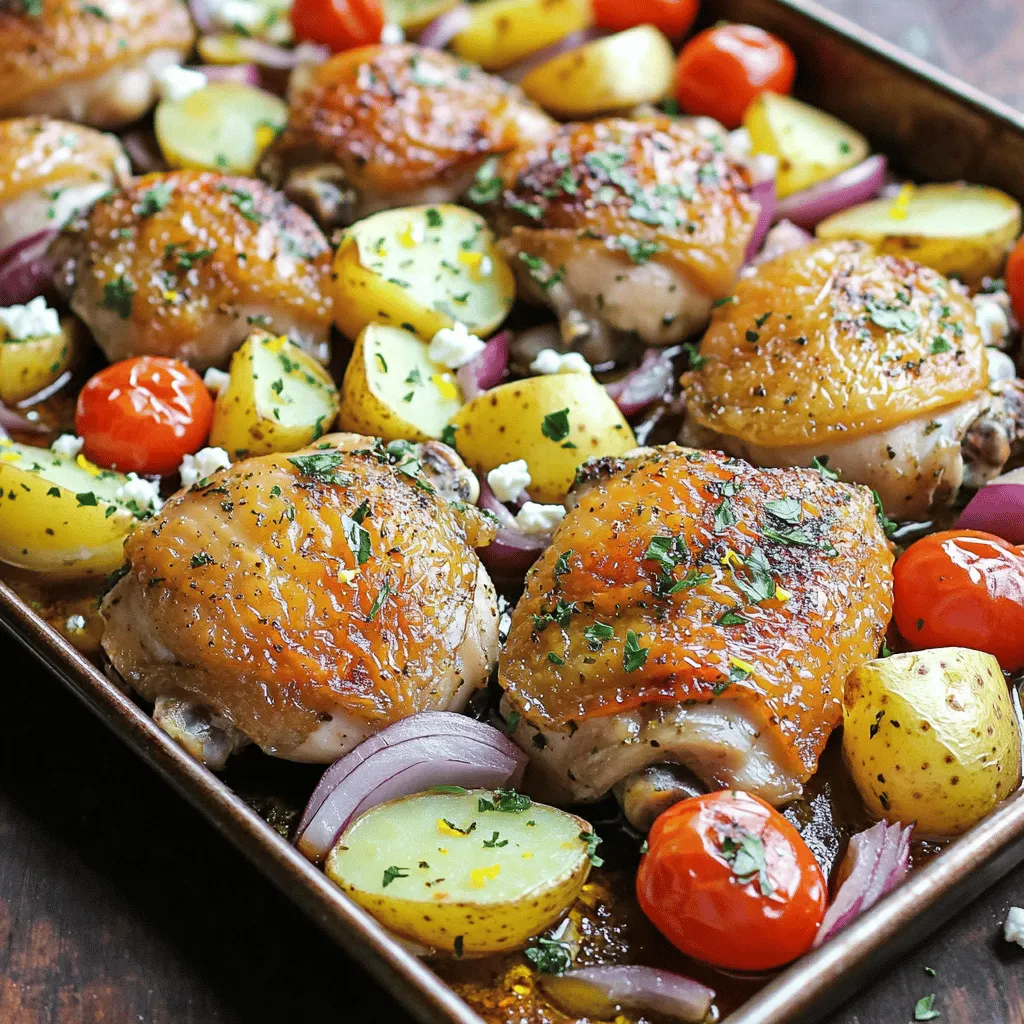
Sheet Pan Greek Chicken & Potatoes Flavorful Meal

Looking for a simple, delicious dinner? You’ve found it! This Sheet Pan Greek Chicken & Potatoes recipe makes meal prep easy and quick. With juicy chicken, crispy potatoes, and fresh veggies, it’s a feast for your taste buds. I will guide you through each step, ensuring you create a flavorful meal everyone will love. Let’s dive into the ingredients and get cooking!
Ingredients
Main Ingredients List
– Chicken and Potatoes
– 4 chicken thighs, skin-on and bone-in
– 4 medium Yukon Gold potatoes, cut into wedges
– Vegetables and Seasonings
– 1 red onion, cut into wedges
– 1 cup cherry tomatoes, halved
– 3 cloves garlic, minced
– 2 tablespoons olive oil
– 1 tablespoon dried oregano
– 1 teaspoon smoked paprika
– 1 teaspoon lemon zest
– Salt and black pepper to taste
– Optional Garnishes
– Fresh parsley, chopped
– 2 tablespoons feta cheese, crumbled
Step-by-Step Instructions
Prepping the Chicken
Marinade Preparation
To start, mix your marinade. Grab a large bowl and add:
– 2 tablespoons olive oil
– 3 cloves garlic, minced
– 1 tablespoon dried oregano
– 1 teaspoon smoked paprika
– 1 teaspoon lemon zest
– Salt and black pepper to taste
Whisk these together until they blend well. This marinade packs a punch!
Marinating Time Recommendations
Add 4 chicken thighs to the bowl. Make sure each piece is coated. Let the chicken marinate for at least 15 minutes. For deeper flavor, marinate overnight in the fridge.
Preparing the Vegetables
Cutting and Seasoning Potatoes and Onions
Now, let’s prepare the veggies. Take 4 medium Yukon Gold potatoes and cut them into wedges. Also, cut 1 red onion into wedges. Place them in a large bowl. Drizzle with a bit of olive oil, salt, and pepper. Toss them to coat.
Arranging Ingredients on the Sheet Pan
Spread the seasoned potatoes and onions evenly on a large sheet pan. This ensures they roast nicely. Place the marinated chicken thighs on top. Scatter 1 cup of halved cherry tomatoes around the chicken and potatoes for extra color and flavor.
Baking Instructions
Oven Temperature Guidelines
Preheat your oven to 425°F (220°C). A hot oven is key for crispy skin and tender potatoes.
Cooking Time and Checking Doneness
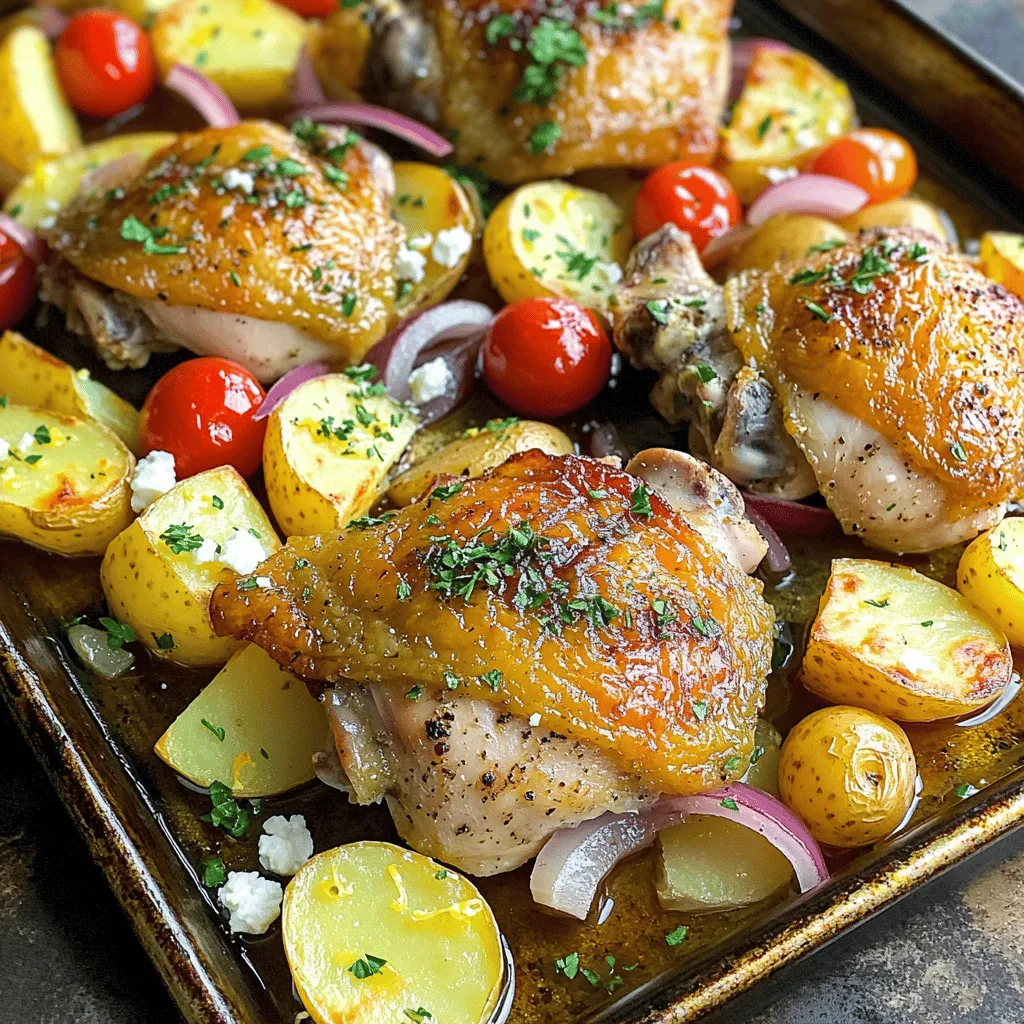
Bake the sheet pan for 35-40 minutes. Check the chicken’s internal temperature; it should reach 165°F (75°C). The potatoes should be golden and soft. For extra crispy skin, broil for 2-3 minutes at the end. Let it rest for 5 minutes after baking. This step helps the juices settle.
Tips & Tricks
Enhancing Flavor
Marinade Variations
You can change the marinade to fit your taste. Try adding lemon juice for more zing. You can also mix in yogurt for a creamy touch. For a kick, add crushed red pepper flakes. Each option gives the chicken a new life.
Using Fresh vs. Dried Herbs
Fresh herbs add bright notes to your dish. You can use fresh oregano, thyme, or parsley. If fresh herbs aren’t available, dried herbs work well too. Just remember to use less dried than fresh. Dried oregano is bold, so a little goes a long way.
Cooking Techniques
Broiling for Crispy Skin
To get crispy chicken skin, broil it at the end. After baking, set your oven to broil. Watch it closely for 2-3 minutes. This step crisps up the skin, making every bite delicious.
Ensuring Even Cooking
For even cooking, cut the potatoes into similar sizes. Place them in a single layer on the pan. This ensures they cook through and become golden. Use a meat thermometer to check the chicken. It should reach 165°F (75°C) for safety.
Serving Suggestions
Plating Options
You can serve this dish right from the sheet pan. It gives a rustic look that everyone loves. If you want a more formal look, transfer it to a large platter. Garnish with fresh herbs and lemon wedges for color.
Accompaniments for a Complete Meal
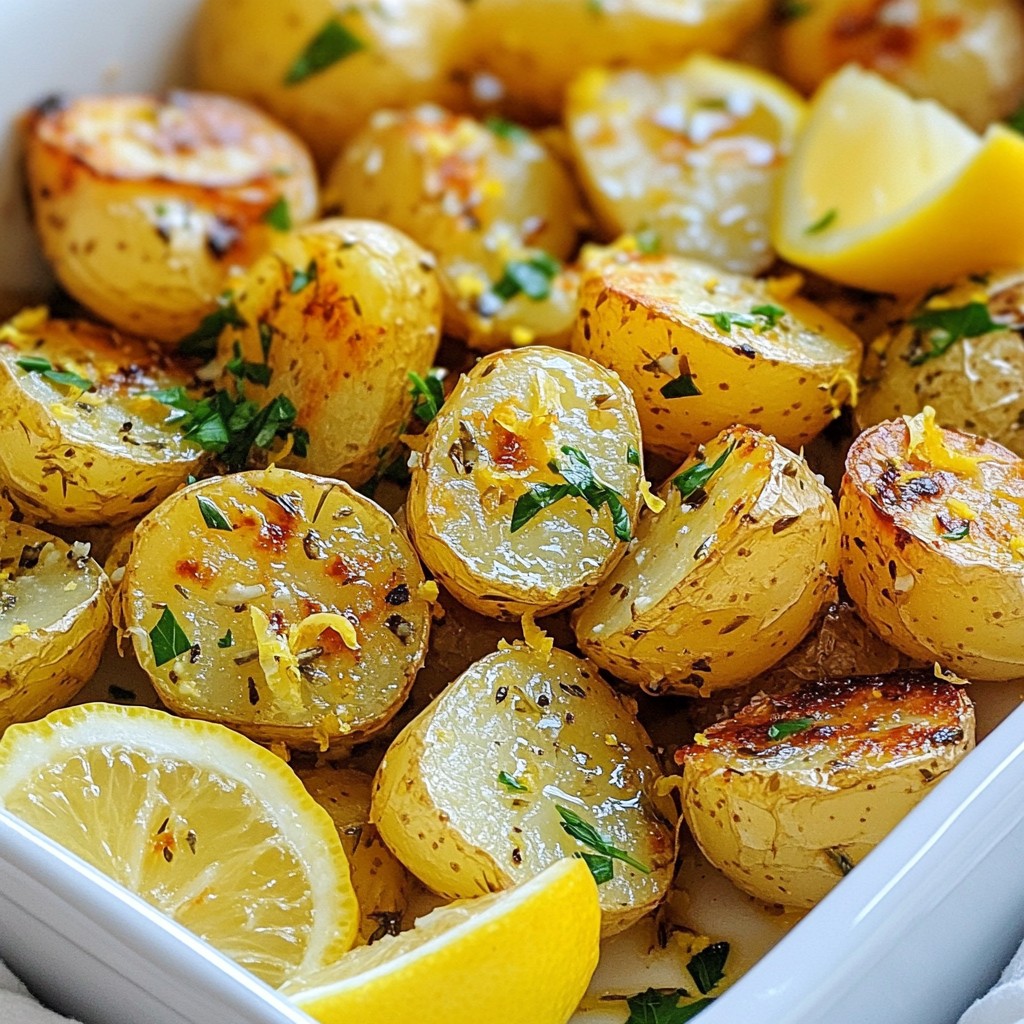
Pair this dish with a simple green salad. A light tzatziki sauce also complements the flavors well. For added carbs, serve with warm pita bread. This makes the meal feel complete and satisfying.
Variations
Ingredient Swaps
You can easily change the chicken cuts. Try chicken breasts or drumsticks. Both options work well and bring new textures. If you want leaner meat, use skinless chicken.
You can also switch up the vegetables. Instead of Yukon Gold potatoes, try sweet potatoes or red potatoes. They add different flavors and colors. You can include bell peppers or zucchini for extra nutrients.
Flavor Profiles
For a Mediterranean twist, add Kalamata olives. They give a salty bite that pairs well with chicken. Just toss them on the sheet pan before baking.
If you want some heat, sprinkle red pepper flakes on the chicken. This adds a nice kick. You could also use cayenne pepper for stronger spice. Adjust the amount to fit your taste.
Storage Info
Leftover Storage
To keep your leftovers fresh, use proper storage containers. Airtight glass or plastic containers work best. This helps maintain flavor and prevents spills.
For refrigeration, store the chicken and potatoes in the fridge. They stay good for about 3-4 days. If you want to keep them longer, freezing is a great option. You can freeze the cooked dish for up to 3 months. Just make sure to cool it first before freezing.
Reheating Guidelines
When reheating, the best methods are the oven or skillet. These methods help keep the chicken juicy and the potatoes crispy. Avoid the microwave if you can. Microwaving can make the potatoes soggy.
If you use the oven, set it to 350°F (175°C). Place the chicken and potatoes on a baking sheet. Heat for about 15-20 minutes, or until warmed through. For the skillet, add a little oil and heat over medium heat. This way, you can keep that savory flavor intact.
FAQs
How long can I marinate the chicken?
You can marinate the chicken for at least 15 minutes. For more flavor, I suggest marinating it overnight. This longer time helps the spices soak into the meat. It makes every bite tasty and juicy.
Can I make this recipe gluten-free?
Yes, this recipe is naturally gluten-free. All the main ingredients, like chicken, potatoes, and veggies, do not contain gluten. Just check any additional ingredients, like spices, to be sure they are gluten-free.
What sides pair well with Sheet Pan Greek Chicken & Potatoes?
This meal goes well with many sides. Here are some ideas:
– Greek salad for freshness
– Tzatziki sauce for a creamy dip
– Grilled veggies for extra color
– Quinoa for a healthy grain option
These sides add more flavor and balance to your meal.
Is it possible to use skinless chicken thighs?
Yes, you can use skinless chicken thighs. They cook well and still taste great. Just keep in mind that skin-on thighs give more crispiness and flavor. If you use skinless, adjust the cooking time to avoid drying them out.
Can I use other potatoes for this recipe?
Absolutely! You can use other types of potatoes, like red or fingerling potatoes. Just cut them into wedges similar to Yukon Gold. Each type adds its unique taste and texture. Enjoy experimenting with different potatoes!
This blog covered an easy and tasty sheet pan recipe for Greek chicken and potatoes. You learned about ingredients, prep steps, and cooking tips. You also saw fun variations to keep your meals fresh. Remember, marinating adds flavor, and using fresh herbs boosts taste. Store leftovers properly to enjoy them later. With these steps, you can create a healthy and delicious meal every time. Now, it’s time to put what you learned into action and enjoy your cooking!

![To make a great Classic Chicken Alfredo, you need a few key items. Here’s what you will need: - 2 boneless, skinless chicken breasts, sliced into strips - 8 oz fettuccine pasta - 2 tablespoons olive oil - 3 cloves garlic, minced - 1 cup heavy cream - 1 cup grated Parmesan cheese - 1 teaspoon Italian seasoning - Salt and black pepper to taste - Fresh parsley, chopped (for garnish) - Freshly cracked black pepper (for finishing) Each ingredient plays a vital role in creating this creamy dish. The chicken gives protein, while the pasta adds substance. Olive oil adds flavor and helps cook the chicken. Garlic gives a nice aroma and taste. Heavy cream makes the sauce rich and smooth. Parmesan cheese adds saltiness and depth. Italian seasoning brings in herbs for a fresh touch. Salt and black pepper enhance all the flavors. Lastly, parsley adds color and brightness to your plate. These ingredients come together to create a comforting meal. You can find the full recipe in the recipe section. Enjoy cooking! Let’s dive into the steps to make Classic Chicken Alfredo. This creamy dish is perfect for dinner. First, fill a large pot with water. Add enough salt to make it taste like the sea. Bring the water to a boil. Add 8 oz of fettuccine pasta. Cook it according to the package instructions until it is al dente. This usually takes about 8-10 minutes. Reserve ½ cup of the pasta water, then drain the pasta and set it aside. Next, heat 2 tablespoons of olive oil in a large skillet over medium heat. When the oil is hot, add the sliced chicken breasts. Season the chicken with salt and black pepper. Cook it for 5-7 minutes, or until it is browned and cooked through. Make sure to stir often. Once done, remove the chicken from the skillet and set it aside. In the same skillet, add 3 cloves of minced garlic. Sauté the garlic for about 1 minute. You want it to be fragrant but not burnt. This step adds a lovely flavor to your sauce. Now, pour in 1 cup of heavy cream and bring it to a gentle simmer. Stir in 1 cup of grated Parmesan cheese and 1 teaspoon of Italian seasoning. Let the sauce thicken for about 2-3 minutes. If it gets too thick, add some reserved pasta water until you reach your desired consistency. Add the cooked fettuccine and browned chicken back into the skillet. Toss everything together gently. Make sure all the pasta and chicken are coated in the creamy sauce. Taste and adjust the seasoning with more salt and pepper if needed. Finally, plate your creamy Chicken Alfredo. Garnish it with freshly chopped parsley and a sprinkle of cracked black pepper. This adds a nice touch and a little kick to the dish. Enjoy your meal! For the full recipe, check out Creamy Dreamy Chicken Alfredo. Avoiding a Lumpy Sauce To stop lumps, stir well as you cook. Use low heat to keep the sauce smooth. Start with warm cream, and add cheese slowly while stirring. This helps the cheese melt better and mix in nicely. Achieving the Right Consistency You want your sauce creamy but not too thick. If it gets thick, add some reserved pasta water. This water helps blend and thin the sauce to the right texture. The sauce should coat the pasta well but still flow easily. Seasoning to Taste Taste your sauce as you cook. Add salt and black pepper as needed. Don’t forget the Italian seasoning for extra flavor. A little fresh parsley on top adds brightness, too. Optimal Chicken Cooking Methods For the best chicken, cook it in a hot skillet with olive oil. This gives you a nice golden crust. Cook until the chicken is no longer pink inside. It takes about 5-7 minutes. Best Pasta Cooking Practices Use plenty of salted water to boil your pasta. This helps the pasta flavor. Cook it just until it’s al dente, so it has a slight bite. Always reserve some pasta water before draining. This water is great for adjusting the sauce later. Explore the [Full Recipe] for step-by-step details! {{image_2}} You can make Chicken Alfredo even better by changing a few things. - Adding Vegetables: Broccoli or spinach adds great color and nutrition. Broccoli cooks well in the pasta water. Just add it for the last 2-3 minutes. Spinach wilts quickly and can go in right before serving. Both make the dish healthier. - Using Different Types of Pasta: Fettuccine is classic, but you can try other pasta. Penne or rigatoni work well too. They hold the sauce just right, giving you a tasty bite every time. - Cheese Alternatives for Flavor Variations: Parmesan is great, but don’t stop there. You can mix in Romano or Asiago for a different taste. A blend of cheeses can add depth and a unique flavor to your sauce. You can easily adapt Chicken Alfredo for diets. - Gluten-Free Options: If you need gluten-free, use gluten-free pasta. Many brands offer good options that cook well and taste great. Always check the package to ensure it's safe for your needs. - Dairy-Free Modifications: For a dairy-free version, swap heavy cream for coconut milk or a nut milk. Nutritional yeast can replace Parmesan for a cheesy flavor without dairy. These swaps keep the dish creamy and delicious. Use these variations and adjustments to make this dish your own. You can enjoy a tasty meal that fits your needs and preferences! Don't forget to check the Full Recipe for detailed steps. Storing your Chicken Alfredo can keep it fresh for later. Here are simple steps: - Refrigerating Alfredo Pasta: Place leftover Chicken Alfredo in an airtight container. This keeps the dish moist. Store it in the fridge. It lasts about 3-4 days. - Freezing Suggestions: If you want to save it longer, use a freezer-safe container. Leave some space at the top for expansion. Chicken Alfredo can freeze well for about 2-3 months. When ready to eat, thaw it in the fridge overnight. To enjoy your Chicken Alfredo again, follow these steps: - Best Methods for Reheating: Use a skillet over low heat. Add a splash of milk or cream to help the sauce. Stir until warmed through. You can also use the microwave. Heat in short bursts, stirring often. - Avoiding a Dry Sauce: Adding a little liquid is key. It helps keep the sauce creamy. If it seems too thick, add more milk or reserved pasta water. This way, your Chicken Alfredo stays delicious. Can I make Chicken Alfredo ahead of time? Yes, you can make Chicken Alfredo ahead. Cook it and let it cool. Store it in the fridge for up to three days. Just reheat gently when you are ready to serve. What kind of chicken is best for Alfredo? Boneless, skinless chicken breasts work best. They cook quickly and stay tender. You can also use chicken thighs for more flavor. How long does Chicken Alfredo last in the fridge? Chicken Alfredo lasts about three days in the fridge. Make sure to store it in an airtight container. Can I use milk instead of heavy cream? You can use milk, but the sauce will be thinner. For creaminess, consider mixing milk with some butter. What's the history behind Chicken Alfredo? Alfredo sauce comes from Italy. It was created by Alfredo di Lelio in the early 1900s. He made it for his wife, who had trouble eating. It became popular in America later. Is it possible to make Alfredo sauce without butter? Yes, you can make Alfredo sauce without butter. You can use olive oil instead. It will still taste great! How can I make Chicken Alfredo spicier? To spice up Chicken Alfredo, add red pepper flakes. You can also use spicy Italian sausage in place of chicken. Both add a nice kick! Classic Chicken Alfredo is easy to make with simple ingredients. You need chicken, fettuccine pasta, garlic, and heavy cream. I shared step-by-step instructions to guide you through cooking this dish. I also included tips to improve your sauce and cooking techniques to enhance flavor. If you want to mix things up, consider adding veggies or adjusting for dietary needs. Enjoy your Alfredo dish and share your thoughts. Cooking can be fun and rewarding!](https://dailydishly.com/wp-content/uploads/2025/06/21a9bb47-f2dd-4716-bed4-2c8161470a16-768x768.webp)


![- 4 bone-in chicken thighs, skin-on - 2 medium zucchinis, sliced into half-moons - 1 bell pepper (red or yellow), chopped - 1 cup cherry tomatoes, halved - 1 red onion, cut into wedges - 4 cloves garlic, minced - 1/4 cup olive oil - Juice of 2 lemons - Zest of 1 lemon - 2 teaspoons dried oregano - 1 teaspoon smoked paprika - Salt and pepper to taste - Fresh parsley, chopped for garnish For the main dish, I like to use bone-in chicken thighs. They stay juicy and add great flavor. Pair them with colorful veggies like zucchini, bell peppers, cherry tomatoes, and red onion. Don’t forget the garlic—its aroma will fill your kitchen. The olive oil and lemon juice create a tasty marinade that makes everything shine. - Fresh herbs and spices - Alternative vegetables to add - Marinade variations Fresh herbs like thyme or rosemary can boost flavor even more. You could also swap in veggies like asparagus or broccoli based on what you have. For a twist, try a different marinade. A honey mustard blend or a spicy harissa can change the game. With these options, you can create your own unique version of the dish. Check out the Full Recipe for more details on how to make it! Start by whisking together the marinade. In a bowl, mix olive oil, lemon juice, lemon zest, minced garlic, oregano, smoked paprika, salt, and pepper. This mix brings bright flavors to the chicken and veggies. Marinating is key. Place the chicken thighs in a bag or bowl. Pour half of the marinade over the chicken. Let it sit in the fridge for at least 30 minutes. For stronger flavor, marinate up to 2 hours. Next, preheat your oven to 425°F (220°C). This step ensures even cooking. While the oven heats, prepare the veggies. In a large bowl, combine zucchini, bell pepper, cherry tomatoes, and red onion. Pour the remaining marinade over the veggies and toss well. This will help the vegetables soak up the flavors. Now, arrange the chicken and veggies on a sheet pan. Place the marinated chicken in the center. Spread the veggies around the chicken for even cooking. Bake the dish for 30 to 35 minutes. The chicken should reach an internal temperature of 165°F (75°C). The veggies will become tender and slightly caramelized. Check for doneness by using a meat thermometer. Once done, remove the pan from the oven. Let it rest for a few minutes before serving. Garnish with freshly chopped parsley for a pop of color. For the full recipe, check out the [Full Recipe]. To enhance the marinade, focus on fresh ingredients. Fresh lemon juice adds brightness. The zest boosts the lemon flavor. Garlic brings depth and warmth. Use quality olive oil for richness. You can also add fresh herbs like rosemary or thyme for extra flavor. When choosing chicken cuts, I recommend bone-in thighs. They stay juicy and tender during cooking. The skin adds flavor and helps crisp up nicely. You can also use drumsticks, but avoid boneless cuts. They tend to dry out faster. For even cooking, cut vegetables into similar sizes. This way, they cook together without some burning. Toss them in the marinade well. Make sure every piece is coated for the best flavor. To add textures, mix soft and crunchy vegetables. Cherry tomatoes become sweet and juicy. Zucchini softens but keeps some bite. Bell peppers add a nice crunch. Red onions caramelize, bringing sweetness to the dish. {{image_2}} You can switch up the taste of your sheet pan lemon chicken easily. Instead of lemon, try lime or orange juice. Both citrus fruits bring a unique zest to the dish. Lime adds a fresh twist, while orange gives a sweeter note. Mixing in different herbs and spices can also change the flavor profile. For example, swap oregano for thyme or rosemary. These herbs add depth and pair well with chicken. You can even try a dash of chili powder for a spicy kick! Grilling is a fun way to cook this recipe. It gives a nice smoky flavor that's hard to beat. Just marinate the chicken and veggies as usual. Then, place them on the grill until cooked through. If you want a one-pan meal, consider using other proteins. Boneless chicken breast, shrimp, or even tofu work great. Adjust the cooking time as needed. This way, you can enjoy new flavors while keeping it simple. After enjoying your sheet pan lemon chicken and veggies, store leftovers properly to keep them fresh. - Refrigerating leftovers safely: Place the chicken and veggies in an airtight container. They will stay good in the fridge for up to four days. Make sure to let them cool down before sealing the container. - Freezing guidelines for chicken and veggies: If you want to save them for later, freeze the leftovers. Use freezer-safe bags or containers. You can freeze them for up to three months. Just remember to label the bags with the date. To enjoy your meal again, reheating is key to keeping it tasty. - Best methods to maintain quality: The best way to reheat is in the oven. Preheat it to 350°F (175°C). Place the chicken and veggies in a baking dish. Cover with foil to keep them moist. - Time and temperature considerations: Heat for about 20-25 minutes. Check that the chicken reaches 165°F (75°C) again. This ensures it is safe and delicious to eat. I recommend marinating the chicken for at least 30 minutes. If you can, let it marinate for up to 2 hours. This longer time allows the chicken to soak in all the zesty flavors. The marinade adds moisture and taste, making the chicken juicy and savory. Yes, you can use boneless chicken. Just remember to adjust the cooking time. Boneless chicken cooks faster than bone-in cuts. Start checking for doneness at about 20 minutes. You want the internal temperature to reach 165°F. This will ensure your chicken is safe to eat and still juicy. If you don’t have a sheet pan, don’t worry! You can use a baking dish or a large skillet. Just make sure to arrange the chicken and veggies in a single layer. This helps them cook evenly. If you use a smaller pan, you may need to cook in batches. This recipe is great for meal prep! You can make it ahead and store the leftovers in the fridge. It keeps well for up to four days. Just reheat portions in the oven or microwave when you’re ready to eat. Divide the meal into containers for easy lunches or dinners. For a twist, try adding different sides throughout the week. Exciting meals can make your prep even more fun! For the full recipe, be sure to check out the details above. This blog post showed you how to make a tasty sheet pan lemon chicken. We covered the main and optional ingredients, plus how to prepare and cook them. You learned tips for flavor and texture, and even some fun variations. Don’t forget how to store and reheat leftovers. Now, you can enjoy delicious meals without much fuss. Try making this dish and share it with friends or family. Cooking can be fun and easy!](https://dailydishly.com/wp-content/uploads/2025/06/6619f650-0475-47be-ab23-3ec1a8437763-768x768.webp)

