
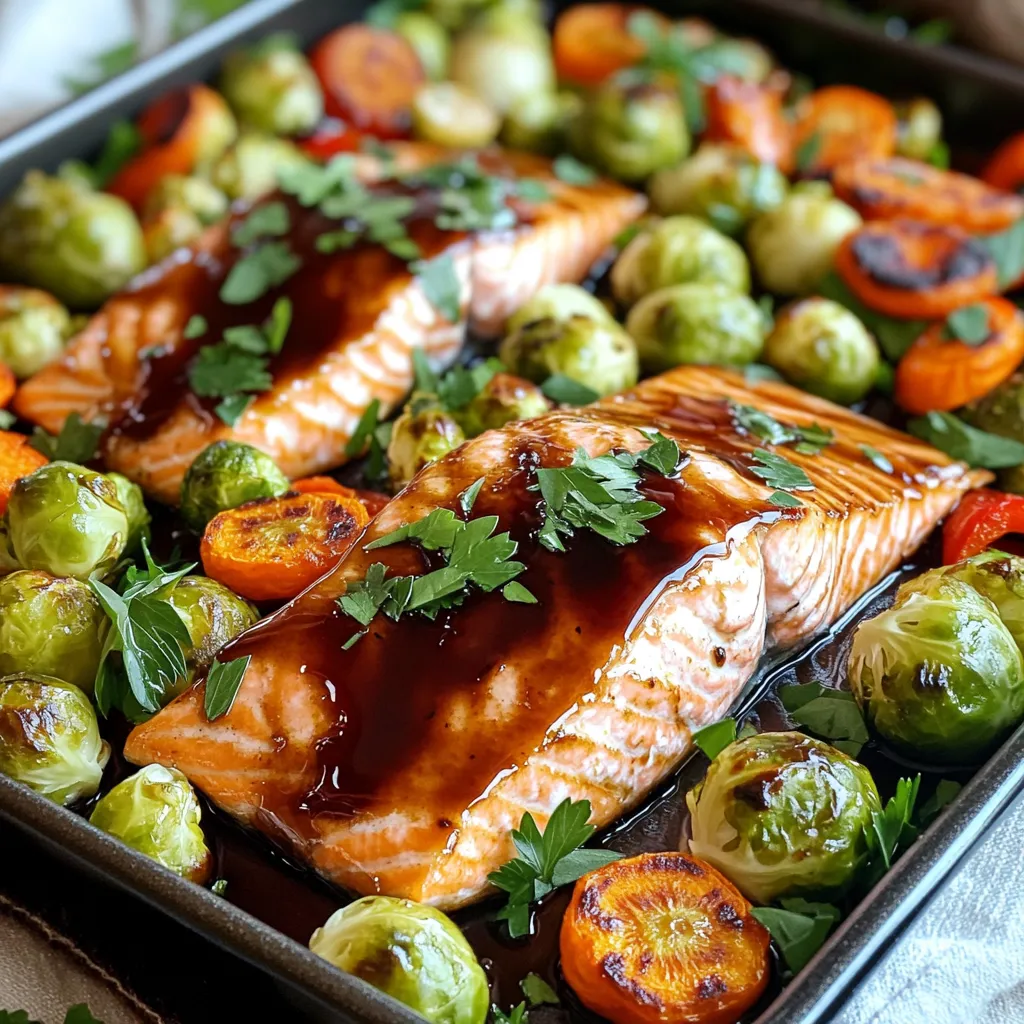
Sheet Pan Maple Balsamic Salmon Flavorful Easy Meal

Looking for a simple yet delicious meal? Try my Sheet Pan Maple Balsamic Salmon! This recipe combines juicy salmon with a sweet and tangy glaze. Plus, you’ll roast tasty veggies alongside for a complete dish. It takes just minutes to prepare and packs flavor in every bite. Ready to impress your family and friends? Let’s dive into this easy recipe that’s perfect for any night of the week!
Ingredients
Main Ingredients
– 4 salmon fillets
– 1/4 cup maple syrup
– 1/4 cup balsamic vinegar
Cooking Essentials
– Olive oil
– Garlic
– Dijon mustard
Vegetables
– Brussels sprouts
– Baby carrots
– Red bell pepper
For this dish, you want to start with fresh salmon fillets. Each fillet should weigh about six ounces. The salmon will soak up the sweet and tangy glaze, making it rich in flavor. Maple syrup and balsamic vinegar create a perfect balance of sweet and sour. This mix coats the salmon and veggies beautifully.
Next, grab some cooking essentials. Olive oil adds a nice richness. It helps the glaze stick to the salmon and veggies. Minced garlic gives a punch of flavor that pairs well with the glaze. Dijon mustard adds a hint of spice, bringing all the flavors together.
Now, let’s talk about the vegetables. Brussels sprouts bring a nutty taste when roasted. Halving them allows for even cooking and caramelization. Baby carrots add sweetness and color. Lastly, a sliced red bell pepper brings crunch and a vibrant look to the dish.
These ingredients combine to make a delightful meal. The flavors meld together as they roast, creating an easy and satisfying dish.
Step-by-Step Instructions
Preparation
1. Preheat the oven and prepare the sheet pan: Start by preheating your oven to 400°F (200°C). While it heats, line a large sheet pan with parchment paper. This makes cleanup easy later.
2. Whisk together the glaze ingredients: In a small bowl, combine 1/4 cup maple syrup, 1/4 cup balsamic vinegar, 2 tablespoons olive oil, and 2 minced garlic cloves. Add 1 teaspoon Dijon mustard, salt, and pepper. Whisk these ingredients together until they mix well.
Salmon and Vegetable Arrangement
1. Coat the salmon with the glaze: Place 4 salmon fillets in the center of your prepared sheet pan. Pour half of the glaze over the salmon. Make sure each fillet is well coated for great flavor.
2. Toss and season the vegetables: In another bowl, toss 1 pound of halved Brussels sprouts, 2 cups of baby carrots, and 1 sliced red bell pepper with the rest of the glaze. Season with more salt and pepper to taste.
Cooking Process
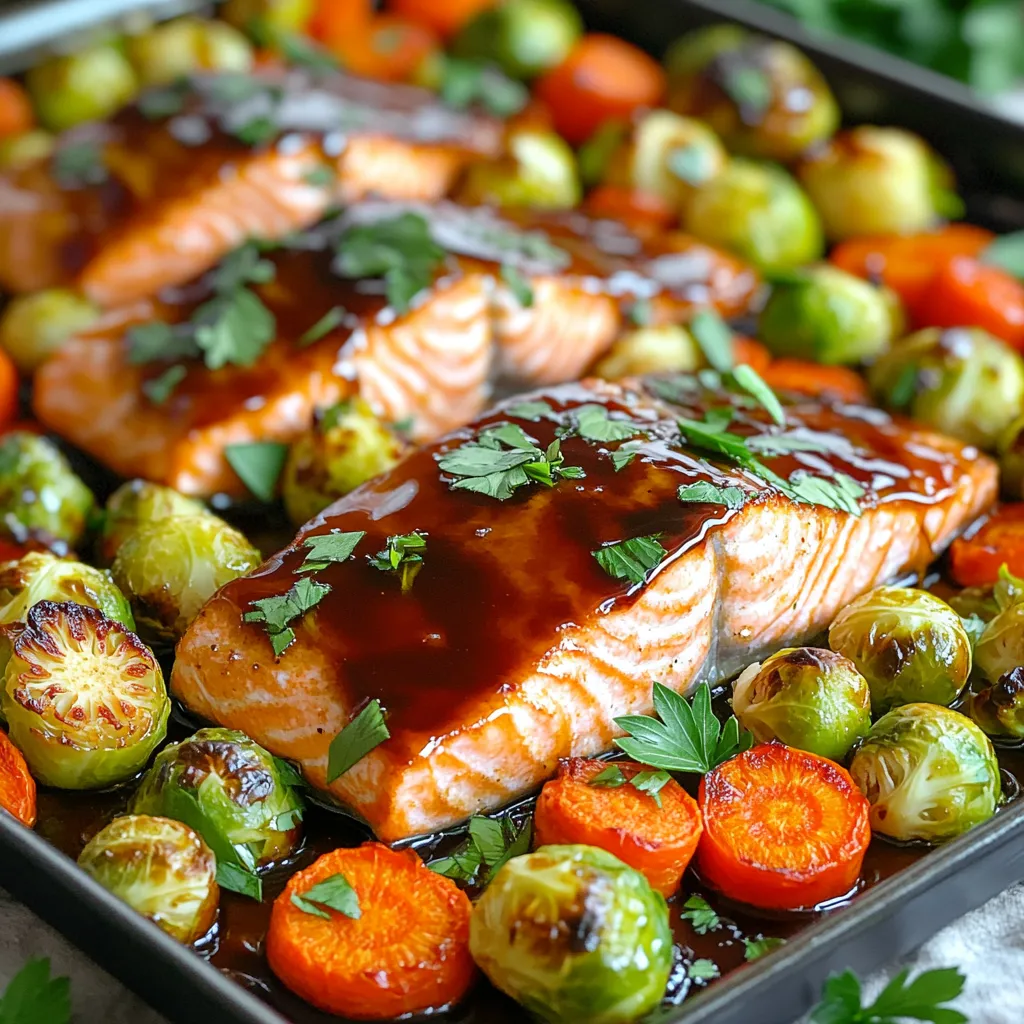
1. Bake the salmon and vegetables: Arrange the glazed vegetables around the salmon on the sheet pan. Bake everything in the preheated oven for about 15 to 20 minutes. The salmon should flake easily with a fork when done, and the veggies will be tender and caramelized.
2. Garnishing tips before serving: After removing the pan from the oven, let it rest for a couple of minutes. For a fresh touch, garnish with chopped parsley before you serve. This adds color and flavor to your dish.
Tips & Tricks
Perfecting the Salmon
To cook salmon perfectly, aim for a temperature of 400°F (200°C). Bake for 15 to 20 minutes. The salmon should flake easily with a fork when done. If it looks opaque and moist, that’s a good sign!
Vegetable Preparation
For this dish, Brussels sprouts, baby carrots, and red bell peppers work best. They roast nicely and bring color to your plate. Cut Brussels sprouts in half and slice the bell pepper thin. This helps them cook evenly. Tossing the veggies in the glaze ensures they are flavorful.
Enhancing Flavor
To boost flavor, consider adding herbs like thyme or rosemary. A pinch of red pepper flakes can add heat. If you have leftovers, mix the salmon and veggies into a salad or wrap. This way, you can enjoy the meal in a new way!
Variations
Alternative Proteins
You can swap salmon for chicken or tofu. Chicken will work well with the same glaze. Just make sure to cook it until it reaches 165°F (74°C). Tofu is a great choice for a plant-based option. Use firm tofu, and press it to remove extra moisture. Cook chicken for about 25-30 minutes. Tofu will need only about 20 minutes, so keep an eye on it.
Flavor Modifications
Want to add some heat? Consider using spices like red pepper flakes or cayenne. You can also try hot sauces for a kick. Mixing in citrus is fun too. Lemon or orange juice can brighten the dish. Garlic is another great addition. It adds depth and pairs well with the glaze.
Seasonal Vegetable Swaps
Use fresh, seasonal veggies for the best taste. In summer, zucchini or bell peppers are perfect. In fall, consider using butternut squash or sweet potatoes. Mixing different colors makes the dish more appealing. For nutrition, aim for a mix of greens, reds, and yellows. This not only looks good but also boosts vitamins in your meal.
Storage Info
Leftover Storage
Store leftover salmon and veggies in an airtight container. This keeps them fresh. Place the container in the fridge. Make sure to eat leftovers within three days. To reheat, use the oven or microwave. If using the oven, set it to 350°F (175°C). Heat for about 10 minutes. This helps keep the salmon moist and the veggies crisp.
Freezing Recommendations
For freezing, wrap salmon fillets tightly in plastic wrap. Place them in a freezer bag. This prevents freezer burn. You can freeze the salmon for up to three months. For veggies, blanch them first. Blanching means boiling them for a few minutes. After blanching, cool them in ice water. Drain and dry, then freeze in bags.
Shelf Life
Leftovers last about three days in the fridge. Check for signs of spoilage. Look for a sour smell or slimy texture. If you see these signs, throw it away. Fresh salmon should not smell fishy. Veggies should stay bright and firm. If they become dull or mushy, it’s time to discard them.
FAQs
How long does it take to cook salmon on a sheet pan?
Cooking salmon on a sheet pan takes about 15 to 20 minutes at 400°F (200°C). This time can vary. The salmon is done when it flakes easily with a fork. Keep an eye on it to avoid overcooking. If your salmon is thicker, you might need a few extra minutes.
Can I use frozen salmon for this recipe?
Yes, you can use frozen salmon! Just remember to thaw it first. You can place it in the fridge overnight. If you’re in a hurry, you can run it under cold water for about an hour. If you cook salmon from frozen, add about 5 to 10 extra minutes to the cooking time. Make sure to check if it’s cooked through before serving.
What to serve with Maple Balsamic Salmon?
You can serve many tasty sides with this dish. Here are some great ideas:
– Quinoa or rice for a hearty base
– A fresh salad with mixed greens
– Roasted potatoes for added crunch
– Steamed asparagus for a fresh touch
These sides balance the flavors of the salmon well. You can mix and match based on what you like!
In this blog post, we explored how to make maple balsamic salmon with delicious vegetables. You learned about key ingredients, cooking steps, and helpful tips. Remember, cooking salmon on a sheet pan is simple but rewarding. You can easily change flavors and swap in different proteins or veggies. Proper storage helps keep your meals fresh. With this knowledge, I hope you feel ready to create your own tasty dish. Enjoy your cooking and share it with friends!


![- 8 oz rice noodles - 1 cup red bell pepper, julienned - 1 cup yellow bell pepper, julienned - 1 cup cucumber, julienned - 1 cup purple cabbage, shredded - 1 cup carrots, grated - 1 cup edamame (shelled) - 1/4 cup fresh cilantro, chopped - 1/4 cup green onions, sliced For the Peanut Sauce: - 1/2 cup creamy peanut butter - 3 tablespoons soy sauce (or tamari for a gluten-free option) - 2 tablespoons lime juice - 1 tablespoon maple syrup (or honey) - 1 tablespoon sesame oil - 1 garlic clove, minced - 1 teaspoon grated fresh ginger - 1-2 tablespoons water (to thin the sauce, as needed) Each serving has about 250 calories. This salad is packed with nutrients. It offers protein and fiber from the noodles and veggies. The peanut sauce adds healthy fats and flavor. Each bite is both tasty and good for you. If you need gluten-free options, use rice noodles and tamari. For vegan alternatives, swap honey for maple syrup. You can also add tofu for extra protein. This salad can fit many diets while still being delicious. You can find the full recipe for Rainbow Thai Peanut Noodle Salad [Full Recipe]. To start, bring a large pot of water to a boil. Use enough water to let the noodles float freely. Once boiling, add 8 oz of rice noodles. Cook them for about 3 to 5 minutes, or until they are firm but tender. Keep an eye on them! After they are cooked, drain them in a colander. Rinse the noodles with cold water. This stops the cooking and keeps the noodles from sticking together. Set them aside while you prep the veggies. While the noodles cook, wash and cut the vegetables. To make it easy, julienne the red and yellow bell peppers. Use a sharp knife for clean cuts. Slice the cucumber and shred the purple cabbage. Grate the carrots too. Aim for uniform pieces so they mix well. Once cut, place all the veggies in a large mixing bowl. This keeps everything together for the next step. You can also add the edamame for extra protein. Now, let’s make the peanut sauce! In a medium bowl, mix 1/2 cup of creamy peanut butter, 3 tablespoons of soy sauce, and 2 tablespoons of lime juice. Add 1 tablespoon of maple syrup for a touch of sweetness. Next, add 1 tablespoon of sesame oil, 1 minced garlic clove, and 1 teaspoon of grated ginger. Whisk these ingredients together until smooth. If the sauce feels thick, add 1-2 tablespoons of water. This helps thin it out to your liking. Now, pour this yummy sauce over the noodles and veggies. Toss gently to coat everything evenly. The flavors will blend beautifully together. For more details, check the Full Recipe. To cook noodles al dente, bring water to a boil. Add rice noodles and cook for about 4-6 minutes. Stir often to prevent sticking. Once done, drain and rinse under cold water. This stops cooking and keeps noodles firm. For crunchy vegetables, cut them just before serving. This keeps their crispness. Use a sharp knife for even slices. Julienne the peppers and cucumber. Shred the cabbage and grate the carrots. Keep them colorful for a vibrant dish. Boost flavor with spices and condiments. A pinch of red pepper flakes gives heat. Add a splash of fish sauce for depth. If you love citrus, lime zest brightens the dish. Fresh herbs make a big difference. Cilantro adds a fresh taste. You can try mint or basil for a twist. Chop herbs finely and mix them in just before serving. Serving bowls set the stage for a great meal. Use larger bowls for family-style serving. For individual plates, choose clear glass bowls. This shows off the colorful layers. Garnishing techniques can elevate your dish. Sprinkle extra cilantro on top for a pop of green. Add chopped peanuts for crunch. Arrange salad in colorful layers for a beautiful view. A rainbow of colors always catches the eye. {{image_2}} You can make this salad heartier by adding protein. Chicken is a great choice. Just grill or sauté it, then slice it thin. Tofu is another option. It soaks up the peanut sauce well. You can also try shrimp or beans for a different flavor. Each adds a nice touch to the Rainbow Thai Peanut Noodle Salad. Switching up the peanut sauce can give your salad new life. You can try a sesame sauce for a nutty twist. Just blend sesame paste with soy sauce and lime juice. For a sweeter flavor, teriyaki sauce works well too. It brings a rich taste that pairs nicely with the fresh veggies. Using seasonal vegetables can enhance your salad's freshness. In summer, add ripe tomatoes or corn for sweetness. Fall brings squash or roasted peppers for warmth. Winter might call for hearty greens like kale. Each season offers unique flavors. Tailoring your recipe helps keep it exciting all year long. For the full recipe, check out the detailed steps to make this dish shine. To store leftovers of your Rainbow Thai Peanut Noodle Salad, put it in the fridge. Use an airtight container to keep it fresh. Glass containers work great because they don’t hold onto smells. If you use plastic, make sure it’s food-safe and BPA-free. You can freeze the salad, but it is best to freeze only the noodles and sauce. Keep the veggies separate. They don't freeze well and lose their crunch. To thaw, move the noodles and sauce to the fridge overnight. When ready to eat, heat the noodles gently and mix in fresh veggies. This keeps everything bright and tasty. In the fridge, the salad lasts about 3 to 5 days. Check for signs of spoilage before eating. If the veggies look wilted or the sauce smells off, it’s best to toss it. Freshness is key for this vibrant dish! What is the best type of noodles for this salad? The best noodles are rice noodles. They are light and soak up the sauce. You can also use soba or whole grain noodles if you prefer. Just remember to cook them until they are al dente. This keeps them from getting too mushy in the salad. Can I make the salad in advance? Yes, you can make the salad ahead of time. It tastes better after chilling for a bit. Prepare it up to a day in advance and store it in the fridge. Just keep the sauce separate if you want the noodles to stay firm. What to do if the sauce is too thick? If your sauce is too thick, add a tablespoon of water. Mix it well, and check again. You can repeat this until it reaches the right consistency. A smooth sauce coats the salad nicely. How to fix overly soggy noodles? To fix soggy noodles, rinse them in cold water. This stops the cooking process and helps firm them up. If they still seem too soft, use them in soups or stir-fries instead. What can I serve with Rainbow Thai Peanut Noodle Salad? This salad pairs well with grilled chicken or shrimp. You can also serve it with spring rolls for a light meal. Add a side of fresh fruit for a sweet touch. Can this dish be served warm? Yes, you can serve this dish warm. Just toss the salad right after mixing it. However, I recommend chilling it first to enhance the flavors. For the full recipe, check out the details provided above. This blog post covered key ingredients for Rainbow Thai Peanut Noodle Salad, including rice noodles, fresh veggies, and tasty peanut sauce. I shared nutritional info, substitutions for dietary needs, and step-by-step cooking instructions. We also explored tips to enhance texture and flavor, various protein additions, and creative presentation ideas. Overall, this salad is versatile and easy to make, perfect for any occasion. Keep it fresh, store leftovers properly, and don't hesitate to try new variations. Enjoy crafting your delicious, colorful dish!](https://dailydishly.com/wp-content/uploads/2025/07/2e038f5f-8562-408c-ae38-174aa7e62a42-768x768.webp)

