
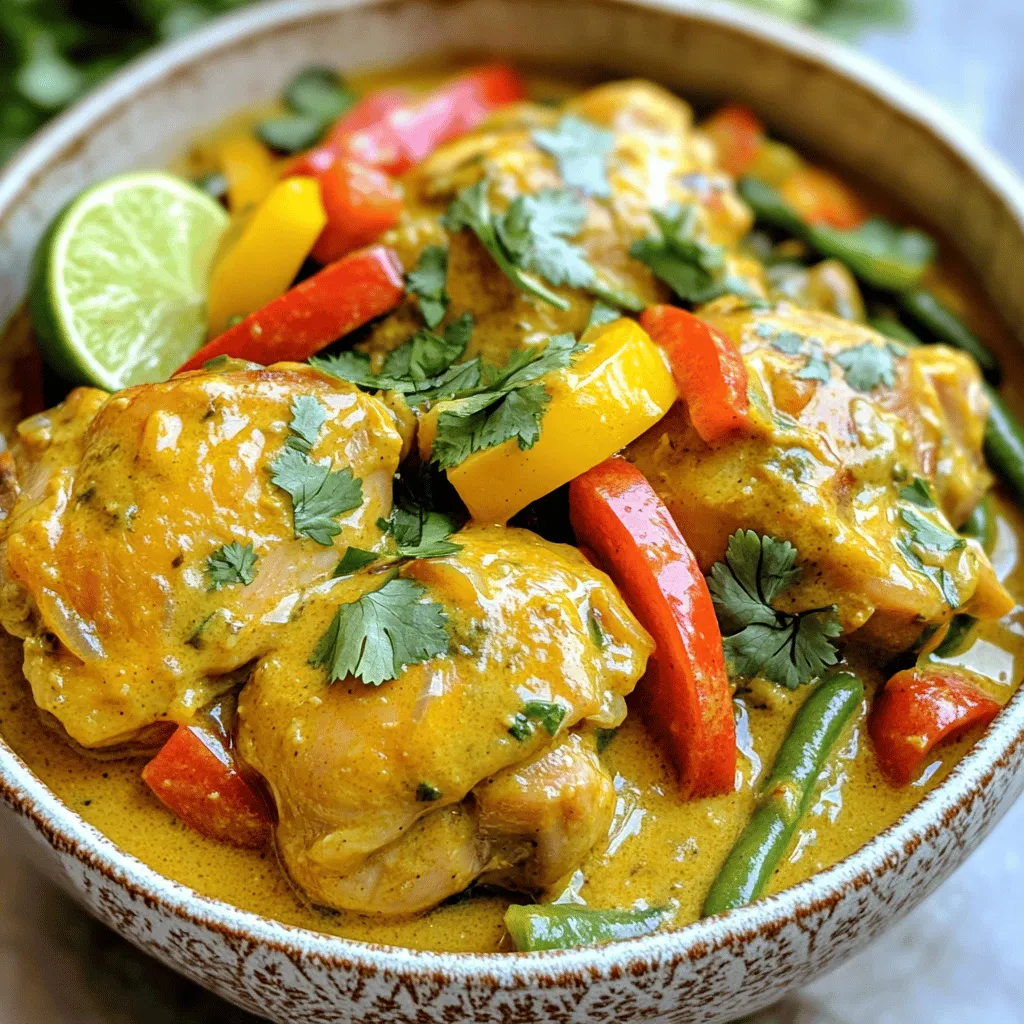
Slow Cooker Coconut Curry Chicken Flavorful and Easy

Are you ready for a delicious and easy dinner? This Slow Cooker Coconut Curry Chicken packs in flavor without the fuss. Using simple ingredients, you can create a creamy and rich dish that everyone will love. Whether you’re a busy parent or just want a tasty meal, this recipe is perfect for you. Let’s dive into the world of slow cooking and spice up your dinner routine!
Ingredients
List of Ingredients
– 2 lbs boneless, skinless chicken thighs, cut into bite-sized pieces
– 1 can (13.5 oz) coconut milk
– 1 cup chicken broth
– 1 large onion, chopped
– 3 cloves garlic, minced
– 1 tablespoon fresh ginger, grated
– 2 tablespoons red curry paste
– 1 tablespoon fish sauce (optional, for depth of flavor)
– 1 cup bell peppers, sliced (red and yellow for color)
– 1 cup green beans, trimmed
– 1 tablespoon brown sugar
– Juice of 1 lime
– Fresh cilantro, for garnish
– Salt and pepper to taste
Optional Ingredients for Flavor Enhancement
Adding a few extras can boost the taste. Consider using:
– 1 tablespoon of soy sauce for umami
– 1 teaspoon of chili flakes for spice
– A splash of lime juice for brightness
These options can elevate the dish further, making it truly your own.
Suggested Fresh Herbs for Garnish
Fresh herbs add a pop of color and taste. I recommend:
– Cilantro for a fresh, citrusy note
– Basil for a sweet, aromatic flavor
– Mint for a cool contrast
Sprinkling these herbs on top of your curry can make your dish look and taste even better. Enjoy the process of making this dish your own!
Step-by-Step Instructions
Preparation Before Cooking
Start by gathering your ingredients. You will need chicken thighs, coconut milk, chicken broth, onion, garlic, ginger, red curry paste, and bell peppers.
1. Chop the onion into small pieces.
2. Mince the garlic into fine bits.
3. Grate the ginger to release its flavor.
4. Slice the bell peppers into thin strips.
These steps help build a strong flavor base for the curry.
Slow Cooking Process
Now, let’s get cooking!
1. In your slow cooker, add the chopped onion, minced garlic, and grated ginger. Mix them well.
2. Place the bite-sized chicken pieces on top.
3. Season the chicken with salt and pepper to taste.
4. In a bowl, whisk together the coconut milk, chicken broth, red curry paste, fish sauce, and brown sugar. This mix brings all the flavors together.
5. Pour this mixture over the chicken and onions, ensuring it covers them well.
6. Add the sliced bell peppers and green beans. Gently stir to mix everything.
7. Cover the slow cooker and set it to low for 6-7 hours or high for 3-4 hours. The chicken should be tender when done.
Final Touches and Serving Suggestions
When the cooking time is up, it’s time for the last steps.
1. Stir in the lime juice to brighten the flavors.
2. Taste and adjust the seasoning if needed.
3. Serve the curry over steamed rice or quinoa.
4. Don’t forget to garnish with fresh cilantro for a pop of color and fresh flavor.
Enjoy your delicious coconut curry chicken!
Tips & Tricks
How to Achieve the Best Flavor
To get the most flavor from your slow cooker coconut curry chicken, follow these tips:
– Use fresh ingredients: Fresh ginger and garlic add a bright taste.
– Pick quality chicken: Boneless, skinless thighs stay juicy and tender in the slow cooker.
– Mix the curry paste well: Blend it well with coconut milk for even flavor.
– Add fish sauce: Though optional, it deepens the flavor.
– Finish with lime juice: This adds a fresh zing right before serving.
Common Mistakes to Avoid
Here are some mistakes to steer clear of:
– Don’t skip browning the chicken: While not necessary, browning adds a rich layer of flavor.
– Avoid overcooking: Cooking too long can dry out the chicken. Check for doneness around 3 hours on high.
– Don’t forget to taste: Always taste and adjust seasoning before serving.
– Skip the salt until the end: Adding salt too early can make the dish too salty.
Tools and Equipment Recommendations
Having the right tools makes cooking easier:
– Slow cooker: A good quality slow cooker ensures even cooking.
– Cutting board and knife: A sharp knife makes chopping quick and easy.
– Measuring cups and spoons: Precision helps maintain flavor balance.
– Whisk: Use a whisk to blend the curry paste and coconut milk well.
– Ladle: A ladle helps serve this rich curry without mess.
These tips will help you create a delicious and flavorful dish that impresses everyone.
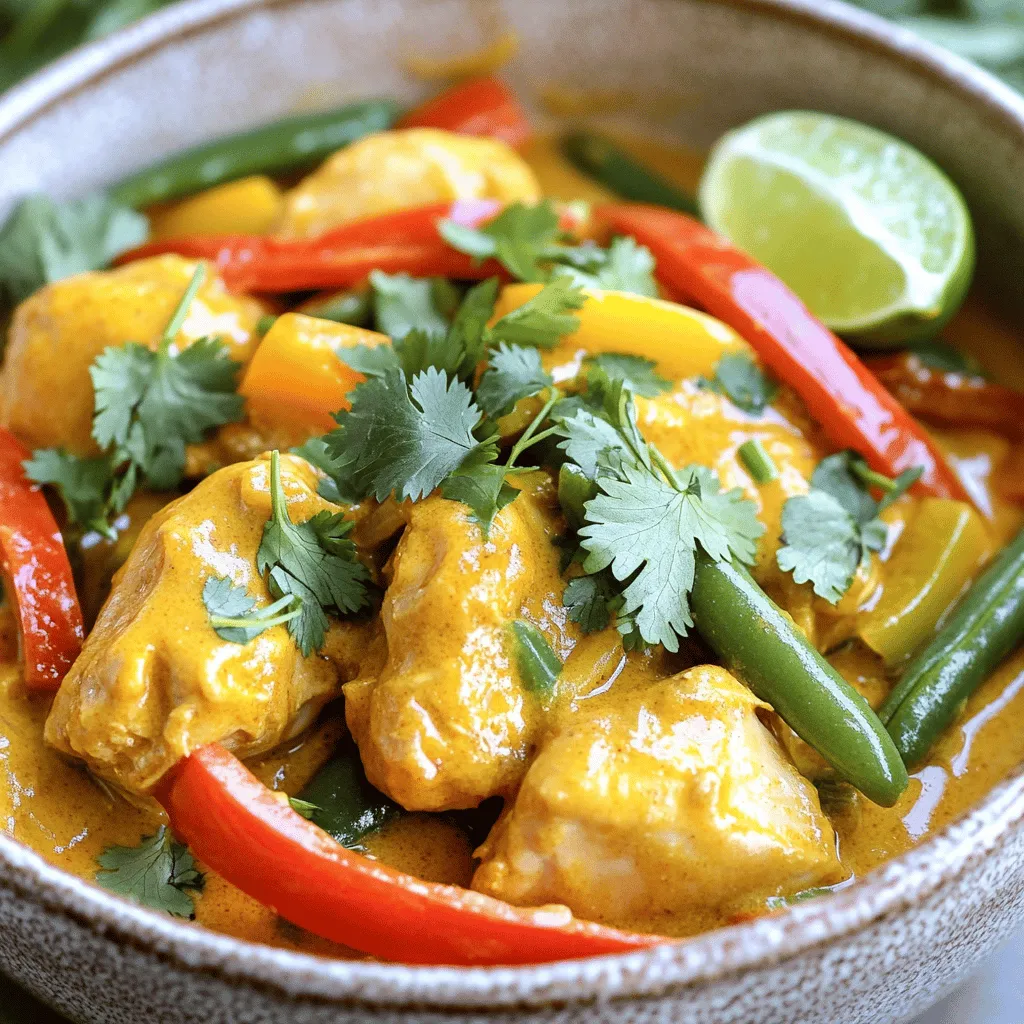
Variations
Alternative Proteins to Use
You can switch chicken with other proteins. Try using shrimp or tofu. Shrimp cooks fast, so add it in the last hour. Tofu gives a nice texture and soaks up the curry flavor. Use firm tofu and cut it into cubes. You can also use pork, but cook it longer for tender meat.
Vegetarian or Vegan Options
To make this dish vegetarian or vegan, skip the chicken. Use chickpeas instead. They add protein and a creamy texture. You can also use a mix of vegetables, like carrots and zucchini. These will soak up the curry flavor well. This way, everyone can enjoy the dish.
Add-ins for Extra Nutrients
Boost the nutrition of your curry with add-ins. Try adding spinach or kale for greens. These will wilt nicely into the sauce. Carrots add sweetness and crunch. You can also add lentils for extra fiber. Just make sure they are cooked before adding to the slow cooker. These simple changes make your meal even better.
Storage Info
How to Store Leftovers
After you enjoy your coconut curry chicken, let it cool. Then, put it in an airtight container. Store it in the fridge. It stays good for 3 to 4 days. If you see any signs of spoilage, throw it away. Always check before eating.
Freezing Instructions
To freeze, use a freezer-safe container. Leave some space at the top. The curry will expand when it freezes. Label the container with the date. You can freeze it for up to 3 months. When you’re ready to eat, thaw it in the fridge overnight.
Reheating Tips
For reheating, you can use the microwave or the stove. If using the microwave, heat it in short bursts. Stir between bursts for even heating. If using the stove, warm it in a pot over low heat. Add a splash of chicken broth if it looks thick. Enjoy your meal again!
FAQs
Can I use frozen chicken for this recipe?
Yes, you can use frozen chicken. Just add the frozen pieces directly to the slow cooker. Cooking time may increase by one to two hours. Always check that the chicken reaches 165°F for safety.
What can I substitute for coconut milk?
You can use almond milk or soy milk for a dairy-free option. For creaminess, add a bit of nut butter or silken tofu. These options change the flavor but can still taste good.
How do I make this curry spicier?
To amp up the heat, add more red curry paste. You can also add chopped fresh chilies or a pinch of cayenne pepper. Adjust slowly to find your perfect spice level.
This blog post covered the key ingredients needed for a delicious dish. We walked through step-by-step cooking instructions, ensuring the best flavor and common mistakes to avoid. You learned about tasty variations, storage tips, and answers to frequently asked questions.
Cooking can be fun and rewarding. With these tips, you can enjoy every bite. Experiment with flavors and find what you love best. Let’s make your next meal a hit!

![To make roasted garlic and tomato pasta, you need these simple items: - 1 pound spaghetti or your favorite pasta - 8 cloves garlic, unpeeled - 4 cups cherry tomatoes, halved - 1/4 cup extra-virgin olive oil - 1 teaspoon dried oregano - 1 teaspoon red pepper flakes (adjust for spice preference) - Salt and pepper to taste - 1/4 cup fresh basil, chopped - 1/2 cup freshly grated Parmesan cheese (optional) Fresh ingredients make a big difference in taste. When cooking, I always use ripe cherry tomatoes. They burst with flavor. Fresh garlic gives a sweet, nutty taste after roasting. Fresh basil adds a bright note to the dish. Using these ingredients helps create a dish that feels special. You can adjust this pasta to fit your needs. If you're gluten-free, choose gluten-free pasta. For a vegan option, skip the Parmesan cheese or use a plant-based alternative. You can even swap cherry tomatoes for canned diced tomatoes if fresh ones aren't available. This way, anyone can enjoy this tasty dish. For a heartier meal, add cooked chicken or shrimp. Feel free to mix in veggies like spinach or zucchini for added nutrition. For the full recipe, check out the details above. Start by gathering your ingredients. For this dish, you need: - 1 pound spaghetti or your favorite pasta - 8 cloves garlic, unpeeled - 4 cups cherry tomatoes, halved - 1/4 cup extra-virgin olive oil - 1 teaspoon dried oregano - 1 teaspoon red pepper flakes (adjust for spice preference) - Salt and pepper to taste - 1/4 cup fresh basil, chopped - 1/2 cup freshly grated Parmesan cheese (optional) Preheat your oven to 400°F (200°C). This helps the garlic and tomatoes roast perfectly. On a baking sheet, place the unpeeled garlic cloves and halved cherry tomatoes. Drizzle with half of the olive oil. Sprinkle with oregano, red pepper flakes, salt, and pepper. Toss gently to coat. Roast in the oven for 20-25 minutes. Look for blistered tomatoes and soft garlic. The smell will guide you! Meanwhile, cook your pasta. Use a large pot of salted boiling water and follow the package instructions. Cook until it’s al dente. Don’t forget to save 1 cup of pasta water before draining. Once the tomatoes and garlic are done, let them cool a bit. Squeeze the roasted garlic out of its skin into a bowl. Mash it with a fork to create a creamy base. Mix the mashed garlic with the roasted tomatoes. Add the remaining olive oil and a splash of the reserved pasta water. Stir well to make a sauce. Now, add the drained pasta to the sauce. Toss it all together until the pasta is well coated. If the sauce is too thick, add more reserved pasta water until you like the consistency. Finally, stir in fresh basil. Taste and adjust seasoning with salt and pepper if needed. Serve your roasted garlic and tomato pasta immediately. If you want, sprinkle some grated Parmesan cheese on top. Enjoy this meal! For the full recipe, check the earlier section. Roasting garlic is simple. Start by placing unpeeled garlic cloves on a baking sheet. Cook them at 400°F (200°C) for about 20 to 25 minutes. You want them soft and golden. When done, let them cool a bit. Squeeze the garlic out of the skin with your fingers. It should be creamy and sweet. This garlic adds a rich, deep flavor to your pasta. Cooking pasta seems easy, but timing is key. Follow the package directions for cooking time. Use a large pot with plenty of salted boiling water. This boosts flavor and helps keep pasta from sticking. For the best texture, aim for "al dente," which means it should be firm to the bite. Remember to reserve some pasta water before draining. This starchy water helps thicken your sauce. Want to make your roasted garlic and tomato pasta pop? Here are some ideas: - Herbs: Add fresh basil or parsley for a bright touch. - Cheese: Toss in some feta or goat cheese for creaminess. - Nuts: Pine nuts or walnuts give a nice crunch. - Spices: For heat, add more red pepper flakes or a dash of smoked paprika. - Zest: A sprinkle of lemon zest can brighten the flavors. These enhancements will take your dish to the next level. Check out the Full Recipe for a complete guide to making this tasty meal! {{image_2}} Roasted garlic and tomato pasta is great for everyone. For a vegetarian twist, skip the cheese. You can add nutritional yeast for a cheesy taste. If you want a vegan option, use a plant-based cheese. This makes it creamy without dairy. You can also toss in fresh spinach or kale. These greens add color and nutrients to your dish. You can switch up the pasta for fun! Try whole wheat pasta for more fiber. Gluten-free pasta works well if you need it. You can even use zucchini noodles for a low-carb choice. Each type will change the dish's texture, so experiment to find your favorite. Want to make it heartier? Add protein like grilled chicken or shrimp. Cook these separately and toss them in at the end. For a veggie boost, add bell peppers or mushrooms. They roast well and taste amazing with garlic and tomatoes. Broccoli or asparagus are also great choices. These keep the dish fresh and colorful. For more details, check out the full recipe. To keep your roasted garlic and tomato pasta fresh, store it in an airtight container. Make sure it cools down before sealing. This will help keep the flavors intact. The pasta can last in the fridge for about 3 to 5 days. If you notice any off smells or changes in color, it's best to toss it. When you’re ready to enjoy your leftovers, reheating properly is key. Use a pan over low heat for the best results. Add a splash of water or olive oil to help the pasta regain its moisture. Stir often to prevent sticking. You can also microwave it, but cover the dish to retain moisture. Heat in 30-second intervals, stirring in between. If you want to save some pasta for later, freezing is a great option. Portion the pasta into individual servings and place them in freezer-safe bags. Remove as much air as possible before sealing. It keeps well for about 2 to 3 months in the freezer. When you're ready to eat, thaw it in the fridge overnight, then reheat as mentioned above. For the best taste, enjoy it within a month. Yes, you can use many types of tomatoes. Roma tomatoes add a rich flavor. Beefsteak tomatoes are juicy and sweet. You can also use canned tomatoes if fresh ones are not available. Just be sure to drain them well. This will keep your pasta from getting too watery. Experiment and find what you like best! To make this recipe gluten-free, choose gluten-free pasta. Many brands offer great options that taste good. You can find pasta made from rice, corn, or lentils. These pastas cook a bit differently, so check the package for instructions. Follow the same steps in the recipe, and enjoy your meal worry-free! Roasted garlic and tomato pasta pairs well with many sides. A fresh green salad adds crunch and color. Garlic bread is a classic choice that everyone loves. You can also serve it with grilled vegetables for a healthy twist. A nice glass of red wine makes the meal even better. Enjoy exploring different pairings! For the complete recipe, check out the [Full Recipe]. This blog post covered key ingredients for roasted garlic and tomato pasta. We explored fresh ingredients and alternatives for dietary needs. I shared step-by-step cooking instructions and helpful tips, like roasting garlic perfectly. We also discussed pasta variations and storage tips to keep leftovers fresh. In summary, this dish is simple, versatile, and delicious. You can make it fit your tastes and needs. Enjoy experimenting with flavors and ingredients! Your next meal can be a hit.](https://dailydishly.com/wp-content/uploads/2025/06/d553d96f-6423-4985-8dca-dedfc8f9e127-768x768.webp)


