
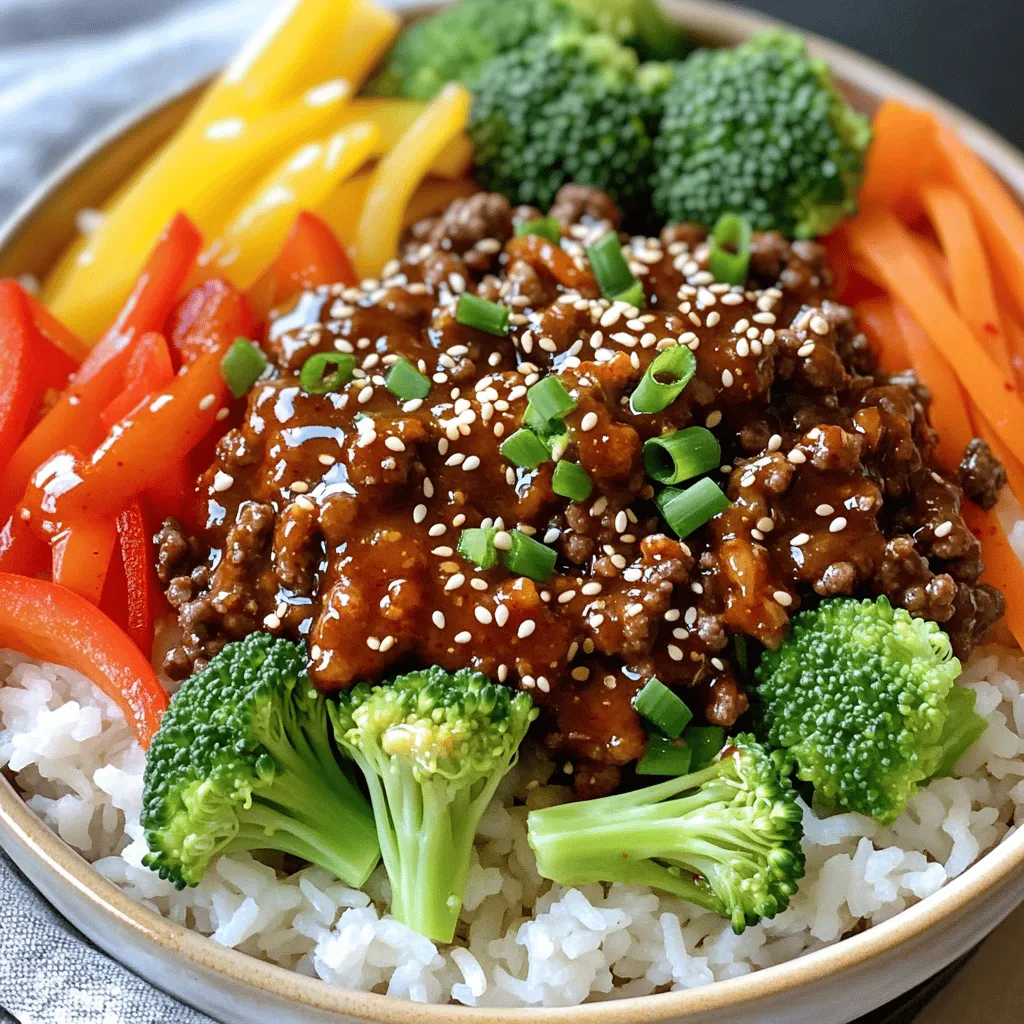
Get ready to spice up your dinner with these Spicy Korean Beef Bowls! You’ll love how quick and easy it is to prepare this flavorful comfort food delight. With savory ground beef, fresh veggies, and a punch of Korean chili paste, each bite bursts with taste. Whether you’re cooking for yourself or hosting friends, this dish is sure to impress. Let’s dive into the simple ingredients and steps you need to create this delicious meal!
Ingredients
Main Ingredients List
– 1 lb ground beef (or ground turkey)
– 1 tablespoon vegetable oil
– 3 cloves garlic, minced
– 1 inch piece ginger, grated
– 1 tablespoon gochujang (Korean chili paste)
– 1 tablespoon soy sauce
– 1 tablespoon sesame oil
– 1 tablespoon brown sugar
– 1 carrot, julienned
– 1 cup broccoli florets
– 1 bell pepper, sliced
– 2 green onions, chopped
– 1 tablespoon sesame seeds (for garnish)
– Cooked rice for serving
Optional Seasonings and Toppings
– Additional chili flakes for spice
– Chopped cilantro or parsley
Nutritional Information
– Calories per serving: Approximately 450
– Macronutrient breakdown:
– Carbs: 45g
– Proteins: 25g
– Fats: 20g
You can easily find these ingredients at your local grocery store. The gochujang is key for that spicy kick. You can also swap the ground beef for turkey if you want a leaner meal. I love using colorful bell peppers to make the dish pop! This recipe serves four, perfect for a family dinner or meal prep for the week.
Step-by-Step Instructions
Cooking Preparation
Start by getting your skillet ready. Place it on the stove and turn the heat to medium-high. Pour in 1 tablespoon of vegetable oil and let it warm up. While the oil heats, you can prepare the garlic and ginger. Mince 3 cloves of garlic and grate a 1-inch piece of ginger. This mix adds a great flavor to the dish.
Cooking the Beef
Once the oil is hot, add the minced garlic and grated ginger to the skillet. Sauté them for about 30 seconds until they smell amazing. Next, add 1 pound of ground beef. Break it apart as it cooks. You want to brown the beef completely, which takes about 5-7 minutes. If there is extra fat, drain it off. Now, stir in 1 tablespoon of gochujang, 1 tablespoon of soy sauce, 1 tablespoon of sesame oil, and 1 tablespoon of brown sugar. Mix everything well to coat the beef evenly with the sauce.
Incorporating Vegetables
Next, it’s time to add some color and crunch! Toss in 1 julienned carrot, 1 cup of broccoli florets, and 1 sliced bell pepper. Cook this mix for another 3-4 minutes. You want the veggies to be tender but still crisp. Once done, take the skillet off the heat and mix in 2 chopped green onions. Serve your spicy Korean beef over a bed of cooked rice, and don’t forget to garnish with sesame seeds.Enjoy your meal!
Tips & Tricks
Achieving the Right Flavor
Gochujang is key to this dish. It brings heat and depth. Use it right. Mix it well with soy sauce and sesame oil. This balance makes each bite pop. For veggies, cook them just enough to stay crisp. Sauté them after the beef is cooked. This keeps their color and crunch.
Time-Saving Tips
Save time by using pre-cut veggies. Many stores sell ready-to-use options. This makes meal prep fast. You can also prep beef and sauce ahead. Store them in the fridge. When you’re ready, just cook and combine. It’s a great way to enjoy this dish on busy nights.
Serving Suggestions
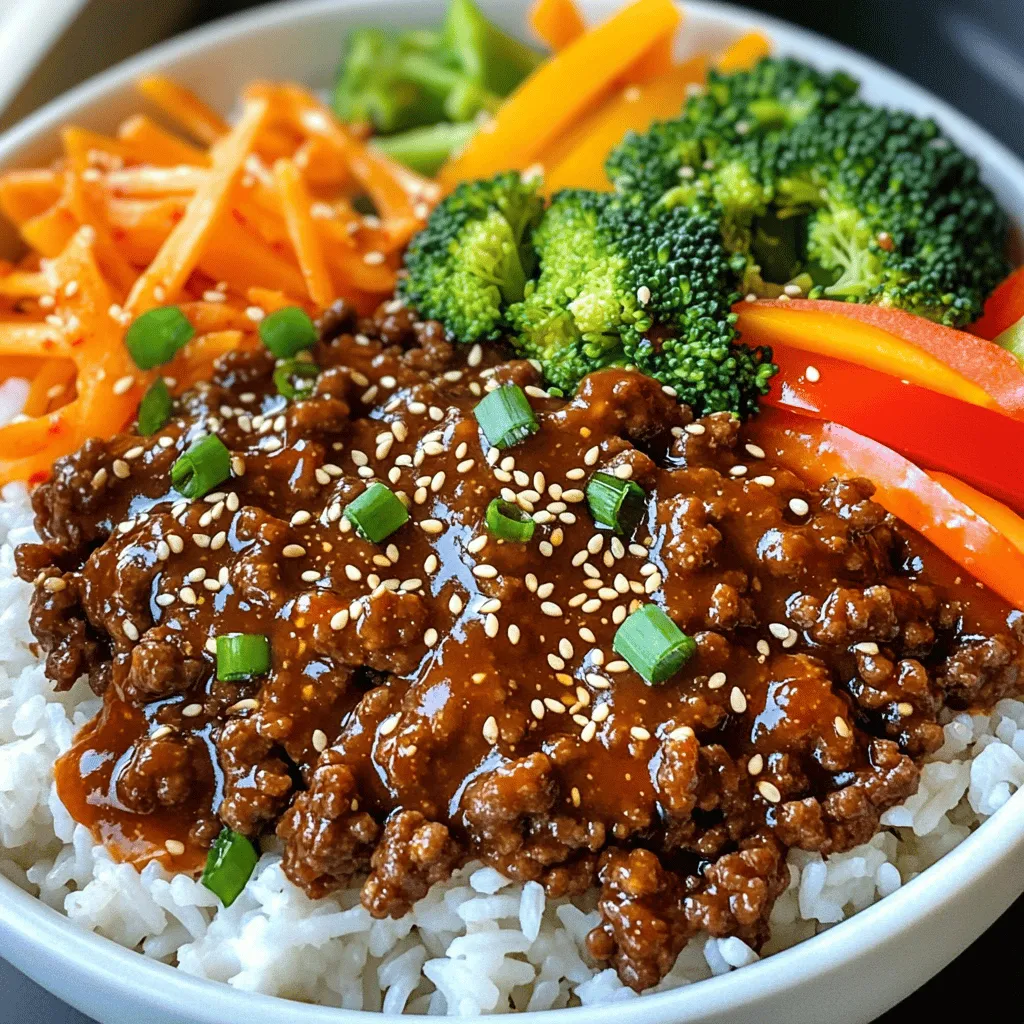
Serve your spicy Korean beef over rice. You can choose white, brown, or cauliflower rice. Each option has its own charm. For side dishes, try kimchi or pickled veggies. They add extra flavor and texture. Aim for about one cup of rice per serving. Enjoy the mix of tastes and colors on your plate!
Variations
Healthier Alternatives
You can easily swap out ground beef for turkey or tofu. Ground turkey is leaner and still tasty. Tofu gives a great texture and soaks up flavors well. For a low-carb option, use cauliflower rice instead of regular rice. It adds crunch and keeps the dish light.
Spice Level Adjustments
Want more heat? Add extra gochujang or chili flakes. For less spice, use less gochujang. You can also try sweet chili sauce or soy sauce for a milder taste. This way, you can enjoy a dish that matches your heat level.
Different Vegetable Options
Seasonal veggies work great in this dish. Swap broccoli for asparagus or snap peas. You can also add spinach or kale for extra greens. These additions boost nutrition and color. Get creative with what you have on hand!
Storage Info
Short-Term Storage
To refrigerate leftovers, let the beef cool first. Place it in an airtight container. Store it in the fridge for up to three days. For reheating, use the microwave. Heat it in short bursts to avoid drying out. Stir it often to ensure even heating.
Long-Term Storage
For freezing, pack the beef in freezer-safe containers. Make sure to leave some space for expansion. You can freeze it for up to three months. When ready to eat, thaw it overnight in the fridge. Then, reheat it on the stove or microwave.
Shelf-Life of Ingredients
The cooked beef mixture stays fresh for three days in the fridge. Check the ground beef’s expiry date before cooking. Gochujang lasts a long time, usually up to a year when unopened. Other fresh veggies should be used within a week for best taste. Enjoy your spicy Korean beef bowls!
FAQs
What is gochujang and where can I find it?
Gochujang is a thick, red chili paste from Korea. It has a deep flavor that mixes spicy, sweet, and savory. This sauce adds a unique kick to many dishes. You can find gochujang in most Asian grocery stores. It is often in the international aisle of larger supermarkets. You can also buy it online from various retailers.
Can I make spicy Korean beef bowls ahead of time?
Yes, you can prepare spicy Korean beef bowls ahead. Cook the beef and veggies as the recipe shows. Let the mixture cool, then store it in a container. You can keep it in the fridge for up to three days. When you are ready to eat, just reheat it in a pan or microwave. Add a splash of water if it seems dry.
What can I substitute for rice in this recipe?
If you want to skip rice, there are great options. Quinoa is a healthy choice that adds protein. You can also use lettuce wraps for a fun twist. Cauliflower rice is another low-carb alternative. Each of these options pairs well with the spicy beef mixture.
Can I make this recipe vegetarian?
Absolutely! You can swap out the beef for plant-based proteins. Tofu or tempeh works well in this recipe. You can also use lentils for added texture. For sauce, you can mix gochujang with soy sauce and maple syrup. This will give you the same great taste without meat.
This blog post covered a tasty Korean beef bowl recipe. It included key ingredients, cooking steps, and storage tips. Cooking with gochujang adds flavor, while fresh veggies boost nutrition. You can customize spice levels and swap proteins for variety. Remember to store leftovers properly, so nothing goes to waste. Enjoying this dish is simple and fun. With these tips, you can create a meal that’s delicious and easy. Dive into this recipe and make it your own!