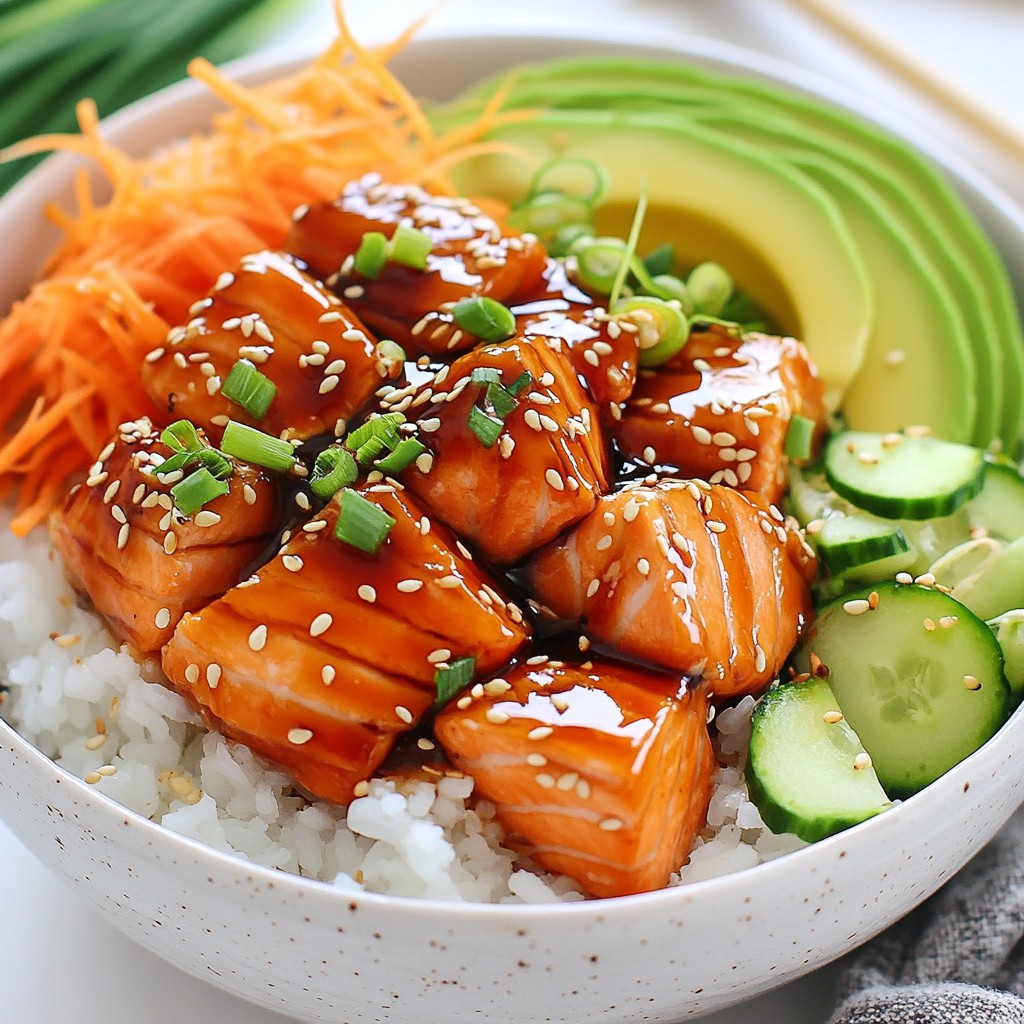
Craving a fulfilling meal that’s both flavorful and easy to make? Let me introduce you to Teriyaki Salmon Sushi Bowls! These delightful bowls combine tender salmon, fluffy sushi rice, and fresh veggies, making them a hit for lunch or dinner. Perfect for both beginners and seasoned cooks, each step is simple to follow. Ready to impress your taste buds? Dive into the full recipe and discover your new favorite dish!
Why I Love This Recipe
- Fresh and Flavorful: This recipe combines fresh ingredients like salmon, avocado, and vegetables, creating a vibrant and delicious meal.
- Customizable Bowls: Everyone can personalize their sushi bowl with their favorite toppings or additional ingredients, making it a hit for any crowd.
- Quick and Easy: With a total time of just 55 minutes, you can whip up this delightful dish without spending all day in the kitchen.
- Healthy and Satisfying: This bowl is packed with nutrients from the fish, veggies, and healthy fats, making it a wholesome choice for any meal.
Ingredients
Main Ingredients
- 2 cups sushi rice
- 2 1/2 cups water
- 1 lb salmon fillet
- 1/4 cup soy sauce
- 2 tablespoons honey
- 1 tablespoon rice vinegar
- 1 teaspoon sesame oil
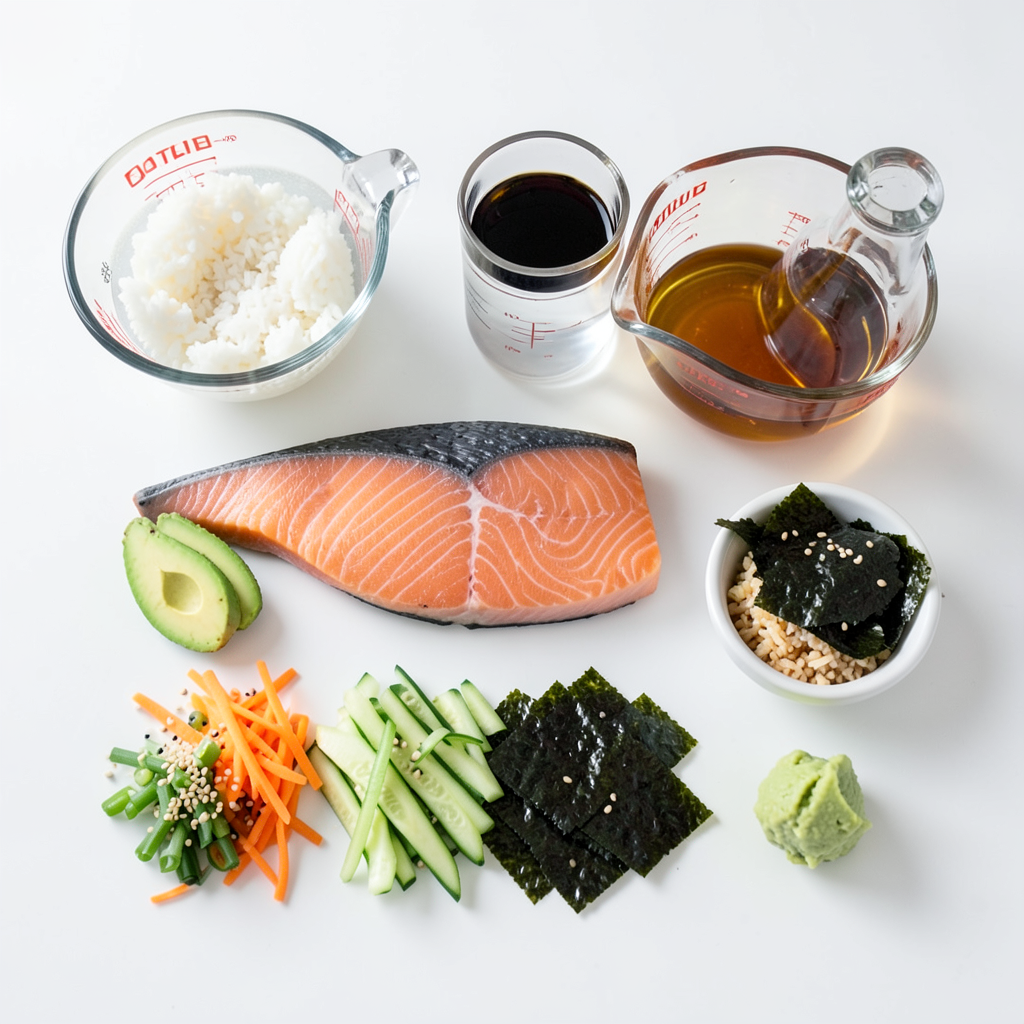
Sushi rice is the base of this dish. It is sticky and helps hold everything together. The salmon fillet brings rich flavor, and it pairs well with teriyaki sauce. For the sauce, we mix soy sauce, honey, rice vinegar, and sesame oil.
Toppings & Garnishes
- 1 avocado, sliced
- 1 cucumber, julienned
- 1 carrot, grated
- 2 green onions, sliced
- 1 tablespoon sesame seeds
These toppings add color, crunch, and nutrition. Avocado gives a creamy texture. Cucumber adds freshness. Grated carrot brings sweetness. Green onions give a mild onion flavor. Sesame seeds finish the bowl with a nutty touch.
Optional Add-Ons
- Seaweed sheets, cut into strips
- Pickled ginger
- Wasabi
These add-ons can enhance your sushi bowl. Seaweed sheets add a salty crunch. Pickled ginger cleanses your palate. Wasabi brings heat and spice. You can mix and match to find what you like best.
Step-by-Step Instructions
Cooking the Sushi Rice
- Rinsing the rice: Start by rinsing 2 cups of sushi rice in cold water. Keep rinsing until the water runs clear. This step helps remove excess starch. Clean rice will help create that sticky texture we want.
- Cooking the rice: After rinsing, add the rice to a medium pot. Pour in 2 1/2 cups of water. Bring it to a boil over medium heat. Once it's boiling, lower the heat, cover, and let it simmer for about 18 minutes. After the water is absorbed, let the rice sit covered for 10 more minutes. This resting time lets the rice become fluffy.
Making the Teriyaki Sauce
- Combining ingredients: While the rice cooks, you can make your teriyaki sauce. In a small saucepan, mix 1/4 cup of soy sauce, 2 tablespoons of honey, 1 tablespoon of rice vinegar, and 1 teaspoon of sesame oil.
- Cooking method: Heat the saucepan over low heat. Stir until the honey is fully dissolved. This sauce adds a sweet and savory flavor to the salmon.
Preparing the Salmon
- Grilling vs baking: You can prepare the salmon in two ways: grilling or baking. For grilling, heat a grill pan or skillet over medium-high heat. Brush the salmon fillet with some teriyaki sauce. Cook for about 4-5 minutes on each side until it’s flaky. If you prefer baking, set your oven to 400°F (200°C) and cook for 12-15 minutes.
- Flaking the salmon: Once cooked, let the salmon rest for a few minutes. This helps keep it moist. Then, flake the salmon into bite-sized pieces using a fork.
Assembling the Sushi Bowls
- Fluffing the rice: In a large mixing bowl, take your cooked sushi rice and fluff it with a fork. If you want, add a splash of rice vinegar to enhance the flavor.
- Layering the ingredients: To assemble, divide the rice into serving bowls. Top each bowl with flaked salmon, avocado slices, julienned cucumber, grated carrot, and sliced green onions. Drizzle more teriyaki sauce on top and sprinkle sesame seeds for extra crunch.
Now, you have a colorful and tasty sushi bowl ready to enjoy!
Tips & Tricks
Sourcing Fresh Ingredients
Selecting quality salmon When picking salmon, look for bright color and firm texture. Fresh salmon should smell like the ocean, not fishy. If you can, buy wild-caught salmon for better taste and health benefits. Ask your fishmonger about the source to ensure quality.
Choosing ripe avocados For avocados, choose ones that yield slightly to gentle pressure. If they feel hard, they are not ripe yet. Ripe avocados have a nice green color and smooth skin. If you can't use them right away, store them in the fridge to slow the ripening.
Cooking Tips
Achieving the perfect salmon texture Cook salmon until it flakes easily with a fork. You can grill or bake it, but keep an eye on the time. For a juicy texture, don’t overcook it. Use a brush of teriyaki sauce for added flavor while cooking.
Getting the ideal rice consistency Rinse sushi rice under cold water until it runs clear. This helps remove excess starch. Cook the rice until the water is absorbed, then let it rest. Fluff it with a fork for the best texture. A splash of rice vinegar adds a nice tang.
Presentation Suggestions
Stylish bowl arrangement When serving, divide the rice evenly in bowls. Layer flaked salmon on top, then arrange the avocado, cucumber, and carrot artfully around it. This makes the bowl look appealing and colorful.
Garnishing techniques Sprinkle sesame seeds over the top for crunch. Add green onions for a fresh touch. Serve with strips of seaweed, pickled ginger, and a dab of wasabi for extra flavor. These details make your dish not just tasty but also beautiful.
Pro Tips
- Choose Fresh Salmon: Always opt for the freshest salmon available for the best flavor and texture. Look for bright color and a clean scent.
- Perfectly Cooked Rice: Ensure your sushi rice is cooked perfectly by following the water-to-rice ratio and letting it rest after cooking to achieve ideal stickiness.
- Customize Toppings: Feel free to add or substitute toppings based on your preference. Pickled vegetables, radishes, or edamame can enhance your sushi bowl.
- Store Leftovers Properly: If you have leftovers, store the components separately in airtight containers to maintain freshness and prevent sogginess.
Variations
Alternative Proteins
You can swap salmon for chicken or tofu if you want. Chicken gives a nice texture and flavor. Just cook it until it’s safe to eat. Tofu works well too, especially if you press it first. This helps it absorb more flavor. You can also try different types of seafood, like shrimp or tuna. Each one brings a unique taste to the bowl.
Dietary Modifications
If you need a gluten-free meal, use tamari instead of soy sauce. This simple change keeps the same taste. For a vegan option, use tofu and replace the honey with maple syrup. You can still enjoy all the flavors without any animal products. It’s all about making the dish fit your needs.
Flavor Enhancements
You can add spices or extra marinades to boost the flavor. Try some garlic powder or ginger for a zing. You can also add more vegetables to the bowl. Bell peppers, snap peas, or radishes can add color and crunch. Mix and match to find what you love best.
Storage Info
Storing Leftovers
To keep your teriyaki salmon sushi bowls fresh, follow these tips:
- Store the sushi rice and salmon in airtight containers.
- Place veggies like avocado and cucumber in a separate container.
- Refrigerate everything within two hours of cooking.
- Sushi bowls stay fresh for up to three days in the fridge.
If you want to freeze the salmon, do this:
- Wrap it tightly in plastic wrap.
- Place it in a freezer-safe bag or container.
- Frozen salmon can last up to three months.
Reheating Guidelines
To reheat your sushi bowls, use these methods:
- For the microwave, place the rice and salmon in a bowl.
- Cover with a damp paper towel and heat for one minute.
- Check if it's warm; if not, heat in 30-second bursts.
For oven reheating, follow these steps:
- Preheat the oven to 350°F (175°C).
- Place the salmon and rice in an oven-safe dish.
- Cover with foil and heat for about 10-15 minutes.
Shelf Life
Your teriyaki salmon sushi bowls last a few days in the fridge.
- Generally, they stay good for about three days.
- Always check for signs of spoilage like off smells or discoloration.
- If the rice feels dry or hard, it’s time to toss it.
- For the salmon, look for any change in color or texture.
FAQs
How do I cook sushi rice perfectly?
To cook sushi rice well, start by rinsing it. Rinse the rice under cold water until the water runs clear. This step is key. It removes extra starch. If you skip this, the rice may become too sticky.
The cooking ratio is also important. Use 1 cup of sushi rice to 1.25 cups of water. For two cups of rice, use 2.5 cups of water. Bring the rice and water to a boil. Once boiling, lower the heat, cover, and let it simmer for 18 minutes. After that, let it sit for 10 more minutes while covered. This resting time helps the rice finish cooking and become fluffy.
Can I make teriyaki sauce from scratch?
Yes, making teriyaki sauce at home is easy. Mix 1/4 cup of soy sauce, 2 tablespoons of honey, 1 tablespoon of rice vinegar, and 1 teaspoon of sesame oil in a small saucepan. Heat it on low until the honey dissolves. This simple recipe gives you fresh sauce.
If you're short on time, you can buy teriyaki sauce at the store. Look for brands with natural ingredients. Always check the label for any added sugars or preservatives.
What can I substitute for sushi rice?
If you can't find sushi rice, don't worry. You can use other types of rice. Short-grain rice works well as a substitute. You can also use jasmine rice, but the texture will be different.
Another great option is quinoa. It adds a nutty flavor and is a healthy choice. Cauliflower rice is a popular low-carb option. It’s light and has a nice texture. Just remember to squeeze out excess moisture before using it in your sushi bowl.
This guide covered making delicious sushi bowls at home. We discussed key ingredients like sushi rice, salmon, and teriyaki sauce. You learned how to prepare your sushi bowl step-by-step, from cooking the rice to assembling the ingredients. Tips on sourcing fresh items, cooking methods, and presentation enhance your dish. You can also explore variations, making it fit your diet. Finally, proper storage and reheating advice ensure your bowls last. Now, you’re ready to enjoy this fun and tasty meal!