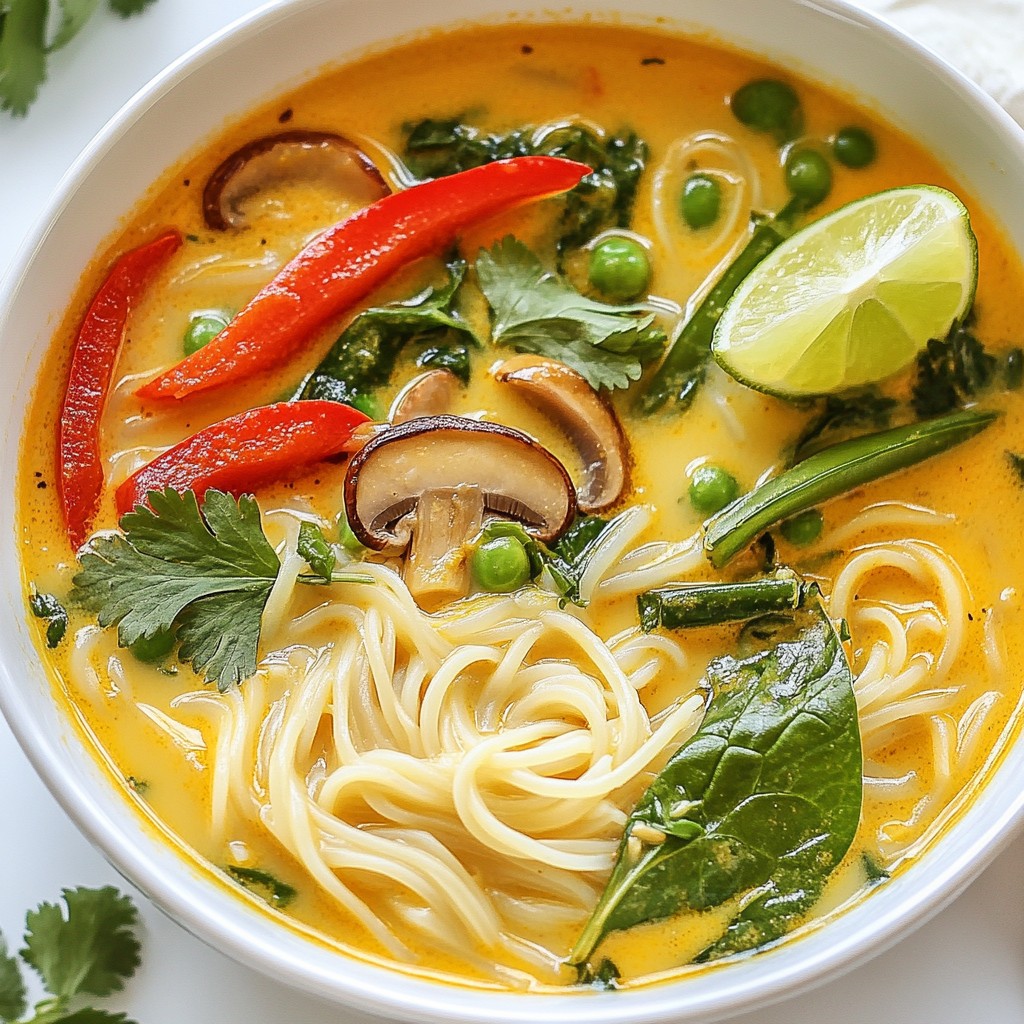
If you love rich, creamy flavors with a hint of spice, you need to try Thai Coconut Curry Noodle Soup. This dish blends tender rice noodles and fresh veggies in a silky curry broth. It's easy to make and bursting with flavor! Join me as we explore the simple ingredients, step-by-step instructions, and secret tips to create this scrumptious soup at home. Let's get cooking!
Why I Love This Recipe
- Delicious Flavor: This soup is packed with vibrant Thai flavors that will tantalize your taste buds.
- Quick and Easy: With just 15 minutes of prep time, this recipe is perfect for a weeknight dinner.
- Healthy Ingredients: Loaded with vegetables and made with coconut milk, it's both nutritious and satisfying.
- Customizable: Feel free to add your favorite proteins or vegetables to make it your own.
Ingredients
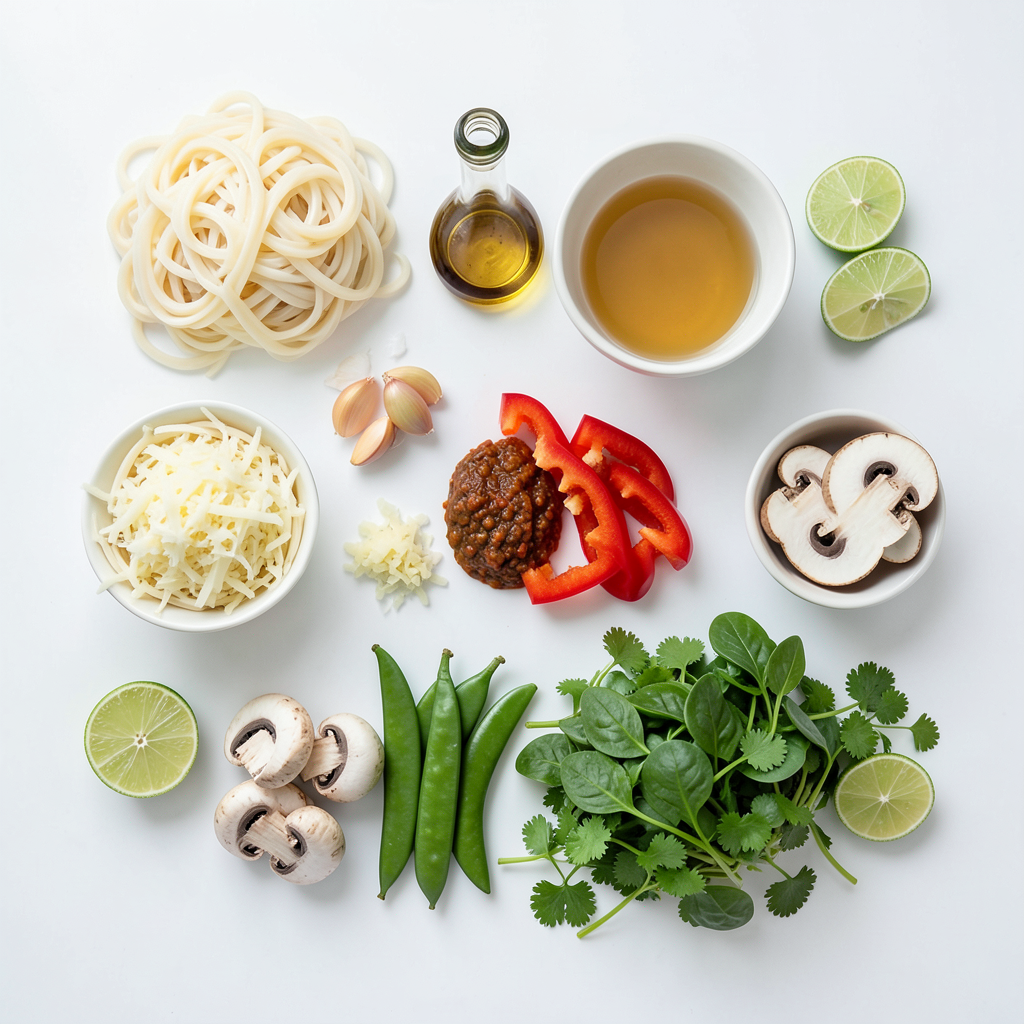
To make a rich Thai Coconut Curry Noodle Soup, gather these simple ingredients:
- 200g rice noodles
- 1 tablespoon coconut oil
- 1 onion, finely chopped
- 2 garlic cloves, minced
- 1 tablespoon fresh ginger, grated
- 1 tablespoon red curry paste
- 400ml coconut milk
- 2 cups vegetable broth
- 1 tablespoon soy sauce
- 2 teaspoons brown sugar
- 1 red bell pepper, sliced
- 1 cup snap peas
- 1 cup mushrooms, sliced
- 1 cup baby spinach
- Fresh cilantro for garnish
- Lime wedges for serving
Each ingredient plays a key role in making this dish full of flavor. The rice noodles give a soft base. Coconut oil adds a subtle richness. Onion, garlic, and ginger bring warmth and depth. The red curry paste gives that signature heat. Coconut milk creates a creamy texture, while vegetable broth boosts the flavor. Soy sauce and brown sugar balance the taste. Fresh veggies add crunch and color, making the soup vibrant and appealing. Lastly, cilantro and lime enhance the fresh taste.
Remember, using fresh ingredients makes a big difference! Prepare them with care, and you'll enjoy a delightful bowl of soup.
Step-by-Step Instructions
Cooking the Rice Noodles
To cook rice noodles, follow the package instructions. Bring a pot of water to a boil. Add the rice noodles and cook them for 3-5 minutes until soft. Drain the noodles and rinse them with cold water. This stops the cooking process and keeps them from sticking. Set the noodles aside for later.
Sautéing the Aromatics
Heat 1 tablespoon of coconut oil in a large pot over medium heat. Add the chopped onion and sauté for about 3-4 minutes. You want them to be soft and clear. Next, add 2 minced garlic cloves and 1 tablespoon of grated ginger. Cook for another 1-2 minutes. This step fills your kitchen with a lovely aroma.
Creating the Curry Base
Now, it’s time to make the curry base. Stir in 1 tablespoon of red curry paste and cook for 1 minute. This helps the flavors come alive. Pour in 400ml of coconut milk and 2 cups of vegetable broth. Stir well and bring the mixture to a gentle simmer. Simmering helps blend the flavors together.
Adding Vegetables
Next, add your sliced vegetables. Toss in 1 sliced red bell pepper, 1 cup of snap peas, and 1 cup of sliced mushrooms. Cook for 5-7 minutes. You want the veggies to be tender but still crisp. This keeps your soup colorful and fresh.
Combining Noodles and Spinach
Finally, add the cooked rice noodles and 1 cup of baby spinach to the pot. Stir gently to mix everything. Be careful not to break the noodles. Cook until the spinach wilts and everything is hot. Taste the soup and adjust seasoning if needed. Enjoy your flavorful Thai coconut curry noodle soup!
Tips & Tricks
Enhancing Flavor
To boost the flavor of your Thai coconut curry noodle soup, consider these tips:
- Adjust Seasoning: If you want more saltiness, add more soy sauce. For sweetness, add more brown sugar.
- Extra Ingredients: Try adding lime juice for brightness or fish sauce for depth. A dash of sesame oil can also add a nice touch.
Cooking Techniques
Sautéing and simmering are key to great flavor:
- Sautéing: Start with medium heat for your coconut oil. Add onions first, then garlic and ginger. This order helps build layers of flavor.
- Simmering: Once you add the coconut milk, let it simmer gently. This melds the flavors together without burning.
Presentation Tips
How you serve your soup can make it more fun:
- Serving Ideas: Use deep bowls for a cozy feel. Add cilantro on top for color. Lime wedges on the side make it fresh.
- Side Dishes: Pair it with crispy spring rolls or a light salad. These complement the soup and add crunch.
Pro Tips
- Use Fresh Ingredients: Fresh vegetables and herbs will elevate the flavor of your soup. Opt for in-season produce when possible.
- Adjust Spice Levels: If you prefer a milder soup, start with half the amount of red curry paste and add more to taste as it cooks.
- Customize Your Noodles: Feel free to substitute rice noodles with other types like udon or soba for a different texture and flavor.
- Make It Ahead: This soup tastes even better the next day! Prepare it in advance and reheat for a quick meal.
Variations
Protein Additions
You can make this soup even better by adding protein. Tofu is a great choice if you want a plant-based option. Just cube it and toss it in during the last few minutes of cooking. If you prefer meat, chicken works well too. Cube the chicken and add it after sautéing the onions. Cook until it's no longer pink. Shrimp is another tasty option. Add it to the soup just before serving. Cook it for a few minutes until it turns pink.
Veggie Swaps
Feel free to change the veggies based on what you like. Carrots add a nice crunch. Just slice them thin and add them with the bell pepper. Broccoli is a great addition too. Cut it into small florets and toss it in when you add the other veggies. You can also use zucchini or bok choy for a unique twist. Get creative with what you have!
Spice Adjustments
If you want more heat, add extra red curry paste. Start with a little, then taste as you go. For less spice, use less curry paste or add a bit of coconut milk to cool it down. You can also add a pinch of sugar to balance the flavors. Always remember to taste your soup before serving. Adjust the spice to fit your taste!
Storage Info
Storing Leftovers
To store your Thai coconut curry noodle soup, let it cool first. Use an airtight container to keep it fresh. You can refrigerate it for up to three days. If you want to keep it longer, freeze it in portions. Make sure to leave some space in the container, as liquids expand when frozen.
Reheating Instructions
When you are ready to eat, you can reheat the soup on the stove. Pour the soup into a pot and heat over low to medium heat. Stir it often to help it warm evenly. You can also use a microwave. Place the soup in a microwave-safe bowl. Heat it for one to two minutes, stirring halfway through.
Shelf Life
In the fridge, the soup lasts about three days. If you freeze it, it can last up to three months. For best taste, eat it sooner rather than later. Always check for any off smells or changes in color before eating leftovers.
FAQs
What is Thai coconut curry noodle soup?
Thai coconut curry noodle soup is a rich and creamy dish. It combines rice noodles with a flavorful coconut milk base. The soup features red curry paste, which adds warmth and spice. Fresh vegetables like bell peppers, snap peas, and mushrooms add color and crunch. This soup is both comforting and vibrant, making it a favorite among many.
Can I make this soup vegan?
Yes, you can easily make this soup vegan. Use vegetable broth instead of chicken broth. Replace the soy sauce with a gluten-free version if needed. You can also use tofu or tempeh for protein. This keeps the dish plant-based while still being tasty.
How to fix overly salty soup?
If your soup tastes too salty, try adding more liquid. Add extra vegetable broth or coconut milk to dilute the saltiness. You can also add a pinch of sugar to balance the flavors. If you have fresh veggies, toss in more to absorb some salt. Taste as you adjust to reach the right balance.
Can I use other types of noodles?
Absolutely! You can use other noodle types based on your preference. Udon, egg noodles, or even soba work well. Each noodle adds a different texture. Just make sure to cook them according to package instructions before adding to the soup.
This blog shared a simple recipe for Thai coconut curry noodle soup. You learned about key ingredients, step-by-step cooking, tips for flavor, and storage methods. The recipe is flexible; you can easily add proteins or swap vegetables.
In your kitchen, feel free to make it your own. Enjoy experimenting with flavors and finding your perfect version of this dish. Cooking is fun, and every bowl of soup can be unique!