
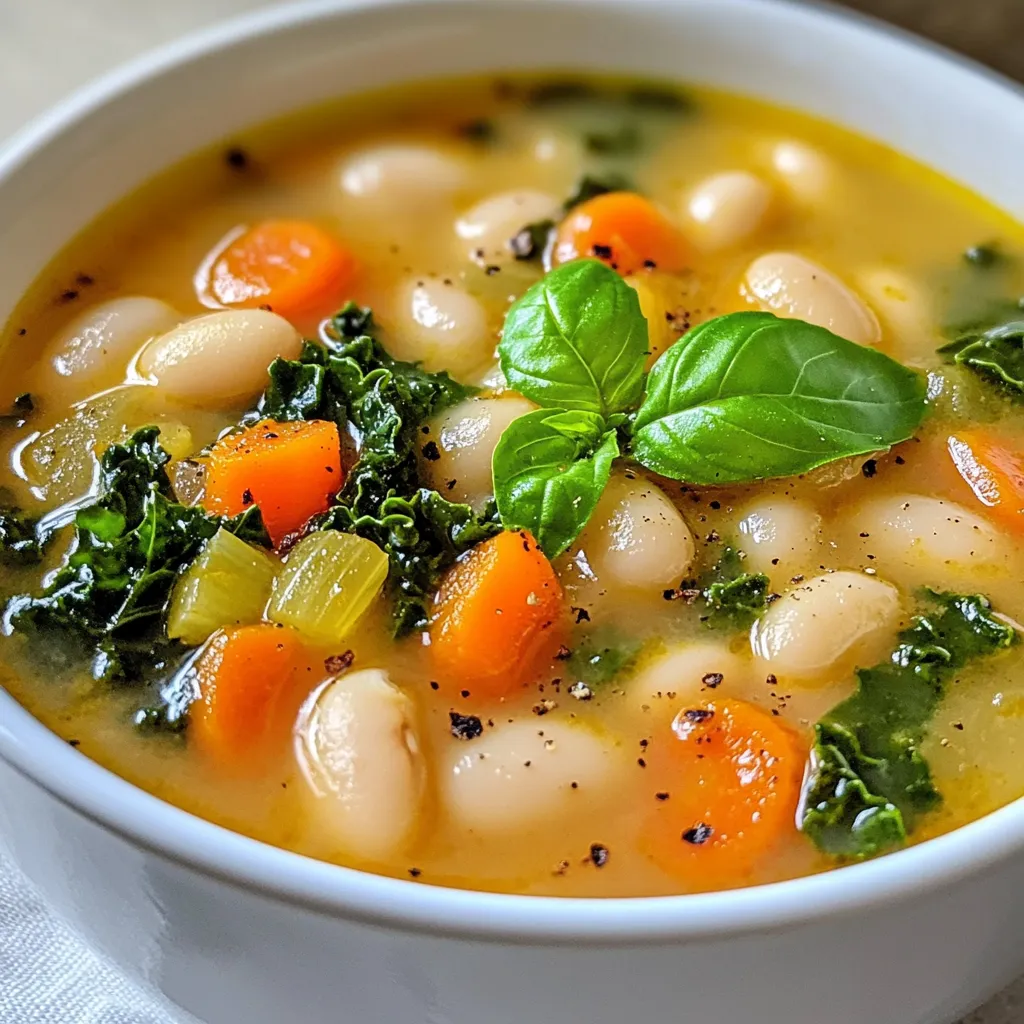
Tuscan White Bean Soup Simple and Flavorful Dish

Looking for a warm, hearty meal that’s simple to make? Tuscan White Bean Soup is your answer! This flavorful dish packs in nutritious ingredients like white beans, cozy vegetables, and herbs. You can whip it up in no time, making it perfect for busy weeknights or a relaxing weekend. Join me as we explore easy steps to create this delightful soup that everyone will love!
Why I Love This Recipe
- Comforting and Hearty: This soup is perfect for chilly evenings, providing warmth and satisfaction in every bowl.
- Nutritious Ingredients: Packed with beans, vegetables, and kale, it’s a wholesome meal that nourishes the body.
- Easy to Make: With simple steps and minimal prep, this recipe is accessible for cooks of all skill levels.
- Customizable Flavor: Feel free to adjust herbs and spices to suit your taste, making it a versatile dish.
Ingredients
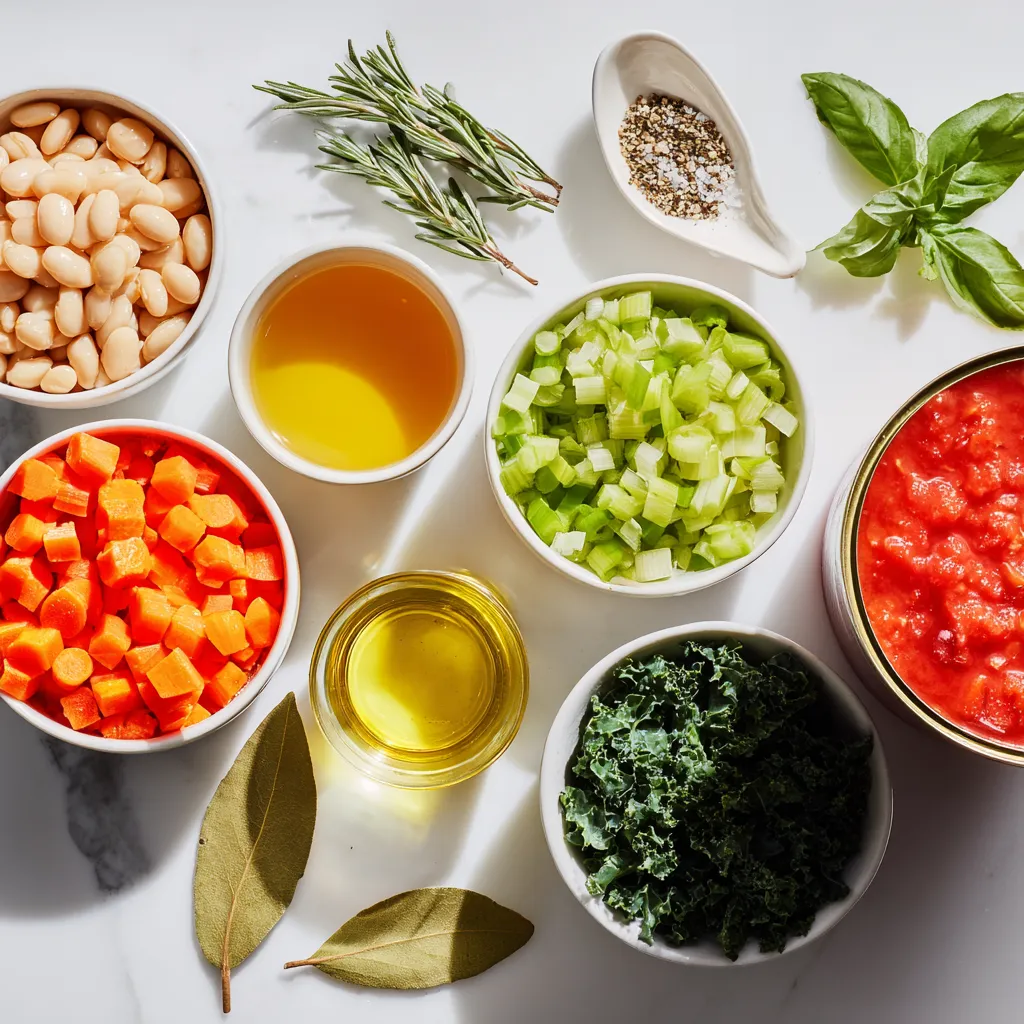
List of Ingredients
– 2 cups canned white beans (cannellini), rinsed and drained
– 1 medium onion, diced
– 2 cloves garlic, minced
– 2 carrots, diced
– 2 celery stalks, diced
– 4 cups vegetable broth
– 1 can (14 oz) diced tomatoes, with juices
– 1 teaspoon dried thyme
– 1 teaspoon dried rosemary
– 1 bay leaf
– 2 cups kale, chopped
– 2 tablespoons olive oil
– Salt and pepper to taste
– Fresh basil leaves for garnish
When I make Tuscan White Bean Soup, I love to use simple, fresh ingredients. Canned white beans, like cannellini, add creaminess and protein. For the best flavor, I always rinse and drain them. Diced onions, carrots, and celery form a tasty base. I chop them small for even cooking. Garlic adds a punch of flavor, so I use two cloves, minced finely.
Vegetable broth is crucial for depth. I recommend a good quality broth or even homemade if you have it. The diced tomatoes bring acidity and sweetness. They add a lovely color too. Dried thyme and rosemary give the soup an earthy taste. The bay leaf adds a subtle aroma.
Kale offers nutrients and a nice texture. I chop it into bite-sized pieces. Olive oil helps sauté the veggies and adds richness. I season with salt and pepper to taste. Fresh basil leaves make a beautiful garnish. They bring a fresh finish to the dish.
Ingredient Substitutions
If you don’t have white beans, you can use chickpeas or black beans. Both work well and bring great flavor. For vegetable broth, you can use low-sodium or homemade. This helps control the salt level.
When it comes to herbs, fresh thyme and rosemary can enhance the taste. If you only have dried herbs, that’s fine too. Just use less, as dried herbs are stronger. Always adjust based on your taste.
Step-by-Step Instructions
Preparation Steps
To start, heat 2 tablespoons of olive oil in a large pot over medium heat. Add the diced onion, carrots, and celery. Sauté these vegetables for about 5-7 minutes. You want them to soften, and the onion should become a bit clear.
Next, add 2 minced cloves of garlic to the pot. Stir and cook for another minute until you smell that wonderful garlic aroma. This step builds a strong flavor base for your soup.
Cooking the Soup
Now it’s time to incorporate the main ingredients. Stir in 2 cups of rinsed and drained white beans and 1 can of diced tomatoes, including their juices. Pour in 4 cups of vegetable broth too. Then, add 1 teaspoon of dried thyme, 1 teaspoon of dried rosemary, and 1 bay leaf.
Bring the soup to a boil. Once boiling, reduce the heat and let it simmer uncovered for 20 minutes. This simmering allows the flavors to mingle.
After 20 minutes, it’s time to add the greens. Add 2 cups of chopped kale to the pot. Continue simmering for another 10 minutes until the kale is tender.
Final Touches
If you want a creamier soup, blend a portion of it before adding the kale. This step is optional but gives a nice texture.
Finally, taste your soup. Add salt and pepper to suit your preference. Remember, seasoning makes all the difference!
Tips & Tricks
Enhancing Flavor
Using homemade vegetable broth makes a big difference. It adds rich flavor and depth. You can also add dried herbs like oregano or basil for more taste. Fresh herbs are great too! Try adding a sprinkle of red pepper flakes for heat. A splash of lemon juice can brighten up the soup.
Making Ahead
This soup keeps well in the fridge. Store it in airtight containers for up to five days. When you’re ready to eat, reheat it on the stove. Add a bit of water if it seems too thick. You can also freeze the soup for up to three months. Thaw it overnight in the fridge before reheating.
Serving Suggestions
Serve your soup with crusty bread or a fresh salad. A sprinkle of Parmesan cheese adds a nice touch. For a beautiful presentation, drizzle olive oil on top. Arrange fresh basil leaves neatly around the bowl. This makes the soup look and taste even better.
Pro Tips
- Use Fresh Herbs: Fresh thyme and rosemary will enhance the flavor of the soup significantly compared to dried herbs.
- Adjust Consistency: For a creamier soup, blend a portion of the soup before adding the kale. This will give it a rich texture.
- Let it Sit: Allowing the soup to sit for a few hours or overnight can deepen the flavors, making it even tastier the next day.
- Garnish for Freshness: Always add fresh basil just before serving for a burst of flavor and vibrant color.

Variations
Vegan and Vegetarian Options
To keep the soup vegan, use vegetable broth and omit any meat. The main ingredients, white beans and veggies, provide great flavor. You can add more vegetables if you want. Try zucchini or bell peppers for extra taste. Adding spices like smoked paprika can bring a nice kick. These options keep it hearty while ensuring it stays plant-based.
Adding Proteins
If you want to add protein, chicken or sausage works well. For chicken, use cooked, shredded pieces. Stir it in during the last simmer. For sausage, slice it and brown it in the pot before adding other ingredients. This adds depth and flavor to the soup. Choose spicy or mild sausage, depending on your taste. Both protein options will make the dish more filling.
Seasonal Variations
You can change ingredients based on the season. In winter, add root vegetables like parsnips or sweet potatoes for warmth. Spring calls for fresh peas and asparagus for a lighter taste. In the summer, swap in fresh tomatoes instead of canned ones. Fall is perfect for adding pumpkin or squash for a cozy flavor. These swaps keep the soup fresh and exciting throughout the year.
Storage Info
How to Store Leftovers
To keep your Tuscan white bean soup fresh, use an airtight container. Glass or BPA-free plastic containers work best. Make sure the soup cools down to room temperature before sealing it. This helps prevent condensation and keeps your soup tasty.
Freezing Instructions
If you want to freeze your soup, let it cool completely first. Pour the soup into freezer-safe bags or containers. Leave some space at the top, as the soup will expand when frozen. To reheat, thaw it in the fridge overnight. Then, warm it on the stove or in the microwave until hot.
Shelf Life
In the fridge, your soup will last about 3 to 4 days. If you freeze it, it can last for up to 3 months. Just remember to label your containers with the date. This way, you know when to enjoy your delicious soup!
FAQs
What can I do if the soup is too thick?
If your soup is too thick, you can easily fix it. Just add more vegetable broth. Start with half a cup and stir well. Keep adding in small amounts until you reach your desired consistency. You can also add water if you prefer. This method keeps the flavor strong while making the soup smoother.
Can I use dried beans instead of canned?
Yes, you can use dried beans! First, soak them overnight in water. This helps soften them. The next day, drain and rinse the beans. Then, cook them in fresh water until tender. This usually takes about one to two hours. Once cooked, add them to your soup as you would with canned beans. Using dried beans adds a fresh taste to your soup.
Is this soup gluten-free?
Yes, this soup is gluten-free! All the ingredients are safe for gluten-free diets. Just make sure your vegetable broth is gluten-free too. Some brands add gluten, so check the label. Enjoy this hearty soup without worry, knowing it fits your dietary needs.
This soup is a simple yet tasty dish. We combined fresh veggies, herbs, and beans to create a warm meal. Remember, you can swap ingredients to fit what you have at home. You can also personalize the soup for different seasons or diets. With smart tips on storage, you’ll enjoy this dish again later. Keep experimenting to find what works best for your taste. Trust me, the more you make this soup, the more you’ll love it! Enjoy your cooking journe


Tuscan White Bean Soup
Ingredients
- 2 cups canned white beans (like cannellini), rinsed and drained
- 1 medium onion, diced
- 2 cloves garlic, minced
- 2 medium carrots, diced
- 2 stalks celery, diced
- 4 cups vegetable broth
- 1 can (14 oz) diced tomatoes, with juices
- 1 teaspoon dried thyme
- 1 teaspoon dried rosemary
- 1 leaf bay leaf
- 2 cups kale, chopped
- 2 tablespoons olive oil
- to taste salt and pepper
- for garnish fresh basil leaves
Instructions
- In a large pot, heat olive oil over medium heat. Add the diced onion, carrots, and celery. Sauté for about 5-7 minutes until the vegetables are softened and the onion is translucent.
- Add the minced garlic and stir for an additional minute until fragrant.
- Stir in the drained white beans, diced tomatoes with their juices, vegetable broth, thyme, rosemary, and bay leaf. Bring to a boil, then reduce heat and let it simmer uncovered for 20 minutes.
- After 20 minutes, add the chopped kale to the soup and continue to simmer for an additional 10 minutes until the kale is tender.
- Remove the bay leaf and season the soup with salt and pepper to taste. If you like a creamier texture, you can blend a portion of the soup before adding the kale.
- Serve the soup hot, garnished with fresh basil leaves.


![- 400g spaghetti - 6 cloves garlic, thinly sliced - ½ cup extra virgin olive oil - 1 teaspoon red pepper flakes - Grated Parmesan cheese for serving - Freshly cracked black pepper - 1 cup fresh parsley, chopped - 1 lemon (zest and juice) - Salt to taste When making Spaghetti Aglio e Olio, you want to keep it simple. The main ingredients shine through. Start with quality spaghetti, as it forms the base of your dish. I always use 400g for four servings. For that distinct flavor, thinly slice 6 cloves of garlic. The garlic adds a rich aroma and taste as it cooks. Don't forget the olive oil! Use ½ cup of extra virgin olive oil to sauté the garlic. To kick it up a notch, consider some optional ingredients. A teaspoon of red pepper flakes adds heat. Adjust it to fit your spice level. If you love cheese, grated Parmesan is a nice touch for serving. Freshly cracked black pepper adds a lovely finish. For freshness, I like to add a cup of chopped parsley. It brings color and taste to the dish. The zest and juice from one lemon brighten the flavors. Salt is essential for enhancing every ingredient. Feel free to adjust the salt to your preference. This recipe is all about balance and freshness. Gather these ingredients for a quick and delicious meal. For the complete recipe, check out the [Full Recipe]. 1. Boil water and salt: Start by filling a large pot with water. Add a generous amount of salt to make it flavorful. Bring it to a rolling boil. 2. Cook until al dente: Add the spaghetti to the boiling water. Stir occasionally. Cook according to package instructions until it is al dente, which means firm to the bite. 3. Reserve pasta water before draining: Before you drain the pasta, remember to save about one cup of that starchy pasta water. It helps to make the sauce creamy later. 1. Heat olive oil in a skillet: In a large skillet, pour in the olive oil. Turn the heat to medium. Let the oil warm up but not smoke. 2. Sauté garlic until golden: Add the thinly sliced garlic to the warm oil. Cook it gently for about 2-3 minutes. Watch it closely until it turns golden and fragrant. Be careful not to let it burn. 3. Mix in red pepper flakes: Stir in the red pepper flakes. Let them cook for an extra minute. This step adds a nice kick to the oil. 1. Toss spaghetti with garlic oil: Add the drained spaghetti to the skillet with the garlic oil. Toss it well to coat every strand. 2. Add reserved pasta water: Pour in a bit of the reserved pasta water. This helps to keep the spaghetti moist and binds the flavors. 3. Incorporate parsley, lemon, and seasoning: Off the heat, mix in the chopped parsley, lemon zest, and juice. Taste it and adjust the salt if needed. This easy recipe gives you a simple yet flavorful dish. For the full recipe, check out the details above. Enjoy every bite of your savory spaghetti aglio e olio! - Avoid overcooking pasta: Cook spaghetti until it's al dente. This means it should be firm when you bite into it. This texture helps the pasta hold up better when you mix it with the sauce. - Importance of seasoning the boiling water: Always add salt to your boiling water. This helps flavor the pasta from the inside. Use about 1-2 tablespoons for every 4 quarts of water. - Timing for sautéing garlic: Add sliced garlic to the oil once it’s hot. Cook it for about 2-3 minutes. This timing helps unlock its rich flavor without going too far. - How to avoid burning garlic: Keep an eye on the garlic as it cooks. If it starts to turn brown too quickly, lower the heat. Burnt garlic can taste bitter and ruin your dish. - Presentation tips for a restaurant-style dish: Serve your spaghetti on warmed plates. This keeps the pasta hot longer. Add a sprinkle of fresh parsley on top for color. A lemon wedge on the side adds a nice touch. - Pairing options for sides or drinks: A simple green salad pairs well with spaghetti. You can also serve it with garlic bread for a full meal. For drinks, a glass of white wine complements the flavors nicely. For more details on how to make this dish, check out the Full Recipe. {{image_2}} You can change some ingredients to fit your needs. If you want gluten-free spaghetti, you can find many great options in stores. These work well in this recipe. If you prefer garlic-infused oil, use it instead of plain olive oil. This option adds even more garlic flavor to your dish. Adding vegetables makes this dish even better. Try mixing in fresh spinach or sweet cherry tomatoes. These add color and nutrients. You can also mix in proteins like shrimp or grilled chicken. Both options create a heartier meal and offer more flavors. Fresh herbs can brighten up this dish. Basil or oregano are great choices. Just chop them finely and mix them in at the end. If you like heat, adjust the spice level. Use different types of peppers, like jalapeños or serranos, to switch things up. Each pepper brings its own unique flavor to your spaghetti. For the Full Recipe, check out the complete details! To keep your Spaghetti Aglio e Olio fresh, store it in the fridge. Place the leftover pasta in an airtight container. This helps to keep moisture in and prevents the pasta from drying out. You can also cover the container tightly with plastic wrap. The best containers for storage are glass or BPA-free plastic. Glass containers allow you to see the food inside. They also do not absorb odors. Plastic containers are lightweight and easy to stack. Just make sure they seal well. When it's time to eat your leftovers, you have two options: the microwave or the stove. The microwave is quick. Place the pasta in a microwave-safe dish. Cover it with a lid or damp paper towel to keep moisture in. Heat for 1-2 minutes, stirring halfway through. Using the stove gives you better results. Add a splash of olive oil or water to a skillet. Heat over low to medium heat. Stir gently until warm. This method helps keep the pasta moist. Yes, you can freeze Spaghetti Aglio e Olio! Freezing is great for making meals ahead of time. First, let the pasta cool completely. Then, place it in a freezer-safe container. Make sure to leave some space at the top for expansion. To freeze, follow these steps: 1. Portion the pasta into single servings. 2. Seal each portion tightly in a plastic bag or container. 3. Label the bags with the date for easy tracking. When you want to eat it, thaw it in the fridge overnight. Reheat as described above. Enjoy your easy dinner later! For the full recipe, check the Full Recipe section above. Spaghetti Aglio e Olio can last in the fridge for up to three days. Store it in an airtight container to keep it fresh. It’s best to eat it within this time for the best flavor. Yes, you can make Spaghetti Aglio e Olio ahead of time. Cook the pasta and sauce, then cool them down. You can store them separately in the fridge. When ready to serve, just reheat and combine. This dish is quick to prepare, so making it fresh is great too. You can serve Spaghetti Aglio e Olio with many tasty options. Consider garlic bread for a crunchy side. A simple salad with fresh greens works well too. You might also enjoy antipasto or bruschetta to start your meal. To reheat Spaghetti Aglio e Olio, follow these steps: 1. Place the pasta in a skillet over low heat. 2. Add a splash of reserved pasta water or olive oil to prevent sticking. 3. Stir gently until heated through, about 5 minutes. 4. Serve hot to enjoy the full flavor of the dish. For the full recipe, check out the detailed instructions for a perfect dish every time! Spaghetti Aglio e Olio is simple yet flavorful. We covered the main and optional ingredients, how to cook and combine them, plus tips for the best results. Variations allow for personal twists, making this dish your own. Proper storage and reheating ensure you enjoy it later. Whether you stick to tradition or experiment, this dish will impress. Enjoy cooking and sharing this tasty meal!](https://dailydishly.com/wp-content/uploads/2025/05/5a127dfa-b261-495f-ad6e-6f110f891143-768x768.webp)