Chicken Pesto Pasta Salad Fresh and Flavorful Meal

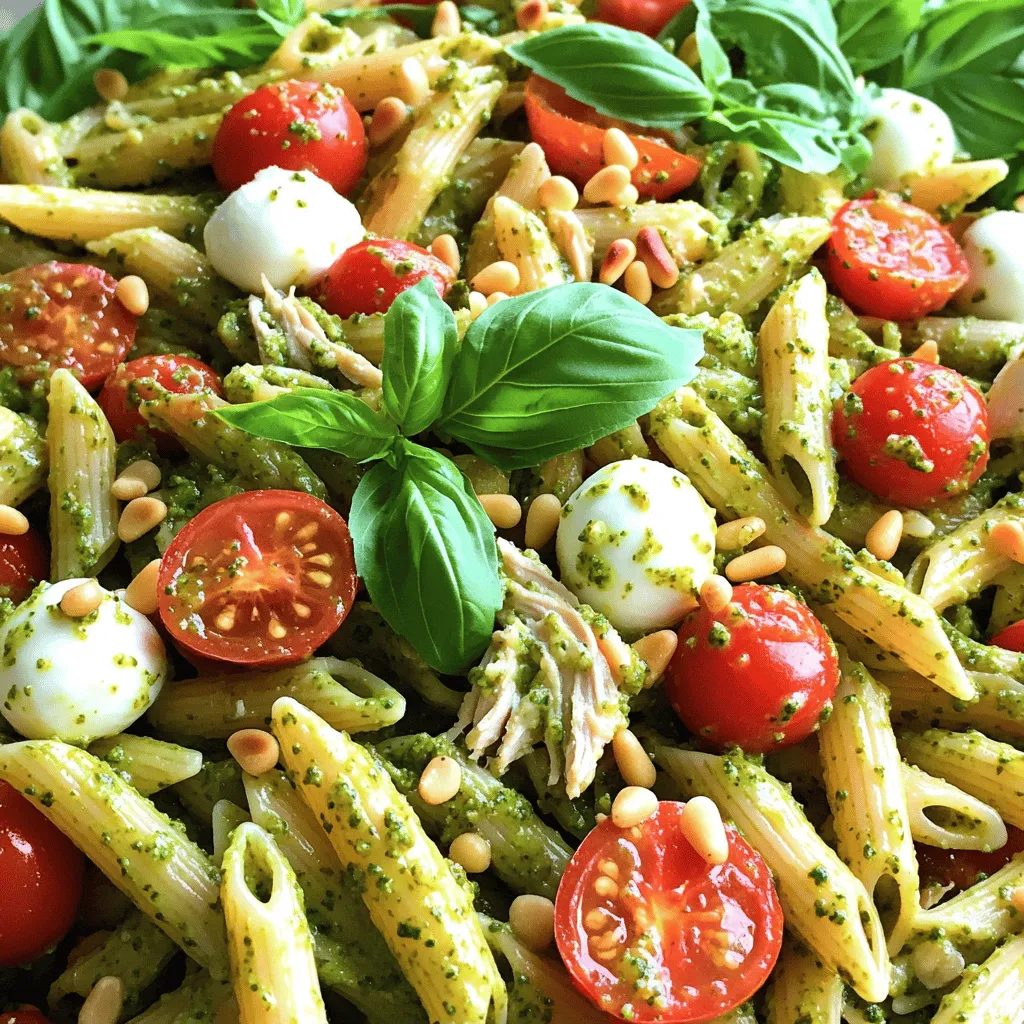
Looking for a fresh and flavorful dish to impress at dinner? This Chicken Pesto Pasta Salad is your answer! Packed with vibrant ingredients, it’s easy to make and perfect for any meal. I’ll guide you through each step, from cooking the pasta to storing your leftovers. Plus, I’ll share tips, tricks, and tasty variations. Let’s dive into this delicious recipe that will have everyone asking for seconds!
Ingredients
Complete list of ingredients
For the Chicken Pesto Pasta Salad, you will need:
– 2 cups penne pasta
– 1 cup cooked chicken breast, shredded
– 1/2 cup cherry tomatoes, halved
– 1/2 cup mozzarella balls, drained
– 1/4 cup fresh basil leaves, chopped
– 1/4 cup pesto sauce
– 2 tablespoons olive oil
– Juice of 1 lemon
– Salt and pepper to taste
– Optional: 1/4 cup pine nuts, toasted
Detailed measurements
Each ingredient plays a role in making this dish tasty. Here are the key measurements:
– Penne pasta: 2 cups gives the salad a nice base.
– Cooked chicken breast: 1 cup adds protein and flavor.
– Cherry tomatoes: 1/2 cup brings sweetness and color.
– Mozzarella balls: 1/2 cup adds creaminess.
– Fresh basil leaves: 1/4 cup gives a vibrant herbal note.
– Pesto sauce: 1/4 cup is the heart of the salad, adding rich flavor.
– Olive oil: 2 tablespoons keep everything moist.
– Juice of 1 lemon: Adds brightness and acidity.
– Salt and pepper: Just enough to enhance the taste.
– Pine nuts: Optional, but they add a nice crunch.
Substitutions for dietary needs
You can easily tweak this recipe to fit your needs:
– Pasta: Use gluten-free pasta for a gluten-free option.
– Chicken: Replace chicken with tofu for a vegetarian dish.
– Cheese: Swap mozzarella with a dairy-free cheese for vegan needs.
– Pesto: Use a nut-free pesto if you have allergies.
– Nuts: Omit pine nuts if you need a nut-free meal.
These swaps keep the salad delicious while meeting dietary needs.
Step-by-Step Instructions
Cooking the pasta
First, get your penne pasta ready. Boil a big pot of salted water. Add the pasta once the water is bubbling. Cook it based on the package instructions, usually about 10 to 12 minutes. When it’s done, drain the pasta. Rinse it under cold water to stop the cooking. This keeps it firm for the salad.
Preparing the chicken and vegetables
While the pasta cooks, shred your cooked chicken breast. You can use leftovers or store-bought rotisserie chicken. Place the shredded chicken in a large bowl. Next, slice your cherry tomatoes in half. Add them to the bowl with the chicken. Now, drain the mozzarella balls and toss them in too. This mix adds great flavor and texture.
Mixing the dressing and combining ingredients
Now it’s time to make the dressing. In a small bowl, whisk together the pesto sauce, olive oil, and lemon juice. Sprinkle in salt and pepper to taste. This dressing brings everything together. Pour it over the chicken and pasta mixture. Toss gently until all ingredients are coated in the dressing. Finally, fold in the chopped fresh basil and pine nuts, if you’re using them. Chill the salad in the fridge for 30 minutes to let the tastes mix well. Enjoy this fresh and flavorful meal!
Tips & Tricks
Time-saving prep tips
To save time, cook your pasta while you prepare the chicken and veggies. Use rotisserie chicken for quick prep. Chop your tomatoes and basil while the pasta cooks. This way, you streamline your process and keep things moving.
Common mistakes to avoid
One common mistake is overcooking the pasta. You want it al dente, so it holds up in the salad. Another mistake is not cooling the pasta before mixing. Rinsing it with cold water helps prevent sogginess. Lastly, don’t skip the lemon juice. It brightens the flavors and adds freshness.
Enhancing flavor with additional ingredients
You can add more flavor by including extra ingredients. Try adding olives for a salty kick. Sundried tomatoes offer a sweet and tangy twist. If you want crunch, toasted pine nuts work great. These additions can elevate your chicken pesto pasta salad.
Variations
Alternative proteins (e.g., shrimp, tofu)
You can switch chicken for shrimp or tofu. Shrimp adds a sweet taste and quick cook time. Tofu is great for a plant-based meal. Just cube firm tofu and sauté it until golden. Both options keep the dish fresh and tasty.
Gluten-free options
If you need a gluten-free meal, choose gluten-free pasta. Many brands offer great taste and texture. You can also try zucchini noodles or quinoa. These options make the dish light and healthy while still delicious.
Adding seasonal vegetables
Seasonal veggies can boost color and flavor. Try adding bell peppers, spinach, or asparagus. They add crunch and nutrients. Roast or sauté them for extra flavor. Feel free to mix and match based on what you have. Each addition makes your Chicken Pesto Pasta Salad unique and exciting.
Storage Info
Proper storage methods
To keep your chicken pesto pasta salad fresh, use an airtight container. This helps keep moisture in and air out. Before sealing, let the salad cool completely. This prevents condensation, which can make the salad soggy.
How long it lasts in the fridge
When stored correctly, chicken pesto pasta salad stays fresh for up to three days. After that, it may lose flavor and texture. Always check for any signs of spoilage before eating.
Freezing tips for leftovers
Freezing chicken pesto pasta salad is possible but not ideal. If you choose to freeze it, keep in mind that the texture may change. Store it in a freezer-safe container. Label it with the date to track freshness. It can last up to two months in the freezer. When ready to eat, thaw it in the fridge overnight. Enjoy it within a day or two after thawing for best taste.
FAQs
What kind of pasta is best for chicken pesto pasta salad?
I like to use penne pasta for chicken pesto pasta salad. Penne holds the sauce well. You can also try rotini or fusilli. These shapes add texture and fun to the dish. Choose what you love best!
Can I make this salad ahead of time?
Yes, you can make this salad ahead of time. It tastes better after chilling in the fridge. I suggest making it a few hours before you plan to serve. This way, the flavors mix well. Just cover it tightly to keep it fresh!
Is this recipe suitable for meal prep?
Absolutely! This chicken pesto pasta salad is great for meal prep. You can store it in individual containers. It stays good in the fridge for up to three days. Just remember to stir it before you eat. The flavors will still shine!
How to make a vegan version of chicken pesto pasta salad?
To make a vegan version, swap the chicken for chickpeas or tofu. Use vegan pesto or make your own. Blend basil, nuts, olive oil, and nutritional yeast for a tasty sauce. Replace mozzarella with avocado or vegan cheese. This way, you keep all the flavor!
This post covered all the essentials for making a great chicken pesto pasta salad. We detailed the ingredients, cooking instructions, and clever tips for success. I shared storage methods and addressed common questions, ensuring you have everything you need.
Enjoy experimenting with variations and make this dish your own. Simple steps and smart choices can lead to delicious outcomes every time. Happy cooking!

![- 300g spaghetti - 6 cloves garlic, thinly sliced - 1/2 teaspoon red pepper flakes - 1/4 cup extra-virgin olive oil - Zest and juice of 1 lemon - 1/2 cup fresh parsley, chopped - Salt to taste - Freshly grated Parmesan cheese (optional) - 1 cup cherry tomatoes, halved To make Spaghetti Aglio e Olio, you need simple and fresh ingredients. The garlic is key. It adds depth and flavor. Thinly sliced garlic cooks fast, so watch it closely. Red pepper flakes give the dish a bit of spice. You can add more or less based on your taste. Extra-virgin olive oil is the base for the sauce. It should be high quality for the best flavor. The lemon zest and juice brighten up the dish. Fresh parsley adds color and freshness. Salt enhances all the flavors, so don’t skip it. If you like cheese, sprinkle on some Parmesan at the end. The cherry tomatoes are a fun addition. They bring sweetness and juiciness. You can use them or leave them out. They add a nice twist to the classic recipe. Check out the Full Recipe for more details on how to prepare this dish. - Protein options (shrimp, chicken) - Seasonal vegetables - Other herbs and spices To make the meal heartier, think about adding proteins. Shrimp or chicken cook quickly and add great flavor. Seasonal vegetables like spinach or zucchini can also bring in extra nutrients. Herbs like basil or oregano can enhance the taste too. Feel free to get creative with what you have! To start, boil water in a large pot. Add salt to the water. This step adds flavor to the spaghetti. Once the water reaches a rolling boil, add 300g of spaghetti. Cook according to package instructions until it is al dente. This usually takes around 8 to 10 minutes. After cooking, reserve 1 cup of pasta water. This is key for the sauce. Drain the spaghetti but do not rinse it. In a large skillet, pour in 1/4 cup of extra-virgin olive oil. Heat it over medium heat. Add 6 cloves of sliced garlic. Sauté the garlic until it turns golden, about 2 minutes. Be careful not to burn it. Next, stir in 1/2 teaspoon of red pepper flakes. This adds a nice kick to the dish. Allow the flakes to cook for about 30 seconds. Then, add 1 cup of halved cherry tomatoes. Cook these for 3 to 4 minutes. They should soften and become juicy. Now it’s time to combine! Toss the drained spaghetti into the skillet. Mix it well to coat it with the garlic and oil. Add the zest and juice of 1 lemon. Also, add half of the chopped parsley. If the pasta looks dry, add some reserved pasta water. Keep mixing until you reach your desired creaminess. Finally, season with salt to taste. Remove the skillet from heat. Your delicious Spaghetti Aglio e Olio is ready to enjoy! For the full recipe, check out the detailed guide. To get great flavor, focus on sautéing garlic just right. Use medium heat and watch it closely. Garlic cooks fast and can burn easily. Sauté it for about two minutes until golden, but not brown. This gives a nice, sweet flavor. Next, balance spice and acidity with lemon. The zest adds a fresh burst, while the juice brightens the dish. Add lemon juice right before serving. This keeps the flavor fresh and lively. For al dente pasta, cook spaghetti for 8-10 minutes. Check the package for exact times, as brands vary. You want it to be firm but not hard. Timing is key for adding ingredients. Toss in cherry tomatoes after the garlic. Cook them for 3-4 minutes until they soften. This keeps them fresh and juicy. Don't forget to reserve some pasta water before draining. It helps bind the dish together later. When plating Spaghetti Aglio e Olio, use shallow bowls. This makes the dish look inviting. Add a drizzle of olive oil on top for shine. Garnish with parsley for color. A lemon wedge on the side adds a nice touch. You can also sprinkle freshly grated Parmesan cheese for extra flavor. Enjoy your beautiful, tasty dish! For the full recipe, check out the link provided. {{image_2}} You can easily add proteins like shrimp or chicken to make your dish heartier. This small change can turn a light meal into a filling feast. You can also incorporate seasonal vegetables, like zucchini or asparagus, for a fresh taste. These add color and nutrition to your plate, making your meal even better. To make your dish pop, try infusing extra-virgin olive oil with herbs. You can use rosemary, thyme, or basil. This simple step adds rich flavors without much effort. Another great idea is to use different types of cheese for depth. Pecorino Romano or a tangy goat cheese can bring new taste sensations to your Spaghetti Aglio e Olio. If you want to simplify your cooking, try the one-pot spaghetti method. Cook everything together for a quick meal with less cleanup. Just toss the raw pasta, garlic, and oil into the pot with water and let it cook. You can also make a baked version. This way, your pasta gets crispy edges while remaining soft inside, offering a delightful contrast. For the full recipe, visit [Full Recipe]. To store leftover spaghetti, let it cool first. Place it in an airtight container. Make sure to refrigerate it. Leftovers can last up to three days in the fridge. If you want to keep it longer, you can freeze spaghetti for up to three months. To reheat spaghetti, the stovetop is best. Heat a pan over medium heat. Add a splash of water or olive oil. This helps keep the pasta moist. Stir occasionally until warm. You can also use the microwave. Place the spaghetti in a bowl, cover it, and heat in short bursts. Check often to avoid drying it out. Enjoy your meal! Yes, you can! If you skip the cheese, the dish remains tasty. You might add a splash of cream for a creamy texture. Another option is to use nutritional yeast. It gives a cheesy flavor without dairy. Salads go great with this dish. A simple green salad with lemon dressing works well. Garlic bread is also a fantastic choice. It complements the garlic flavor in the pasta. To serve more people, just multiply the ingredients. For example, double everything for eight servings. Keep the cooking times the same, but check the pasta for doneness. You may need a larger pot for boiling. If you lack olive oil, use avocado oil or sunflower oil. Both have a mild taste that works well. Grapeseed oil is another option, as it has a light flavor too. You can find the full recipe [here](Full Recipe). It has all the steps and tips to make this dish perfect. Spaghetti Aglio e Olio is simple yet delicious. We covered key ingredients, cooking steps, and tips to enhance flavor. You can customize this dish by adding proteins and veggies. Remember to balance the garlic and lemon for taste. If you store leftovers, keep them moist while reheating. Enjoy your cooking adventure and try the variations for a fresh twist. You’ll impress anyone with this dish!](https://dailydishly.com/wp-content/uploads/2025/06/f6e5d00b-504d-4d52-a053-c2bbef60ee08-768x768.webp)